
By Talal Hangari and Tom Zundel
Liz Truss, having been elected by 0.3 per cent of the country, is now Prime Minister. Truss’s record, combined with scrutiny of her policy proposals, suggests she will be an utter disaster in office. She is ideologically committed to making life worse for the majority of people.
Truss was elected MP for South West Norfolk in 2010. Throughout her time in Parliament, and indeed before her election, her politics have consisted of primitive Thatcherism mixed with the career-driven opportunism typical of Westminster. While a student at Oxford in the mid-1990s, Truss joined meetings of the pro-market Hayek Society. In 2011 she founded the Free Enterprise Group, a denomination in the Conservative Party committed to “encourag[ing] a competitive and free economic environment”, and “free[ing] individuals to create, innovate, and take risks”.
In 2012, Truss and other MPs associated with the FEG published Britannia Unchained: Global Lessons for Growth and Prosperity. They lambasted British workers for being “among the worst idlers in the world” and complained that, “Whereas Indian children aspire to be doctors or businessmen, the British are more interested in football and pop music.” The purported disappearance of Britain’s work ethic was attributed to “high tax rates” and “generous benefits” producing “perverse incentives” and discouraging employment. David Cameron’s government appears to have agreed with this diagnosis, implementing cuts in expenditure that greatly increased child poverty and led to the proliferation of food banks, thus properly incentivising the “idlers”.
Truss and her co-authors also recommended that the UK “learn from the entrepreneurial culture of Israel” and Dubai’s low-regulation enterprise zones. The cruel treatment of migrant labour in the United Arab Emirates, and systematic racist discrimination against Palestinians by the Israeli government were of no interest: human rights ranked low among the authors’ priorities.
Truss’s record in Parliament is no surprise given her Thatcherite principles. According to TheyWorkForYou, she has voted against measures to address the climate emergency eighteen times; to reduce spending on benefits 48 times; to reduce local government funding eight times; to further regulate – in practice, restrict – trade union activity six times; and to use UK military forces overseas six times. While exposing the nation to the risk of climate catastrophe and making collective bargaining for workers more difficult, she has tried to ease the pains of the wealthy, voting in favour of reductions in capital gains tax and corporation tax.
Climbing the career ladder appears to come naturally to Truss. Her former colleague Anna Soubry observed that Truss “was the most ambitious person many people had encountered.” In 2014 Truss became Environment Secretary under Cameron; then Justice Secretary under Theresa May; then Chief Secretary to the Treasury; and in 2019 she was rewarded for backing Boris Johnson’s leadership bid with a post as International Trade Secretary. In 2021 she was promoted to Foreign Secretary.
Johnson and Sunak had a different approach to Truss on fiscal policy, a dispute that has been magnified in Tory leadership debates, with Truss wanting to forge ahead with radical economic libertarianism while Sunak supports mild tax rises to keep the budget balanced. Nevertheless, Truss was able to tolerate Sunak’s tenure as Chancellor of the Exchequer for the sake of her career.
Truss has been a vocal defender of the record of neoliberal Toryism in the House of Commons. In 2019 she declared: “I am incredibly proud of our record, as a Government, of reducing inequality” and claimed that Tory ‘welfare reforms’ got “more people into work”. Earlier that year, Philip Alston, the UN Special Rapporteur on extreme poverty and human rights, published a comprehensive report after visiting Britain, condemning the “tragic social consequences” of Tory austerity, and lamenting that “much of the glue that has held British society together since the Second World War has been deliberately removed and replaced with a harsh and uncaring ethos.”
Universal Credit, praised by Truss as “more generous than the previous benefits system”, and “better at keeping people in work”, was criticised by Alston at length: “The UC system is designed with a perverse and catastrophic five-week delay built in between when people file a claim and when they receive benefits”; “UC involves the imposition of strict conditions enforced by draconian sanctions for even minor infringements”; “The British welfare state is gradually disappearing behind a webpage and an algorithm, with significant implications for those living in poverty.”
Rising poverty in Britain confirms Alston’s assessment and indicts the Tory government, so much so that Secretary of State for Work and Pensions Therese Coffey is reportedly concealing DWP reports on the impact of welfare reforms in order to evade scrutiny.
Perhaps Truss’s most disgraceful remarks in Parliament were those she made with regard to the government’s policy of arming Saudi Arabia’s war in Yemen. Saudi Arabia has been universally condemned by human rights organisations and experts for war crimes, with air strikes on civilian targets including schools, hospitals, weddings and funerals. After a judicial review of the government’s policy launched by NGOs in 2016, the Court of Appeal ruled in June 2019 that the failure of the Secretary of State for International Trade to assess whether there were violations of international humanitarian law taking place before granting arms export licences to Saudi Arabia was “irrational and therefore unlawful”. The government had to stop granting arms export licences for a time.
On 7th July 2020, Liz Truss said in a written statement that the government had completed the review process. There was no “trend” of Saudi breaches of international law or “patterns of non-compliance”. Instead, Truss explained, the “possible violations” were “isolated incidents”:
“Saudi Arabia has a genuine intent and the capacity to comply with IHL. On that basis, I have assessed that there is not a clear risk that the export of arms and military equipment to Saudi Arabia might be used in the commission of a serious violation of IHL.”
Truss committed herself to denying the blindingly obvious: that Saudi Arabia and its partners have repeatedly committed atrocities in Yemen. This is unsurprising for a state that carries out mass executions of its own citizens for ‘crimes’ like freely expressing one’s thoughts and opinions. In a January 2021 speech on the theme of ‘Global Britain’, Truss enthused that British trade “will champion high environmental and animal welfare standards”. In her moral judgement, animals appear to rank above Arabs.
Britannia Unchained, written by MPs who pride themselves on their love of liberty, mentions the British Empire without a hint of criticism. Instead, they write: “British values helped created [sic] the modern world. Britain once prided itself on the virtues of responsible finance, public education, hard work, risk taking and ambition. It helped spread those ideas to the world – but now seems to have lost sight of many of them itself.” British politicians continue to believe that right is synonymous with whatever they do.
Nevertheless, Truss is outraged by Putin’s invasion of Ukraine: “The Government are appalled by the atrocities being committed in Ukraine by Russian forces,” she proclaimed in April. “We will hold the Putin regime accountable for its crimes.” Truss said the government would work with Ukraine to collect evidence and support the investigations of the International Criminal Court. If Truss had an ounce of principle or even straightforward humanity, she would surrender herself to the authorities as an accomplice in the slaughter of Yemen.
Truss’s past has certainly had an effect on her positioning in this leadership election, placing her on the right of the firmly right-wing Conservative Party. In fact, whilst she may successfully thrash Sunak, young Conservatives have said that both candidates are the “two worst” for Prime Minister that MPs could have chosen and it’s not hard to see why.
Crucially, the next Prime Minister faces a historic cost-of-living crisis chiefly regarding household energy bills. The problem is that, in appealing as far as possible to the small-state itch of the Conservative Party, Truss has promised to reduce taxes and rejected “giving out handouts” to help families during the winter energy crisis soon to come.
However, in office Truss has been forced to adapt by the energy crisis. The chief executive of E.ON Energy, which supplies nearly four million households, had warned that up to two in five households in the UK may be pushed into fuel poverty this winter while estimates for the price cap were rising to more than double, reaching three and a half times the price it was at earlier this year by next April. If the price cap had risen to as much as £6,000, as some experts feared, families would have to find £4,000 more just to pay for their energy, an unfathomable sum given the worst-off are set to gain a pitiful 76p a month from the National Insurance cut with impoverished pensioners receiving nothing at all.
As such, the government will spend £150 billion on capping energy prices for two years at £2,500 per household. It is expected the plan will be funded by borrowing. Even committed Thatcherites must turn to the state in an emergency: the stability of capitalism and its class hierarchy is the first priority.
The rational solution is nationalisation of the energy companies. The TUC estimates nationalising the big five would cost £2.85 billion. Large dividends would stop being paid and prices could be reduced in a time of high profits. But that would threaten the interests of the class Truss serves.
Truss has fulfilled her promise to destroy the environment by lifting the ban on fracking. There are plans to licence new oil and gas production in the UK despite such projects taking years to come online while significantly endangering the goal of 1.5C warming as well as grave warnings from climate scientists and the proliferation of climate-related disasters, most recently in Pakistan, where floods have caused nearly 1400 deaths. This policy alone would disqualify Truss from power in a civilised society. All that should be expected of Truss’s ministry is a faithful dedication to the British ruling class. Everyone else is unimportant; they are to be pacified with rare concessions and unceasing propaganda in the press, the latter well-illustrated by the coverage of Elizabeth Windsor’s death.
Part of the reason that Truss is able to blindly ignore the climate and cost-of-living emergencies is the audience that she is playing to. The reality is that with immigration the second most important issue for Conservative Party members, level with the economy, strong anti-refugee rhetoric is more important than an adequate defence against fuel poverty. Truss has pledged continued support for the Rwanda scheme and gone much further in promising to expand it elsewhere and vowing to leave the European Convention on Human Rights if it interferes in the government’s asylum policy.
This is not just wrong on a humanitarian basis, as has been established, but has proven to do little else other than please the Tory rank and file. The House of Commons Home Affairs Select Committee has found it has not deterred migrant crossings and instead ‘numbers have increased significantly since April’. Even if successful, the agreement only allows for as few as 200 migrants to actually be relocated rather than the thousands that had been claimed. Promising to soldier on with a cruel scheme that has minimal impact and scope doesn’t sound like someone ‘trusted to deliver’.
The key plank of her campaign has been her claim that she can restart an economy that she says has faced decades of lacklustre growth. Central to this has been her promise to freeze the planned increase in corporation tax and focus on new ‘Investment Zones’ which would be yet more generous to businesses than existing freeports as a means to level-up in a ‘Conservative way’.
However, on this central issue too, Truss is out of touch with reality. Low-tax and regulation zones for business can’t fulfil several key components of the levelling-up agenda. Just one example is education. In northern towns like South Shields, 26 per cent more people have no qualifications and 32 per cent fewer people have degrees than the national average. Companies relocating within the UK to cut their tax bill won’t create net jobs and won’t bridge regional educational divides.
Furthermore, the idea that freezing the rise in corporation tax will restore significant growth in the economy is fantasy. The Conservatives have cut corporation tax from 28 per cent to 19 per cent during their time in office and while business profits have surged, investment has remained near the bottom of the pack in the developed world. Reports from the Resolution Foundation, Treasury Committee and National Audit Office have all concluded that the chief problem was a “lack of long-term thinking in economic strategy” concerning skills and inequality, with tax cuts being dismissed as a meaningful solution. No wonder even Rishi Sunak, hardly a left-winger, acknowledged this with his plan to increase corporation tax. In fact, only 28 per cent of Conservative voters actually want the corporate tax rise scrapped, showing an alarming disconnect between Truss and the people that actually put the Conservatives in power.
Her neoliberal credentials go further too, as does her desire to emulate Thatcher. No longer relegated to awkward photo ops in tanks, she’s already clashed with trade unions, pledging to limit strike action through a higher threshold for ballots and minimum service guarantees which have been branded as “Victorian” in rolling back workers’ rights. Unions in the UK already have less freedom to represent their members than the rest of Europe and tightening regulations seeks only to further hinder collective bargaining. With real wages still almost £1,000 a year less than in 2008, workers must not have their limited ability to negotiate better pay put in jeopardy.
Truss’s approach to pay has been reflected in her public sector plans too. She has, along with Sunak, pledged to maintain tough public sector pay settlements that are set to cut real pay for teachers, nurses and other essential workers by around 10 per cent as a consequence of surging inflation, an unprecedented decline for those the government applauded just two years ago.
In addition, her now-scrapped plan to enact regional pay boards for civil servants ran into trouble when her proposal claimed it could save £8.8 billion a year despite the whole civil service costing about £9 billion. Either this was an incredible arithmetic failure by a prospective Prime Minister or, as many have suggested, her proposal would include effective pay cuts for public sector workers more widely, including teachers and nurses in parts of England. The real problem is that even if her sums had added up, regional pay would only exacerbate regional inequality, something that even George Osborne acknowledged during the height of austerity, prompting him to drop similar plans. If Truss hopes to place herself to the right of Osborne, her hopes of holding together the coalition that secured an eighty seat majority are deluded.
The bigger problem for the Conservative Party is that the policies proposed by Truss reflect a wider shift within the parliamentary group and the party at large. Penny Mordaunt illustrated this point clearly herself, stressing the party wanted to hear “the good old stuff”. In short, the Johnson experiment has ended and Thatcherism has made its way back.
Talal Hangari is a writer and activist studying at the University of Cambridge. Tom Zundel is an undergraduate student at the University of Warwick studying Economics and Politics. He also works as an editor at The Boar and as a freelance journalist.
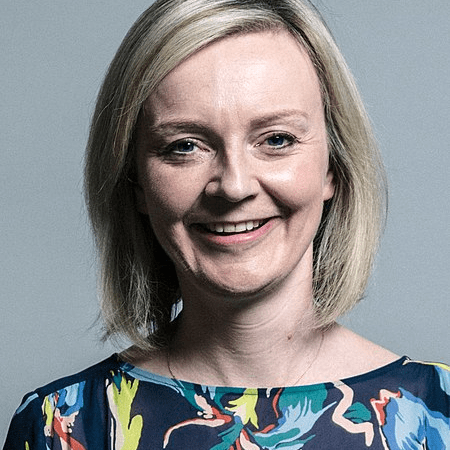
Image: Liz Truss. Source: https://api20170418155059.azure-api.net/photo/aB12tA6N.jpeg?crop=MCU_3:4&quality=80&download=true. Author: Chris McAndrew, licensed under the Creative CommonsAttribution 3.0 Unported license.
 Labour Hub
