
By Pete Firmin
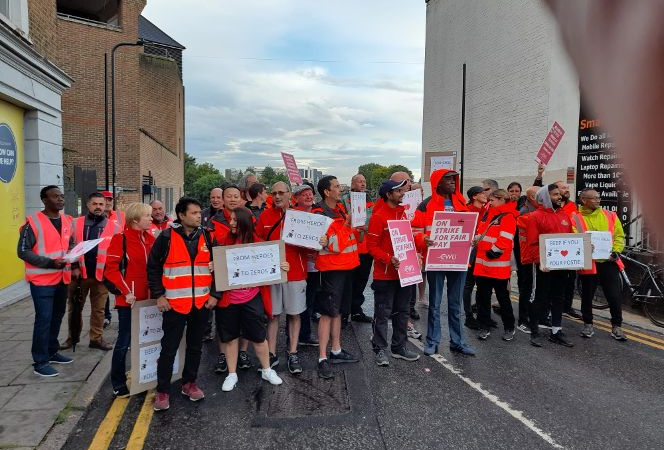
Postal workers have already been on strike for three days – the fourth was cancelled for the morning after Elizabeth Windsor died – and have a further two days coming on the 30th September and 1st October.
Unlike many current disputes, but with parallels to the rail strikes, this is not just about an inflation-matching pay rise. Royal Mail is determined to attack postal workers’ terms and conditions. But even more, at stake is the whole future of Royal Mail as a reliable postal service.
First on pay, Royal Mail has imposed a 2% increase. Management claims it has offered 5.5%, but not only is this tied to unacceptable changes in conditions, but changes which the postal workers union, the CWU, say would be unachievable even if they could be accepted. Unlike many courier services, postal workers were not furloughed during the pandemic and were widely praised for that. But now they are expected to accept a pay offer that would mean falling behind with inflation, even if they were to accept the mythical 5.5%.
The attack on terms and conditions is far from minor.
- Royal Mail introduced Sunday deliveries in 2014, but until now, working Sundays has been voluntary. They now want to make Sundays part of the normal working week.
- Currently, full time delivery workers start around 6.30 a.m. and finish in the early afternoon. Royal Mail wants to push that time back several hours. Not only would that mean customers getting their mail later (and businesses often like to deal with their post the day it arrives) but would also mean posties delivering in the dark in winter with all the problems (accidents, attacks etc) that entails. On top of which, the attraction of the job for many is that they can pick up children from school. Those new hours would make that impossible.
- Currently if a postal worker finishes early and there is no further work, they can clock out, and if they go over their time they are paid overtime. Management wants to change that so if you finish early those hours are `banked’ and they can instruct you to work them whenever they want: effectively compulsory unpaid overtime.
- And much more.
If that wasn’t enough, there is a bigger question looming. Since privatisation, Royal Mail’s guiding principle has been maximisation of profits. Royal Mail claims strikes will lose it £1million a day. Yet a few months ago they announced record profits of £758m, paid out £400m to shareholders and paid over £2m out in executive bonuses.
To continue such profits and compete with other delivery companies (not just Amazon, but DPD, Hermes, etc), management has continually attacked workers’ terms and conditions and wants to step up those attacks.
The union has expressed the fear that management wants to turn it into a gig economy employer, not only abandoning 100 years of industrial relations, but ending the universal service obligation which means delivering to every address in the U.K six days a week – when management don’t already undermine that.
These fears are underlined by reports of behind the scenes negotiations with Royal Mail’s largest shareholder, Vesa Equity Investment. The government has, under pressure from the union, decided to investigate this issue, but we cannot rely on free marketeers Truss and Kwarteng to defend either the postal service or workers’ terms and conditions.
The unprecedented majorities for strike action in their two ballots and the higher than usual turnout on picket lines show the determination of postal workers. They need as much support as possible in this fight. That means supporting the coming strikes, but also pushing for Royal Mail to be brought back into public ownership and assisting with all attempts to unionise other delivery companies, like Amazon, so we have levelling up rather than a race to the bottom.
Pete Firmin is a retired postal worker and Vice Chair, Brent Trades Council
Image: Picket line at Kilburn Delivery Office, c/o the author
 Labour Hub