
By Jan Rocha
Luis Inacio Lula da Silva, the PT, or Workers Party candidate, won the presidential election on Sunday, with 48% of the vote, a lead of 5% over the incumbent president, rightwing extremist Jair Bolsonaro. But Lula failed to obtain the 50% plus 1 vote needed to avoid a runoff which will now take place on October 30th.
Opinion polls had successfully predicted Lula`s percentage, but they badly underestimated Bolsonaro`s share of the vote, giving him up to 14 points less than Lula, instead of the 43% he actually obtained. Out of a total electorate of 156 million, Lula won by over 6 million votes.
Bolsonaro not only did much better than expected in the presidential race. His party, the PL, or Liberal Party, also elected a large number of representatives to the Senate and the Chamber of Deputies, which means that even if Lula wins the second round, he will face a largely hostile congress.
His hopes of victory on October 30th now depend on winning over those who voted for the third and fourth placed candidates in the presidential race, Simone Tebet and Ciro Gomes, who stood for centrist and left of centre parties and between them got 7 % of the vote.
Critics suggest that Lula`s message of hope, as opposed to Bolsonaro`s of hatred, and his promise to restore the good old days of his first presidency 20 years ago, when millions were lifted out of poverty, were not enough to combat the vast blitz of social media messages from the Bolsonaro camp. These accused Lula of corruption, of being in league with organized crime, of planning to close down evangelical churches and destroy the family. Although these messages are blatantly untrue, to an electorate that relies on social media for most of its news and information, and in a predominately conservative society like Brazil, they resonated.
What PT members now want from Lula is a more targeted critique of Bolsonaro`s disastrous social policy. For while the president boasts of providing welfare payments to over 20 million families, at the same time he has slashed spending on programmes to provide free medicines, school meals, internet in schools, family agriculture, women`s refuges, indigenous health, and many others which help low income families.
The result is that an estimated 33 million people go hungry in Brazil, one of the world`s largest food exporters. If the PT cannot show this reality and offer solutions, then voters will continue to vote for the lies of the Bolsonaro administration.
At least the fears that he would try some sort of coup if Lula won outright in the first round, have been postponed. Weeks of accusations about the unreliability of the electronic voting system were immediately forgotten when the results came out better than expected for Bolsonaro.
What the results have also shown is the near disappearance of a more moderate right wing from the political scene, with the more extreme Bolsonarista right assuming a hegemony.
But although they now have a majority in congress, the PT and other smaller leftwing parties have also increased the number of their representatives there. So Brazil`s political polarization continues.
Jan Rocha is an English journalist who has lived in Brazil for over 40 years. She was correspondent of the BBC World Service and The Guardian there for many years and has written several books about Brazil.
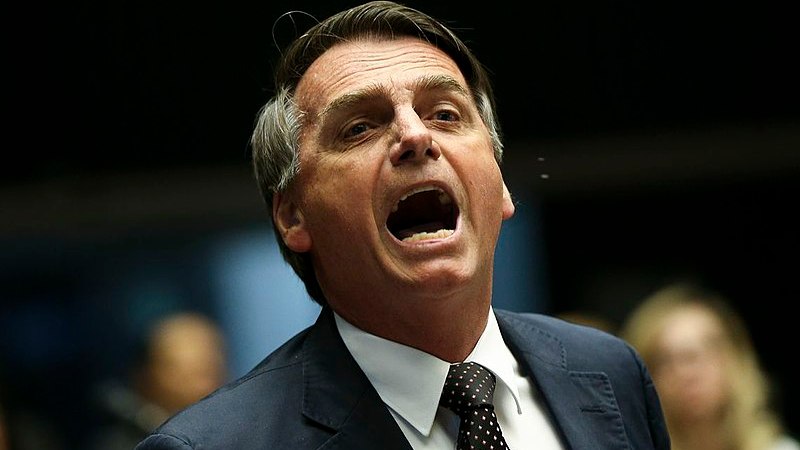
Image: Jair Bolsonaro. Source: http://agenciabrasil.ebc.com.br/politica/foto/2014-02/congresso-promulga-emenda-constitucional-77?id=78867. Author: Marcelo Camargo/Agência Brasil, licensed under the Creative Commons Attribution 3.0 Brazil license.
 Labour Hub