

By Owen Hatherley
When thinking about the Anglosphere zone with whom some on the British right would like to create a new union – a ‘CANZUK’ superstate made up of Canada, Australia, New Zealand and the UK – it is important to remember settler colonialism was not just a project of the right. While it is unpleasant for socialists to recall, the labour movement in this settler zone worked actively in many cases for the dispossession of the Indigenous inhabitants of their new countries, and for the exclusion of workers from neighbouring countries. Except for South Africa – where the battle to suppress the large African majority generally took precedence – these countries have all had important Labour parties, which have in some cases been the dominant political force.
This is in contrast with the lack of a mass workers party in the US, but also, unlike in continental Europe or east Asia, Marxist parties, whether reformist or revolutionary, have seldom done well in Canada, Australia or New Zealand, though they have been briefly influential. At this distance, a ‘Labour’ party might generally not be much further to the right than one founded by Marxists, like the French Parti Socialiste or the German SPD, but their histories are distinct.
As in Britain, the trade union movement shaped new parties in their own image – these would become the Labour Party in Australia and New Zealand, and the Co-Operative Commonwealth Federation (since the sixties the New Democratic Party) in Canada. Though the CCF/NDP in Canada have been far more electorally successful and enduring than any socialist party in the United States, they have almost always been a third party nationally and have never headed the government in Ottawa.
The Labour parties of Australia and New Zealand, on the other hand, are among the great political success stories. In both countries, the Conservative and Liberal parties had to effectively merge in the early 20th century in order to prevent what would otherwise have been permanent Labour government. Both parties have been far more consistently popular at the polls than their alleged British parent. Both countries – Australia especially – actually carried out in the late 19th century the programme of the Chartists and other Victorian British working class radicals, with three-year parliaments, universal male suffrage and an eight-hour day, all established many decades before the ‘mother country’. In 1889, the Great Dock Strike in London, which effectively created modern trade unionism, was won partly because of the financial assistance of the more powerful Australian trade union movement.
Yet this Labourism was deeply implicated with imperialism. The apparent adherence of the working class of North America and Australasia to British Imperialism and to racial theory greatly pleased the advocates of Greater Britain in the Victorian era. As the radical and imperialist Charles Dilke wrote in the 1860s, “the Sydney operatives have always taken a leading part in opposition to immigration, from the time when they founded the Anti-Transportation Committee up to the present day… Sydney mechanics, many of them free immigrants themselves, say that there is no difference of principle between the introduction of free or assisted immigrants and that of convicts.”
In each of the settler colonies, a system would be developed that included not just strict controls on non-white immigration, but also strict tariffs to protect local industry and agriculture from competition. Protection was not just a matter of industrial control, but of immigration control: early Australian Labor governments upheld the policy of ‘White Australia’, which on the ground meant suppression of Aboriginal Australians and expulsion of Chinese and Pacific Islander migrant workers.
One can argue – and some historians have – that this amounted to a distinctive thing called ‘White Labourism’, in which social reform, workers’ collective action and white supremacy were not accidental bedfellows, but were actually inextricably linked. Jonathan Hyslop argues this in an essay titled The Imperial Working Class Makes Itself ‘White, which explains through the apparently bizarre slogan used by participants in a violently suppressed 1922 strike of white South African miners against, among other things, the hiring of black workers – ‘Workers of the World Unite and Fight for a White South Africa’.
In this and other disputes of the time, transnational networks of working class solidarity in Britain (particularly, curiously, Cornwall), Australasia and South Africa were ranged against white bosses but also against Chinese, Indian and African labour. The notion of organising with migrants seems to have been seldom considered.
It is surely clear that there is something in this which helps explain the nostalgia for the settler colonies in the old ‘metropole’ of Britain. They were not just a machinery for exploiting or destroying the populations whose land was to be ‘settled’ and for excluding their neighbours from any part of the spoils – they also gave the British and Irish workers who participated in this process a much greater standard of living and a much more egalitarian, less class-ridden way of life to anything they’d known. Even today, the memory will persist of some hazy visit to a cousin or a brother in Queensland, the North Island or Alberta (or Jo’burg, or Cape Town) who lives in a level of comfort way beyond anything one would be able to expect from Stepney, Govan, Handsworth or Miles Platting.
What makes this hard to wave away indulgently is the sheer scale of the violence that was necessary to make this particular workers’ paradise possible. The new world was built on bones, so as with all those places named after Victoria, so with all the places named after Lenin. The Communist Party, ironically enough, was a partial exception to this rule of white supremacy and Labourism. In Australia, as in the USA, they were commonly identified as ‘race traitors’, and narrowly avoided being banned in the 1950s. There is a specific profession through which you can trace a historical shift from ‘white Labourism’ into a much more radical social movement trade unionism: construction.
Construction workers were central to settlement, for obvious reasons. Skilled masons were those who were able to construct the grandiose Victorian Gothic and Edwardian Baroque edifices that mark the centres of settler cities like Melbourne, Ottawa, Montreal and Auckland. Opposite the Melbourne Trade Hall, a highly symbolic building of the labour movement, is a symbolic ball on a column celebrating workers in the colony of Victoria securing of an eight-hour day. Victoria’s eight-hour day, the world’s first, was the result of the lobbying of building workers, specifically the stonemasons, whose leaders had been Chartists back in Britain – the union’s president, James Stephen, had participated in the 1840 rising in Newport.
The three year parliaments, universal male suffrage and workers’ rights secured here in the 1850s were, in part, the Chartist programme carried out. For many years, there was a public holiday in Victoria to celebrate its achievement; this was quietly abandoned in the 1960s as the labour movement finally settled into resting on its achievements, the long-term project of building a society outside of capitalism abandoned.
At least, that is, until the 1970s. The seventies in Australia have a mythic resonance like that of the sixties in the UK or USA, as the time in which the old conservative colony was finally shaped into a modern nation. Aborigines were recognised as citizens, women gained equal rights, you could drink in a pub after 6pm, you could read forbidden literature like William Burroughs or Henry Miller, and for a few years there was an exciting reforming Labour government, before the Crown and all the forces of the old Empire, in the physical form of the Queen’s Governor-General John Kerr, stepped in to crush it in 1975, dismissing the Gough Whitlam administration from office. This coup was then acclaimed by an electorate apparently shocked into compliance. One aspect of the liveliness of the Australian seventies that is crucial to the architecture and the appearance of cities was the ‘Green Bans’ movement, where, again, building workers were central.
The Green Bans – roughly, mass refusals to work on the destruction of the built or natural environment – are owed in large part to activists of the Australian Communist Party. If Labor were very much part of the Australian establishment and a central part of the story Australia told about itself, then the Communists were always an ‘outside’ force, perhaps particularly suspicious given their unusual opposition, as in South Africa, to white supremacy; otherwise, its history is similar to that of the CPGB in Britain, a small party with an outsized influence and significant bases among miners, intellectuals, and intellectual miners.
The CPA were always most influential in the trade unions, including, by the early 70s, the Builders Labourers Federation. Under the leadership of Communists such as Jack Mundey in New South Wales, the BLF shifted towards backing Aboriginal rights, women’s rights and opposition to imperialism (borrowing the Maoist slogan ‘Dare to Struggle, Dare to Win’). Perhaps uniquely in history for a building workers’ union, they foregrounded opposition to property development.
As Chloe Koffman puts it in a recent short history of the BLF and the Green Bans, the union “came out strongly against excessive urban development and fought for focus on projects that delivered social good.” In 1970, the union formalised “social responsibility” as a part of their union ethos, stating “that workers had a right to insist their labour not be used in harmful ways.” As she writes, “the idea was simple: BLF labourers would work with residents’ groups to protect sites at risk from developers by refusing to work on them.”
Though the movement was closely associated with Sydney, the first Green Ban was actually in Melbourne, “when developers planned to turn a rare area of parkland in the heavily working-class suburb of Carlton into a Kleenex factory, and hundreds banded together against property developers to stop the project. The turning point came when they were supported by local BLF members, who refused to build on the site and forced the plans to be abandoned.”
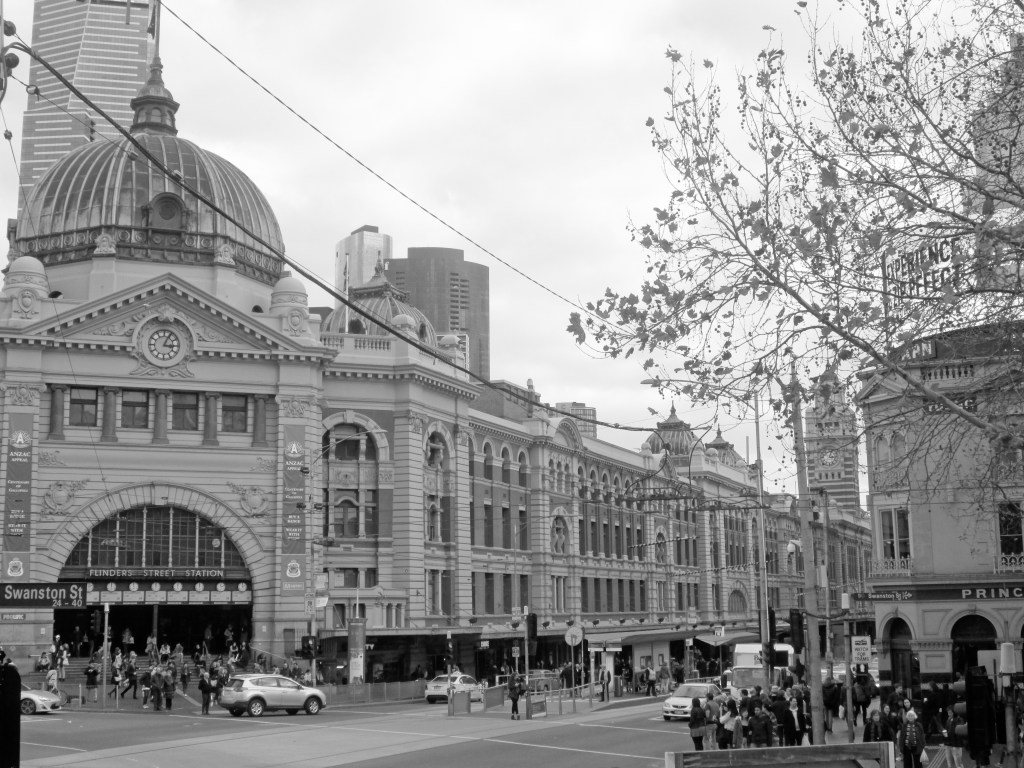
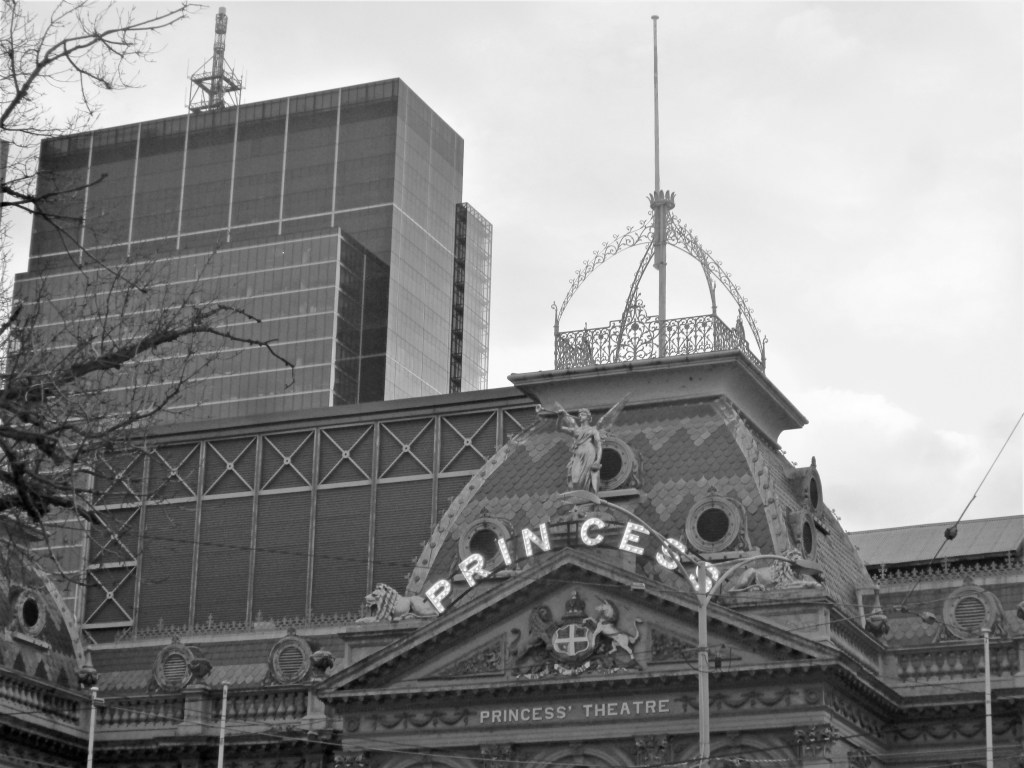
This then became a mass movement which was responsible more than anything else for the survival of so much Victorian and Edwardian architecture in Melbourne. The list of buildings saved by Green Bans in Melbourne is long, with the Princess Theatre and Flinders Street station among them; there are even Green Ban guided tours.
The BLF were crushed in the end, dissolved in 1986 after Labour Prime Minister Bob Hawke, a seasoned anti-communist (and, as was recently revealed by US embassy cables, a CIA informant as a trade union leader), refused to recognise the union; its federal leader, Norm Gallagher, a Melbourne member of the Maoist CPA(ML), went down for corruption.

Jack Mundey’s words, quoted by Koffman, are more enduring:
“There must be, in all this city, a provision for working-class people, for people of low and middle income, to be able to reside in the area. It’s not much good winning a 35-hour week if we are going to choke to death in planless and polluted cities, where rents are too high, where ordinary people can’t live.”
If there’s a future for labour, it is surely here, in this principled refusal to build somebody else’s vision.

This is an edited and rewritten extract from Artificial Islands – Adventures in the Dominions, by Owen Hatherley, published by Repeater Books. Owen Hatherley is the author of several books, including Red Metropolis (Repeater, 2021), reviewed on Labour Hub here.
 Labour Hub