
By Keshia N. Abraham and John Woolf
In the summer of 1803, at a concert hall in Vienna, Ludwig van Beethoven performed Violin Sonata No 9. By his side was the young virtuoso George Bridgetower to whom the piece was dedicated. Beethoven played the piano; the so-called ‘African Prince’ played the violin; and Beethoven was so moved by the performance that, in the midst of the piece, he leapt from his seat and shouted, “Once more, my dear fellow!”
By the time the sonata was published, the dedication had changed. Bridgetower was dropped. The French violinist Rodolphe Kreutzer was chosen instead. The exact reasons why are hazy, but the result was erasure – and it marked a broader pattern.
In January 1826, a stary-eyed, sixteen-year-old medical student engaged the formerly enslaved John Edmonstone to teach him the art of preserving birds at Edinburgh University. Every day for two months, for a fee of one guinea an hour and totalling over forty hours, Edmonstone relayed the latest techniques of taxidermy.
The young medical student, who went by the name Charles Darwin, directly applied Edmonstone’s teachings during the voyage of HMS Beagle (1831–36), where he preserved a mockingbird collection from the Galapagos. This became the raw material that informed Darwin’s theory of evolution. It owed a special debt to Edmonstone – now largely forgotten.
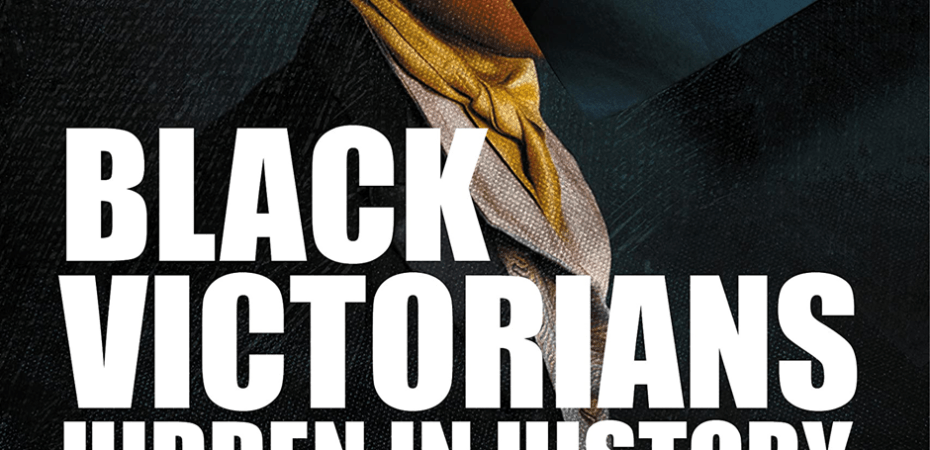
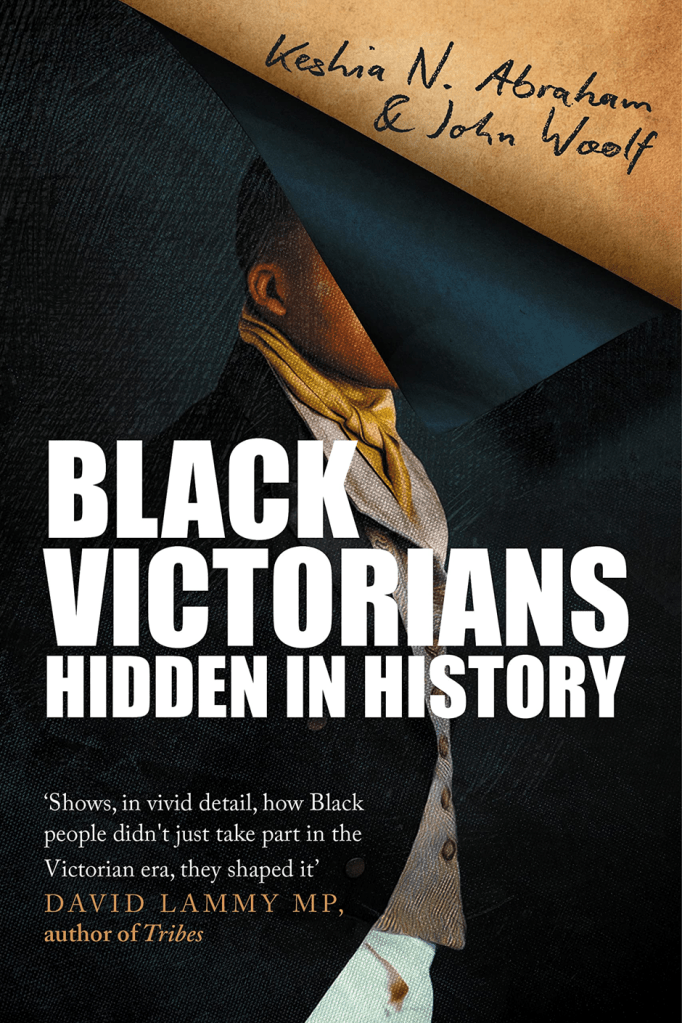
In our book, Black Victorians: Hidden in History, we make the point that there were numerous people of African descent living, working, marrying and dying in Victorian Britain. They were not just temporary residents. They were not just onlookers. They were active and embedded participants who moulded the Victorian landscape. We seek to resurrect their stories to make a broader point about the Victorian age – and history and memory more generally.
We are not trailblazers. A litany of largely Black historians – from the Victorian era to the present day – have discussed, documented and analysed the Black British presence in the nineteenth century, but the statement that there were Black Victorians helping to build Great Britain hasn’t properly landed in Victorian Studies or, indeed, in collective consciousness. There is still the idea that the Black British presence began with the Windrush Generation.
But since at least the first century, Britain’s population included people from North Africa. In the Tudor period (1485–1603) there were people of African descent in the courts and societies of Henry VII, Henry VIII and Elizabeth I. As the English colonised lands and enslaved fellow human beings, more people of African descent – whether enslaved, free or perceived to be enslaved – came to the British Isles.
By the eighteenth century, there were thousands of people of African descent living and working in Britain (as well as Asians and Native Americans). It has been estimated that, by the late eighteenth century, there were 10,000–20,000 Black people living in England. They married and had children who married and had children, assimilating into British society.
But the Victorian archives have made colour hard to see. Ethnicity was overlooked by Victorian recordkeepers, Black assimilation led to archival obfuscation, and we as a society have, until recently, turned a blind eye as well.
Yet local studies have revealed that Black people were relatively common in densely populated areas such as London, Liverpool, Cardiff, Edinburgh and Kent, and in our book, we explore individuals active across British society – everyone from William Cuffay, the Black Chartist leader, to Fanny Eaton, the Pre-Raphaelite muse.
We mined an array of archives to prove the point while the digitization of archives has also helped resurrect silenced voices. Samuel Coleridge-Taylor, whose ‘Hiawatha’s Wedding Feast’ made him world-famous in 1898, gave interviews to The Musical Times where he forcibly asserted: “It has been stated again and again that I was born in the West Indies. This is not the case. I was born in London.”
The National Archives have made accessible the state trail reports of William Cuffay, charged with intending to ‘levy war against the queen’, who defiantly addressed the Old Bailey in September 1848:
“I know my cause is good, and I have a self-approving conscience that will bear me up against anything, and that would bear me up even to the scaffold; therefore I think I can endure any punishment proudly. I feel no disgrace at being called a felon.”
Cuffay, born and raised in Kent, was sentenced to transportation to Australia for life.
Scratch the surface of the era and Black Victorians become visible and perceptively active in areas ranging from politics to art, sports to entertainment, theology to law and the menial and skilled trades.
And this was at a time when the notion of ‘race’ was assuming even greater importance. In scientific circles the advancing theory of polygenism stated that humanity was divided into separate groups with inherited, biological differences (and white was deemed superior to Black). An expanding empire brutally subjugated people across the globe as Britain’s slave empire was replaced by an imperial one. Britain still relied on the cotton picked by the enslaved. And the burgeoning entertainment industry was taking racism to the masses, notably in the form of ‘human zoos’ and Blackface minstrelsy (and it was partly due to this racist form of entertainment that the Black Shakespearian actor, Ira Aldridge, received such vitriol in the nineteenth century).
Nonetheless, despite the context, there were Black Victorians both triumphing and struggling across the social scale. We found Black Victorians struggling on the social margins, but also Black Victorians in the upper echelons: Nathaniel Wells (1779–1852), a Black country gentleman; Sarah Forbes Bonetta who was connected to royalty; Black Victorians among the burgeoning middle classes – like Dr George Rice, a renowned medical director. Africans and Asians came to Britain from the ever-growing empire as interracial couples cohabited, married and had children: migration was always part of Britain’s story.
In Black Victorians: Hidden in History we seek to tell this story by focusing on human lives. But as Olivette Otele makes clear in her book, African Europeans, “simply remembering is not the ultimate goal” – resistance is required; “a collective degree of consciousness” is required; an engagement with Black radicalism is required – “movements that have shifted perceptions around definitions of whiteness, white supremacy and notions of white fragility.” This was (and is) epitomised in Black Lives Matter; it was (and is) epitomised in the #MeToo movement and it was, is and will be incumbent on us all to continue remembering and resisting until the work is done.
Dr Keshia N. Abraham is founder and president of The Abraham Consulting Agency and is an African diaspora scholar and JEDI (Justice and Equity with Dignity and Intention) educator committed to facilitating personal and organisational development through intercultural growth. She has published several academic books and has contributed essays to numerous collections.
Dr John Woolf is a nineteenth-century specialist who has researched and produced historical documentaries for the BBC, co-authored a number of Audible Originals with Stephen Fry and was awarded the Tony Lothian Prize by the Biographers Club for his first book The Wonders. He is also an elected Councillor and the Executive Member for Community Safety at the London Borough of Islington.
 Labour Hub