
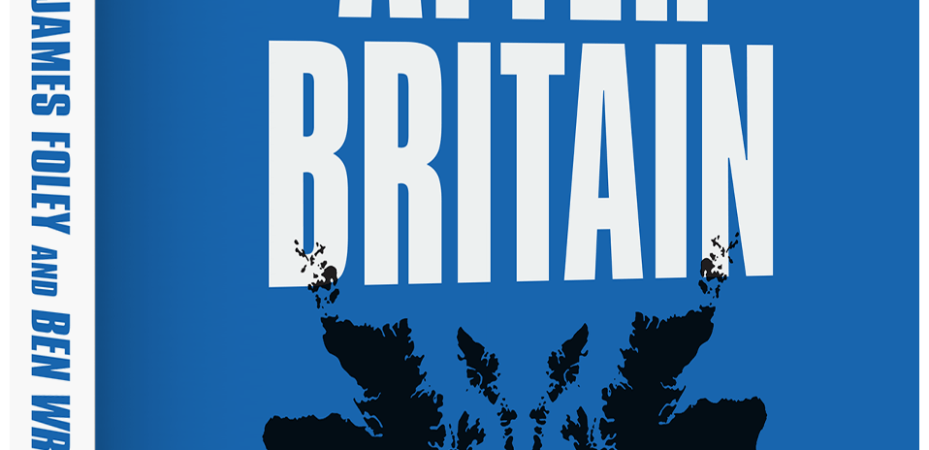
Mike Phipps reviews Scotland after Britain: The Two Souls of Scottish Independence, by James Foley and Ben Wray, with Neil Davidson, published by Verso
“Our interest in these questions… grew, at first, from a personal investment in reviving Scotland’s socialist traditions, and from an optimism, on solidly internationalist grounds, that the breakup of the British state could help unleash democratic energies within and far beyond our borders,” the authors state in their Introduction. “For all its flaws, the independence movement has been an inspiring example of how popular mobilisation in peripheral and working-class communities can redraw the map of state power.”
This is not an abstract idea: “Supposedly sovereign Westminster governments are now forced to accept humiliating limits to their power. This was well illustrated in 2021, when the people of Pollokshields in Glasgow mobbed and turned away a Home Office patrol attempting to impose the UK’s draconian immigration laws.”
Furthermore, on big issues like EU membership, the SNP-led Scottish government has, for the last decade and more, provided more consistent opposition to the Conservatives at Westminster than the official Opposition, with even the Guardian saying at the height of Brexit, “Sturgeon speaks for Britain”.
The authors are also impressed by the way the campaign for independence has galvanised layers of working class and young people in the last decade. In the run-up to the 2014 referendum, the Yes campaign became a vibrant social movement engaging tens of thousands of people across the country: “the biggest grass-roots political movement Scotland had seen.” This was in marked contrast to the Establishment ‘Better Together’ campaign and its ‘Project Fear’ strategy.
Labour paid the price for its anti-independence pact with the Tories in the 2015 general election when it lost 39 of its 40 constituencies in Scotland. The authors see this as a prefiguration of the loss of the ‘red wall’ in England in 2019, but recent by-election results suggest this may be more temporary and to suggest a permanent breach between the Labour Party and its traditional social base might be wishful thinking.
Yet Foley and co are surely right to see the demise of Scottish Labour as a more long term phenomenon, linked to New Labour’s embrace of neoliberalism and retreat from collectivism and its traditional commitment to greater socioeconomic equality. Scottish Labour’s ideological contortions were demonstrated by its tendency to criticise the SNP government from the right, denouncing its universalist measures as representing a ‘something-for-nothing culture’. On this reading, the strong Yes vote in 2014 was a rejection of an institutional consensus in which Scottish Labour was centrally implicated – however much they may portray themselves as the hapless victims of the “virus of nationalism”.
Breaking up the British state, challenging the neoliberal consensus, giving agency to the Scottish working class and escaping from Tory Britain are all sound goals. But would independence actually be good for Scotland? The authors freely admit that “the SNP has done little in power to advance the interests of its (often steadfastly loyal) working-class supporters. On many real measures of poverty-related alienation, Scotland remains near the bottom of European league tables; there has been little reckoning with inequality in education and health; and promises of ‘green jobs’ have come to nothing.” The alibi for these failings is to blame Westminster. Electorally it has worked repeatedly.
Yet, as the Covid pandemic demonstrated, when the opportunity arose for the SNP government to do things differently – better – than Westminster, they screwed up. “In the crucial early days of coronavirus, when the real damage was done, Sturgeon’s administration followed Johnson’s in lockstep. When Johnson embraced ‘herd immunity’, so did the Scottish government.”
Worse, “the Scottish government also made its own calamitous errors, quite separately from any bungling at Westminster. By far the biggest was the decision to discharge elderly patients from hospitals into care homes without testing them for coronavirus. Within three months, an astonishing one in twenty care-home residents had died from Covid-19.” One report described this as possibly the single greatest failing of devolved government since the Scottish Parliament was set up.
The fiasco surrounding the cancellation of Scottish exams was another unnecessary mirroring of the UK government’s bungling, with the Scottish Qualifications Agency’s algorithm uniformly downgrading teacher assessments, thus reinforcing existing systemic inequalities. Just as at Westminster, the algorithm had to be scrapped and teachers’ grades reinstated, following a public outcry.
Despite these similarities, the SNP continue to exploit successfully the ‘blame Westminster’ line for its own failings. And this continues to resonate with the public: a poll in the summer of 2020 showed that a fifth of No voters believed an independent Scotland would have tackled Covid better than the devolved government was able to.
Over a decade and a half of the SNP in office has done little to blunt their primary line of attack, partly because the long term decline of Scotland preceded that period, and even the era of devolution itself. Just as the flaws of the EU became the excuse for the inability or refusal of successful Tory governments at Westminster to regenerate the British economy, so the SNP in Scotland continue to make the case for independence out of the collapse of major sectors of the Scottish economy. Examining the limited economic proposals that the SNP have for a post-independence Scotland, the authors believe that such a vision is unsustainable.
The question is whether anything better is realistically on the table? The authors struggle with this one, partly because their hostility to the EU obliges them to ignore any potential positives for an independent Scotland within that institution.
Equally self-limiting is the book’s failure to consider in detail significant alternatives to independence, dismissed as a “patch-up” that “might temporarily stem the tide of support for independence.” Instead the authors present the choice as being between a neoliberal independence from above, courtesy of the SNP, and a movement-led socialist independence from below that breaks with the existing institutions.
But is the dismissal of other options justified? There are proposals for greater devolution, promoted by the Red Paper Collective and with support from the Scottish TUC. The Remaking the British State report, put together under Jeremy Corbyn and former Scottish Labour leader Richard Leonard outlined a path of ‘radical federalism’.
It would be useful to discuss these ideas, less in terms of their electoral appeal, and more from the standpoint of which constitutional arrangement would most benefit the Scottish working class. Many supporters of these proposals are genuinely concerned that full independence would lead to a parochial and economically impoverished statelet.
Of course, it’s quite possible to support independence while not buying into nationalism. But the leadership of the independence movement is a nationalist party and that’s unlikely to change. Even in the highly unlikely event that Labour were to convert to independence, it would not be able to ‘out-nat’ the nationalists.
The SNP’s brand of Scottish nationalism today looks very inclusive and forward-looking, but all nationalist movements contain a more conservative streak that becomes more prominent once nation-statehood has been achieved. This has to be added to the many concerns that the authors here rightly raise about the SNP’s clientelist and factional politics.
Ultimately, if the problems facing Scotland are not the result of national oppression, they are unlikely to be resolved by independence. This is not to sideline or ignore the constitutional question, as Labour has attempted repeatedly to do, to its electoral cost. But it does means that socialists have got to do a bit more work on how to map out a way forward separate from the chimera of independence and the dead end of Establishment unionism.

Mike Phipps’ new book Don’t Stop Thinking About Tomorrow: The Labour Party after Jeremy Corbyn (OR Books, 2022) can be ordered here.
 Labour Hub