
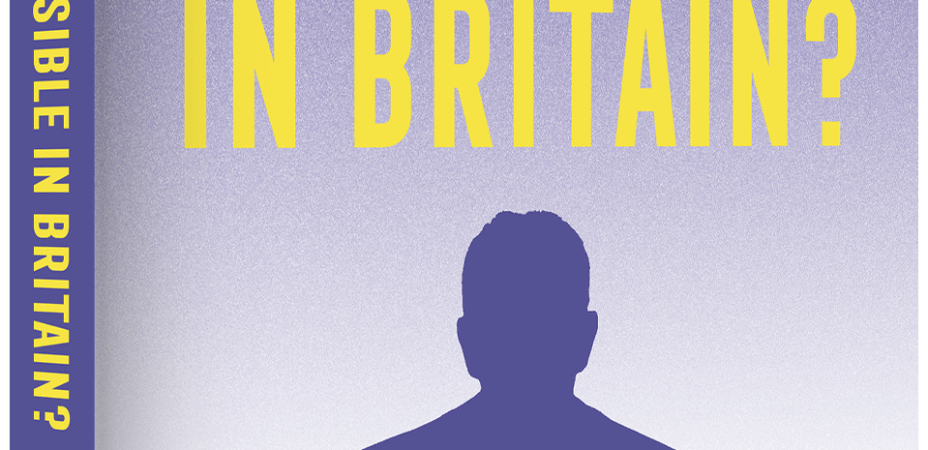
Mike Phipps reviews Is Socialism Possible in Britain? By Andrew Murray, published by Verso
The Financial Times may have decided that Jeremy Corbyn’s leadership was a “shameful footnote in Labour history” but within months of its landslide defeat in 2019, the Johnson government was already adopting “numerous proto-Corbynite economic ideas”, if the Daily Telegraph was to be believed. Former Corbyn advisor Andrew Murray points out in this new book that Corbynism is more likely to be seen as a template for the future than a footnote.
He aims to look at what went wrong and why Corbynism failed – not the first take on this. He rules out personality at the outset – “not in any way decisive in the defeat of Corbynism” – although his Appendix, written in June 2017 hails “the pivotal role of Jeremy Corbyn” as one of the key factors in Labour’s strong showing in that year’s general election.
Murray’s book is a combination of a short history of the Labour Party in office and a memoir of his own role in the Corbyn project. Neither, to be fair, contains much new material. So why the book? Well, like other insiders who have written about this period, Murray finds it hard to resist settling scores with colleagues, swiping at the then Shadow Chancellor John McDonnell, for example, for his “gratuitous” opposition to exchange controls as a means of tackling capital flight: “Pre-emptively discarding the most potent weapon against such sabotage sent a signal that even a Corbyn government would not cross red lines drawn by global markets.”
Murray catalogues the obstacles in the way of Corbyn’s success – the military establishment, the media and above all the Parliamentary Labour Party, most of whose members worked continuously to undermine the elected Party leader. He considers how this might be remedied: unimpressed with the idea of mandatory reselection of MPs by local CLPs, he prefers to see the PLP’s work brought under the more centralised control of the Party’s National Executive Committee. But he freely admits the NEC itself was not fully supportive of Corbyn before 2018 and could not be relied on even to control freelancing Party senior officials, let alone parliamentary heavyweights.
On other issues, such as the antisemitism crisis, Murray is refreshingly non-doctrinaire. He recognises that “prominent Corbyn supporters from Ken Livingstone through to Chris Williamson made self-publicising interventions which were unhelpful and sometimes indefensible.” He admits that the Leader of the Opposition’s Office’s inability to get on top of the issue made Corbyn look weak and that advice was canvassed on how to be seen to be doing more to tackle the problem –yet was not heeded.
He also believes it was inexpedient to wage a battle over the issue of the International Holocaust Remembrance Alliance definition and examples of antisemitism, flawed though these were: “We blundered in trying to rewrite much of the IHRA examples.”
This seems right – but how much of it is being wise after the event? It’s unclear how much Murray fought on these issues at the time, as he is quite self-deprecating about his own role at the heart of events. From 2015 to 2017, he was “no more than one of many informal advisors”; from 2017, “part-time advisor in the Leader of the Opposition’s office (LOTO), seconded for part of the week”; “my responsibilities fluctuated”; “I was largely detached from the daily rough- and-tumble.” All of this reinforces an impression that Murray may have been an observer rather than a participator in some of the key decision-making about strategy, which he now calls into question.
As an ardent Brexiteer, Murray predictably sees the Corbyn leadership’s shift in its position on the EU as decisive in its failure. “The story of the period between the relative electoral success of 2017 and the absolute failure of 2019 is an account of Labour’s migration from being an emergent agent of radical change to becoming perceived as part of a stonewalling Establishment.”
Unfortunately, Murray’s unremitting hostility to the EU blinds him to the emergence of that wing of the Establishment which ultimately triumphed, determined to get the hardest Brexit possible. He is also wildly off when he suggests that by the summer of 2017, “the Labour Party was at Corbyn’s feet” and the leadership could have fully committed to Brexit without further public consultation – in the face of opposition not only from much of the Party’s grassroots but most Corbyn supporters too.
Murray argued at the time that Labour should propose a common, ‘national’ position to the government and take responsibility jointly for a soft Brexit. There were two problems with this approach. First was the danger of collaborating with and appearing to rescue a failing government. Secondly, Murray himself admits that after losing her majority in the 2017 election, May’s authority within her own party was “shredded”, so the likelihood of her being able to deliver such a bipartisan deal was remote.
The whole Tory strategy towards Jeremy Corbyn’s leadership from the beginning was one of delegitimisation: to work with him at that late stage would be impossible for Conservative MPs to stomach. As it later proved when belated discussions did take place between the government and the Labour front bench over Brexit, this was the spark that ignited a full-scale Tory rebellion against May.
Murray’s position was not adopted. In fairness, he is not as nasty about his opponents as others who have written about these events, although like them he does heap much of the blame, quite wrongly, on John McDonnell. Instead he highlights a broader problem: “The Corbyn leadership never developed a method for elaborating and resolving strategic political disagreements.” As a result, Labour’s position was a defensive compromise and failed to offer a clear vision in either direction.
Stasis set in, Murray argues. Proposals for a broader Shadow Cabinet to puncture some of the hostility to Corbyn from within the parliamentary Labour Party were not taken up. Nor were proposals to get on top of continuing festering allegations of antisemitism. Murray, not the first to do so, accuses LOTO of a bunker mentality, riven by “squabbling”.
But he of course was one of the squabblers, part of the “mythic might” of the ‘four Ms’ – media chief Seumas Milne, Chief of Staff Karie Murphy, Unite General Secretary Len McCluskey and Murray himself. These internal divisions weakened Labour’s 2019 electoral campaign, but as I have argued elsewhere, there were far more significant reasons for Labour’s defeat.
And since then? Murray sees the election to Labour’s leadership of Sir Keir Starmer, a “North London ‘Remainiac’ lawyer” as “an act of self-harm by the party membership.” This was even before Starmer abandoned his ten pledges of continuity with Corbynism. Murray is also pretty categorical about the supposed feebleness of the Socialist Campaign Group of MPs and weaknesses of Momentum, yet it’s not clear from anything here how the new leadership’s attacks on Jeremy Corbyn, the grassroots members and the Party’s policies might be effectively resisted.
But there are reasons to be hopeful: “The ground that seeded Corbyn’s ascent remains fertile.” Murray places his faith in the labour movement, workplaces and communities. This means refocusing on “direct political interventions outside Labour’s internal agonies.”
I’m not so sure. Such a one-track orientation overlooks the fact that while Starmer’s leadership has comprised a catalogue of missed opportunities and a vicious witch hunt against the left, in many respects that of Tony Blair was much worse, dangerously so, in its fulsome embrace of neoliberalism and illegal war. Yet it was out of the wreckage of New Labour that Labour members eventually elected Jeremy Corbyn as leader in 2015.
Furthermore, the left in the Party today is far stronger – in terms of ideas, media, organisation and elected representatives – than it was a decade ago. Whether this allows us to give a positive answer to the question raised by the title of Andrew Murray’s book is more debatable.

Mike Phipps’ new book Don’t Stop Thinking About Tomorrow: The Labour Party after Jeremy Corbyn (OR Books, 2022) can be ordered here.
Andrew Murray responds:
I am grateful to Mike Phipps for his balanced review of my book Is Socialism Possible in Britain? I would like to respond to just one point – Phipps asserts that I am unduly critical of John McDonnell, to the point of wanting to settle scores with the former Shadow Chancellor. That is not the case – I have a great regard for John and we worked well together. I make it clear in the book that I regard him as having been an outstanding Shadow Chancellor and having risen to the unexpected challenges of left leadership in Labour far better than most. I disagreed with his views on how to handle the Brexit question, views he shared with many others. I do not think I was wrong. I also believe that no left government can pre-emptively discard the weapon of capital controls – if Phipps disagrees he does not explain why. These are real political debates and have nothing to do with “score-settling”, still less with any animosity towards a comrade I greatly admire.
Andrew Murray
 Labour Hub