
By Graham O’Neill
Fifty years ago, Jimmy Reid, one of the most ethical and brilliant trade unionists of the last century, delivered an insightful, deeply empathetic and inclusive speech. It was his first as the Rector of Glasgow University. His subject: Alienation. Or, in Jimmy’s own words: “The feeling of despair and hopelessness that pervades people who feel with justification that they have no real say in shaping or determining their own destinies.”
Jimmy’s speech effused care. Its genius lay in a moral truth: that we all know of this thing – alienation – even if we prefer not to admit it. The speech had a profound and hence far-reaching ‘cut-through’. That is why it was published by the New York Times. It is why so many still reach back to it.
Here was a politics of empathy and inclusion. Not of envy or exclusion. He spoke to our innate dignity. Poor or rich: we matter. We all have lives of possibilities. The problem is only a few realise these. For the rest, unprotected from alienation seeping in, fulfilment or joy are sporadic, a respite in lives of insecurity. Or, in Jimmy’s own words: “I am convinced that the great mass of our people go through life without even a glimmer of what they could have contributed to their fellow human beings. This is a personal tragedy [and] a social crime.”
So, we return from Jimmy’s speech in Glasgow 50 years ago, to this week of a Tory governing elite – a Cabinet stuffed with millionaires – set to inflict again its political economy of envy and exclusion. In soothsaying words, as in 2008 after the financial crash, this few will tell the many that we “are all in it together”. Such wilful ignorance to the suffering of millions in Austerity 1.0. Or those who struggled to survive Covid-19. And, who are now assailed by a worsening cost of living social emergency. The visceral truth is a decade of plummeting living standards, rising child poverty and widening wealth inequities.
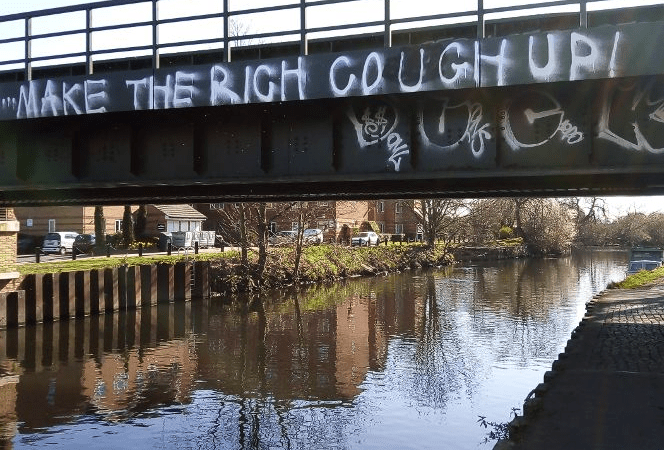
We cannot allow Austerity 2.0. There is a super-rich elite, increasing its land power and absurdity, but most troublingly, possessively holding grossly disproportionate rising shares of wealth. These accumulate in assets, far from the productive real economy. The Office for National Statistics reported by 2020 almost half (43%) of wealth in Britain was concentrated in the top 10% of households. The bottom 50% had only 9% of that wealth. This is the real politics of envy. It is why we need to talk about wealth. We need wealth fairness in politics.
That should entail Labour demands that the UK government increase taxes on the wealthiest, such as levies on inheritance, capital gains, dividends and profits including windfalls. But we also need an explicit tax on net wealth, to be applied to the richest in our society. They benefit from the common infrastructure we all pay for, but do not reciprocate proportionately to their wealth. That is ethically unjustifiable, alienating to the many, and it is unproductive too.
As a minimum and as the centrepiece of an unapologetic wealth fairness politics, the Labour Party should advocate a one-off wealth tax – a “Cost of living solidarity wealth levy”. Those with the broadest shoulders can well afford it. Some of the wealthiest people in the country are to their credit, saying that this is needed. As a one-off, it is less vulnerable to avoidance or evasion. Revenues can be maximised. Most of all, it is the fair alternative to Austerity 2.0.
If this wealth tax gets no traction with Labour at Westminster, then Scottish Labour should pressure the Scottish government to introduce a wealth tax, which they can feasibly do via the Scotland Act by seeking an Order in Council at Westminster. Such a wealth levy could transform the ability of the Scottish Parliament to invest in the Scottish people, its public sector workforce and public services.
There is nothing utopian about this. The Wealth Tax Commission has laid the groundwork. Tax Justice UK have set out a wealth taxation agenda. It is all feasible. This is about real fairness, political will and keeping our public services for the people. The Autumn Statement 2022 is a fork in the road: do we allow Austerity 2.0 or push for a politics of wealth fairness?
Based on the Wealth Tax Commission final report in 2020, this levy generates huge resources, for example a one-off wealth tax set at an annual rate of 1% over five years would, at net wealth threshold (a) of £1 million, generate £147 billion from three million taxpayers; (b) of £2 million, generate £81 billion from 626,000 taxpayers and (c) of £5 million, generate £53 billion from 83,000 taxpayers. Tax Justice UK report £37 billion per annum may be raised via taxes on wealth. Critically, this transfer is also productive, moving from moribund assets to the real economy.
A politics of wealth fairness with this “Cost of living solidarity wealth levy” at its core, can and would protect people from the worst impacts of survival decisions of heating or eating or being abandoned and left with rent arrears, mortgage default, crippling debt, homelessness or worst of all, dying in despair. Inflation already rips through millions of lives. As always it hits the poorest, hardest. Austerity 2.0 would complete a brutal job of the alienation of the many.
Politics is not only about choices. It is part that, of course. But most of all, as Jimmy Reid reminded us 50 years ago, it is more than anything else about people. Are we comfortable with millions suffering, having endured a triple whammy in the last decade of Austerity 1.0., spiralling living standards and then Covid-19? Only to be assailed again, this time by Austerity 2.0? There were approximately 335,000 additional deaths in Britain in 2012-2019, largely stemming from Austerity 1.0, and disproportionately affecting women in poverty.
The cost of living social emergency and deep wealth inequities are symptoms of a failed political economy of envy, exclusion and selfishness. Austerity is a choice. We cannot allow the few to choose ‘Austerity 2.0’ for the many. The “Cost of living solidarity wealth levy”, ideally as part of a politics of wealth fairness, is the choice we must demand of the UK government, and Labour and each other. That may stop any further dreadful alienation.
Graham O’Neill, Linlithgow CLP, has been a Labour Party member and campaigner for human rights for over 20 years. He works especially with migrants and refugees and survivors of trafficked exploitation. His present work is in the refugee rights sector, especially in the asylum system. Previously, Graham drafted the Private Members Bill, the Human Trafficking (Scotland) Bill, taken by Jenny Marra MSP, and that led directly to the Human Trafficking and Exploitation (Scotland) Act 2015.
Image: c/o Mike Phipps
 Labour Hub