
Mike Phipps concludes his overview of a chaotic year for the Tories and one in which Labour’s leadership consolidated its authoritarian control over the Party grassroots.
July continued
On July 19th, the Forde Report into allegations of bullying, racism and sexism in the Labour Party is finally published after a two-year delay. The wealth of evidence of discriminatory behaviours based on religion, race, gender and sexual orientation, the Report says, was “shocking and disappointing” and there was overt and underlying racism and sexism in some of the WhatsApp messages between the Party’s most senior staff.
Hilary Schan, Co-chair of Momentum, characterises the Report as “a damning indictment of the Labour right’s attempts to destroy from within the Corbyn leadership.” Journalist Peter Oborne agrees, saying Labour’s former leader “has been the victim of a grotesque miscarriage of justice.”
Kate Osamor MP says Labour risks creating a “hostile environment” for people from Black and other minority ethnic backgrounds if it fails to address issues raised in the Report. But after a modicum of media mis-reporting, the Report and its detailed recommendations to address the problems it highlighted sink without trace.
The month ends with Keir Starmer sacking his shadow transport minister Sam Tarry for going on rail picket lines and giving media interviews which the leader says breach collective responsibility. Tarry responds: “It’s a fundamental mistake to ban Labour MPs from being on picket lines.”
August
Enough is Enough, the campaign to fight back against rising prices and wage stagnation and to pressure the government to take action on the cost-of-living crisis, is launched. Its five demands: A real pay rise; Slash energy bills; End fuel poverty; Decent homes for all; and Tax the rich. Over 150,000 people sign up on its first day. Later this month, postal workers begin a wave of industrial action in the “biggest strike of summer so far”.
September
In internal elections, the Grassroots Left slate get four out of five of its candidates elected to the Party’s National Executive Committee, included Naomi Wimborne-Idrissi, whom Labour officials three weeks later suspend and subsequently expel – on her seventieth birthday! The left sweep the board in elections to the leadership of Young Labour and Momentum win a majority of positions on the national Labour students committee in what is seen as a strong result, given the fall in grassroots membership.
After a fractious and divisive Tory leadership campaign, Liz Truss becomes Tory PM, despite not having majority support among her MPs.
Three days later the Queen dies. All mainstream media run blanket coverage until her funeral eleven days later, in what many see is as a controlled exercise in coercive manipulation. Labour MPs are told by their Party leadership not to post anything on social media aside from tributes and what they have been asked to share by the Parliamentary Labour Party, nor to appear on any media other than to pay tributes.
More signs of the Labour leadership’s control freakery emerge around the agenda of September’s Party Conference. It is accused of “bending party rules and breaking leadership pledges” after the Party’s Conference Arrangements Committee rules out of order a motion in support of public ownership. Chair of Labour for a Green New Deal, Chris Saltmarsh, describes it as a “disgraceful, anti-democratic decision.”
September 23rd: Truss’s new Chancellor Kwasi Kwarteng’s emergency budget scraps the cap on bankers’ bonuses, abolishes the 45% additional rate of income tax, abandons the planned rise in corporation tax, cuts stamp duty and promises legislation to tackle “militant trade unions.” His revival of failed ‘trickle-down economics’ adds £70 bn to government debt and shocks the markets: the pound plunges, lenders withdraw mortgage products and the Bank of England is forced to step in to prevent chaotic drops in gilts prices from hitting pension funds and threatening financial stability.
Even the International Monetary Fund is critical of the government’s tax cuts, warning they could speed up the pace of price rises and will “likely increase inequality”. Kwarteng is forced to U-turn on the top rate of tax and is soon sacked.
By the end of the month, Labour has a poll lead over the Conservatives of 33 points. At the end of Labour’s Annual Conference, reports Labour List, “The leadership is happy with how things have gone… Critics can claim motions on proportional representation, inflation-proof pay rises and a £15 minimum wage as victories, but there have been no explosive rows.”
The Labour Files, a four-part series by al-Jazeera’s Investigations Unit, is released to coincide with the Conference. Its first episode examines the ways in which unelected staff working for the Party’s General Secretary sought to expel and silence Corbyn-supporting activists, but there is little coverage in the mainstream media to dent the ‘Hope turns to belief’ narrative being pushed by the leadership.
Meanwhile in Iran, a revolution begins, following the arrest and death of a young woman at the hands of the regime’s notorious morality police. Demonstrations and protests engulf the country.
October
Prime Minster Truss sacks her Chancellor on October 14th, hours after saying he is “doing an excellent job.” New Chancellor Jeremy Hunt shreds Kwarteng’s budget and promises ”more difficult decisions to come” – in other words, more austerity. Truss, now a laughing stock, goes on TV to apologise for her “mistakes”.
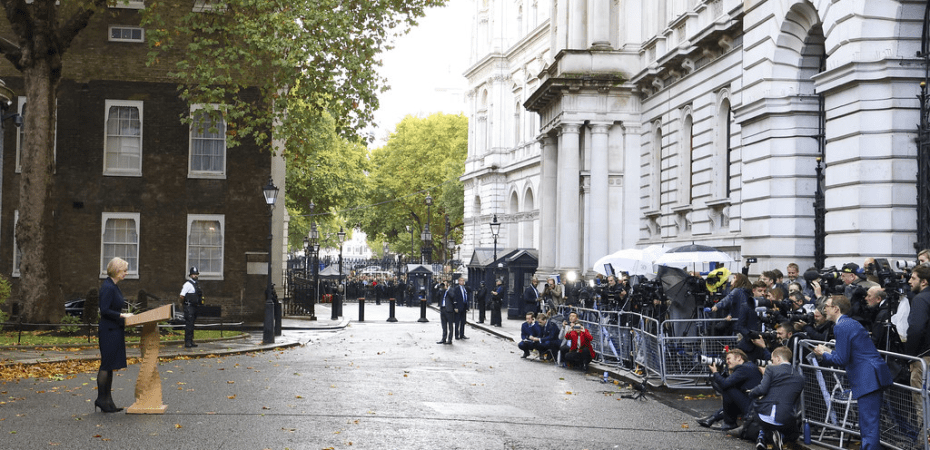
A majority of Conservative members feel Truss should step down. On October 19th Home Secretary Suella Braverman resigns over a breach of rule and attacks Truss’s leadership. Tory MPs’ discipline effectively falls apart: the government says a vote on fracking will be treated as an issue of confidence, then changes its mind, whereupon the Chief Whip announces in the lobby while the vote is taking place that she is resigning. In the chaos, Truss forgets to vote and MPs claim colleagues are manhandled and bullied into voting. The following day Truss resigns.
There is more heavy-handed interference by Labour officials in the Party’s candidate selection professes. Maurice McLeod, a councillor in south London, racial justice campaigner and former editor of The Voice, Britain’s leading Black newspaper, is blocked from being a candidate for Camberwell & Peckham. The move is criticised by Labour MPs, and Labour Black Socialists respond: “Maurice’s blocking seems to suggest that having solid support in the community that you wish to represent in Parliament might be a reason not to be selected.”
Two days later, Emma Dent Coad, who served as the MP for Kensington between 2017 and 2019 and on the local council since 2006, is excluded from the longlist for the parliamentary seat by the Party machine. Even sitting members of the Socialist Campaign Group of MPs are not safe: Sam Tarry is deselected by the Party in his Ilford South seat.
Lauren Townsend, a councillor in Milton Keynes, is also prevented from standing for a parliamentary seat, despite having endorsements from several trade unions. She says the reasons behind her being blocked include an article she wrote advocating for a green new deal and having liked a tweet by Nicola Sturgeon saying she had tested negative for Covid.
Despite a dramatic return to the Westminster by the holidaying Boris Johnson, Rishi Sunak is the only candidate to have enough nominations from fellow MPs to qualify in the Tory leadership contest and becomes PM on October 24th.
But his reappointment of Suella Braverman as Home Secretary raises immediate questions about his judgment as her breaking of the ministerial code – by emailing government documents to a backbench MP – turns out to be not an isolated incident, a fact she admits only when confronted with the evidence.
November
Gavin Williamson is forced to resign from the Cabinet over bullying allegations. Sunak says he regrets appointing him but didn’t know.
Civil servants vote overwhelmingly to strike over pay and conditions, joining other public sector workers in rail, the post and the NHS. The FBU announce a strike ballot after its demands for increased pay are rejected.
Labour expulsions plumb new depths with long-standing Unite activist Martin Meyer excluded, alongside the President of Unison, Andrea Egan. Meanwhile the NEC decides to revive the Party’s undemocratic and discredited BAME structures, a move seen by Momentum as a “deeply damaging attack on the rights of BAME members in Starmer’s Labour at a time when the party is facing serious questions over anti-black racism and Islamophobia.”
The COP 27 summit concludes, just as the Qatar World Cup – expected to have ten times the carbon impact of the previous tournament – opens. Although the establishment of a Loss and Damage Fund is welcomed, the failure to agree a target for phasing out fossil fuels and emissions, the lack of progress on a Gender Action Plan and the broken promises of wealthier countries over climate finance mean the event is far from being a success.
Chancellor Jeremy Hunt unveils his Autumn Statement, which offers little to people facing the worst cost of living crisis in recent memory. TUC General Secretary Frances O’Grady says: “Millions of key workers across the public sector… face years of pay misery as departmental budgets are brutally squeezed… The super-rich have once again been let off the hook.” Backbench MP Ian Byrne, who has campaigned tirelessly on the Right to Food, declares the budget “a disaster for my constituents and indeed the nation.”
John McDonnell MP says: “The number of workers earning below the real living wage is expected to rise to 5.1 million next year. With inflation at 11.1%… we are experiencing the largest drop in living wages on record… There is a growing atmosphere of frustration and, for those in in-work poverty, a growing atmosphere of absolute desperation, which is why increasing numbers of people feel they have little option but to demand a pay increase that at least matches the rate of inflation. If that means a pay offer is rejected, many of them feel they have no other option but to support industrial action.”
December
Ministers consider measures that will prevent public sector workers from taking strike action, at the same time as RMT General Secretary Mick Lynch claims that the government wants rail strike action to go ahead, with ministers having deliberately “torpedoed” negotiations. As nurses strike for the first time in their history, more than half of voters blame the government for the conflict. Union leaders denounce Health Secretary Steve Barclay’s claim that ambulance unions have taken a “conscious choice” to inflict harm on patients and declare he has “lost all credibility”.
Meanwhile Wes Streeting, Labour’ Shadow health Secretary, is accused of “declaring war” on NHS staff after criticising the British Medical Association for being hostile to the idea of improving patient care, adding that that Labour will not have a “something-for-nothing culture in the NHS”.
In his alternative Christmas message, Owen Jones dubs 2022 “the year that people began to fight back.” Unite the Union reckon that around 200 industrial disputes were settled over the course of 2022 in favour of the workers involved. Will that figure be beaten in 2023? Forecasts suggest even stormier weather ahead.
Mike Phipps’ new book Don’t Stop Thinking About Tomorrow: The Labour Party after Jeremy Corbyn (OR Books, 2022) can be ordered here.
Image: Liz Truss resigns. Source: https://www.flickr.com/photos/number10gov/52441893548/. Licence:Attribution-NonCommercial-NoDerivs 2.0 Generic (CC BY-NC-ND 2.0)
 Labour Hub