
January 8th marks the fiftieth anniversary of one of the most notorious atrocities carried out by the Brazilian dictatorship, reports Mike Phipps
Fifty years ago today, the Brazilian government kidnapped, from different locations, six opponents of the military regime and then murdered them. The bodies were found in a barn in the town of São Bento near the city of Abreu e Lima in the Pernambuco state.
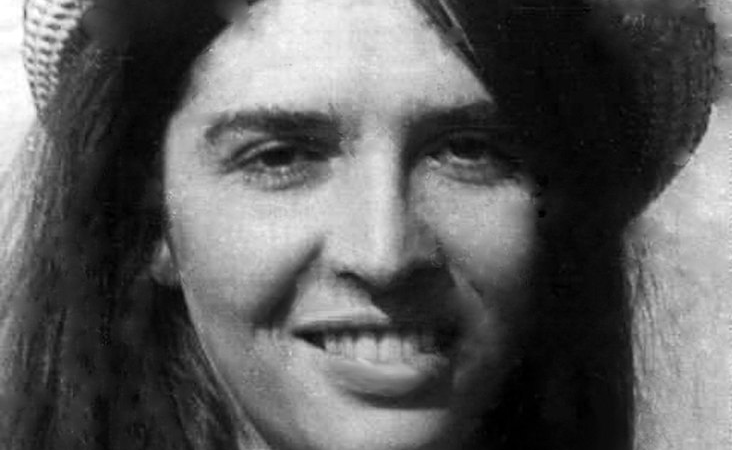
One of them was Soledad Barrett Viedma. Soledad and her comrade Pauline Reichstul were selling clothes in the Chica Boa boutique, when five men stormed in and took them away at gunpoint. It was the last time that the owner of the store saw them alive.
The kidnappers, who were dressed in civilian clothes, were agents of the feared DOPS secret police. Years later the store owner testified that, “Soledad and Pauline were in the boutique when five men claiming to be policemen invaded the premises, savagely beat Pauline while Soledad, who was pregnant, only insistently wondered Why?”
Soledad Barrett had an unusual upbringing. Born in 1945 in Paraguay, her father was the only son of the great Spanish writer and anarchist leader Rafael Barrett, who arrived in the country in 1904 and sparked the social struggles of an entire era.
She spent much of her childhood in exile in other Latin American countries. Returning to Paraguay in her adolescence, Soledad became active in a group linked to the Asunción Youth-Student Front, but state repression forced her family to emigrate again.
When she was 17 years old, Soledad was kidnapped by members of a Uruguayan neo-Nazi group. They used a knife to carve two swastikas on her thighs after she refused to chant slogans praising Adolf Hitler, and left her lying in a ditch.
Already active in revolutionary groups, she decided to travel to Cuba, where she received guerrilla training. There she met the Brazilian José María Ferreira de Araujo, whom she married and with whom she had a daughter. He returned to Brazil to consolidate the struggle against the dictatorship and in September 1970 was captured and assassinated by the military.
Learning of her husband’s death, Soledad decided to join the Brazilian guerrillas in their fight to overthrow the dictatorship. She was sent to Recife, where she met Anselmo, a former militant friend of her husband. ‘Corporal Anselmo’ was a soldier who led the ‘sailors’ revolt’ in 1964, against the government of João Goulart, and had become a hero to the guerrillas. But the dictatorship had captured him and he had become a double agent, with a mission of betraying his comrades. To this end, he targeted Soledad, who entered a relationship with him and became pregnant.
Just a few days after her 28th birthday, the revolutionary‘s life came to a violent end, betrayed by her own lover and father of the baby she was carrying in her womb. He was one of the five agents who arrested her at the boutique, the owner testified.
Anselmo died only last year, free and unpunished at the age of 80.
Journalist Francisco Corral wrote of Soledad: “If her physical beauty and her external attractiveness were remarkable, the integrity of her personality and character was no less: kind, supportive, sensitive to all the pain of others and indifferent to her own, rebellious against injustice, determined, brave. Soledad had a strong moral conscience that prevented her from remaining indifferent to despotism.”
Along with Soledad, five others were kidnapped: Pauline Reichstul, the daughter of Polish Jews who had emigrated to Brazil and a Psychology graduate; Eudaldo Gómez da Silva, who had been a leading student activist in the late 1960s; Jarbas Pereira Márquez, a former student and like the others a member of the Popular Revolutionary Vanguard group; José Manoel da Silva and Evaldo Luiz Ferreira, both former activists in the sailors movement. Their bodies were found on the farm in São Bento, near Recife. Soledad’s mutilated corpse was found in a barrel.
José Manoel da Silva was arrested the night before, January 7th, at a gas station. Jarbas Pereira Marques was arrested at the bookstore where he worked. Two others, Eudaldo Gomes da Silva and Evaldo Luiz Ferreira, were picked up at their homes. All were brutally tortured before being killed.
According to the state’s official version of events, the six died during an armed confrontation with the police from which only Anselmo, conveniently, managed to escape. It was later found, partly through the work of journalist Elio Gaspari, that the militants had been kidnapped in different locations, tortured and killed.
It took over two decades for the truth to emerge. The incident is known as the Massacre da Chácara São Bento and has been described by Gaspari as “one of the dictatorship’s most savage massacres.”
The purpose of that bloodbath was clear. “It was a way to further demoralize the left at a time when the armed struggle was already fragile… The objective was to exterminate with something symbolic, shocking,” suggests Luiz Felipe Campos, a journalist who wrote a book investigating the massacre.
Some might argue that an activist in a guerrilla organisation that practised armed struggle against the state could not have expected a different fate to what befell Soledad Barret. It’s worth remembering, however, that the conditions of dictatorship against which she fought, were the same ones that led Dilma Roussef into guerrilla activity around the same time. She too was arrested and tortured for 22 days – but survived.
Forty years later Dilma was elected President of Brazil. Five years after that, the Brazilian legislature, dominated by the same elites that had supported the dictatorship, impeached her out of office on the spurious grounds of breaking budgetary laws.
In 2022, the judicial investigation into the accusations of accounting fraud that were the basis for the impeachment was officially closed, as the Brazilian Federal Public Ministry was unable to identify any crime or act of administrative irregularity. But by then, Bolsonaro, an open supporter of Brazil’s 21-year dictatorship, was safely in power.
It’s important that the memory of fighters like Soledad Barrett should not fade away. In the Jardim Adelfiore neighbourhood of São Paulo, at 315 Tarcon Street, there is a municipal school named after her, where students remember her as “a heroic Paraguayan fighter who gave her life for freedom.” In Santa Cruz, Rio de Janeiro, a street bears her name.
The Uruguayan poet Mario Benedetti wrote “Death of Soledad Barrett” in her memory. Uruguayan songwriter Daniel Viglietti composed the song ”Soledad”. But in Paraguay, she is largely unknown.
On December 11th, 2015, Soledad Barrett was granted a posthumous political amnesty for the persecution she suffered and an apology from the Brazilian state. It was one small, important step in the fight for justice for the victims of the dictatorship.
Mike Phipps’ new book Don’t Stop Thinking About Tomorrow: The Labour Party after Jeremy Corbyn (OR Books, 2022) can be ordered here.
Image: Soledad Barrett Viedma. Source: http://memoriasdaditadura.org.br/memorial-mortos-e-desaparecidos/. Author: Memórias da Ditadura, made available under the Creative Commons CC0 1.0 Universal Public Domain Dedication
 Labour Hub