
By David Osland
It’s just months since Liz Truss tanked the pound, knocked 40% off the value of Britain’s pension funds and jacked mortgage payments up by hundreds of pounds a month. Personally I haven’t missed her all that much.
In her shoes, I would retreat from the public eye and join a contemplative religious order, spending the rest of my life in poverty, prayer and fasting, and maybe reading a few reality-based undergraduate level economics textbooks.
But our doughty crusader for straight-no-chaser Tufton Street libertarianism is not to be deterred from re-entering the fray. Much like a middle-aged former boy band singer nobody misses that much either, she’s launched the inevitable comeback tour.
Hence the publication of a 4,000-word Je Ne Regrette Rien essay, billed as her first major intervention since leaving 10 Downing Street.
The Sunday Telegraph website is running the story under a dramatic headline that reads “Liz Truss: I was brought down by the leftwing economic establishment”.
Heading the charge of the said leftwing economic establishment, whose very existence comes as surprising news to me, is the Office of Budget Responsibility.
This is surely a body hitherto beyond suspicion of Trotskyist infiltration, but such is what can befall the nation while good men sleep.
This misses the point entirely. The OBR was established by George Osborne to provide justification for his austerity drive. Truss accuses it of wishing to impose economic orthodoxy; that’s what it’s there for.
The conspiracy had an international dimension, too. There were criticisms from the International Monetary Fund, an organisation famed for the imposition of draconian free market straightjackets on dozens of countries across the global south, which is accused of a politically-motivated attempt to destabilise her administration.
The entire polemic is based on the same kind of logic that governs the lament of the baddy inevitably unmasked at the end of every episode of Scooby-Doo. She’d have gotten away with it if it wasn’t for those pesky kids.
Graciously, Truss concedes she is not blameless for les événements of the 49 days she spent casually lobbing increasingly wide of the mark Molotov cocktails at the intransigent Corbynistas that now dominate the Bank of England.
In particular – and revealingly – she admits to not knowing how the pension industry works.
Topics don’t come any more arcane than that. I don’t know anything about it either. But unlike Liz Truss, I didn’t spend two years as Chief Secretary to the Treasury, a post which comes with the reasonable expectation that you learn all that boring stuff on the job.
Meanwhile, Truss pronounces herself “very pleased” that her policies “eased the burden on those buying their own homes”. Let’s just say that friends of mine who are on variable rate mortgages don’t seem to see things that way.
There are some lessons to be had from this otherwise sorry tale of lack of contrition, and oddly enough, Marxists are best placed to point them out.
Truss’s complaints are not entirely fatuous. The state is not neutral and does act as the ultimate guarantor of the interests of the ruling class, and not just in the sense of providing bodies of armed men.
Any government offering a radical programme, from either the right or the left, cannot expect the policies to be implemented smoothly.
Had Jeremy Corbyn and John McDonnell won in 2017, they would have faced not just lack of enthusiasm but active obstruction, to an extent that would have made Labour Party headquarters staff look like high school cheerleaders gaily prancing along the bleachers with their letter sweaters and giant pom-poms.
Finally, there is the wider point about democracy. Truss took office purely on the basis of a vote among the more active members of the Conservative Party. Her ideological hue got her the gig, and Britain is still playing the price for it.
Comparisons to the handover between Tony Blair and Gordon Brown and David Cameron and Theresa May don’t quite work, because both those examples marked a change of personnel more than a change of political direction.
Ultimately Truss blames her downfall on “lack of political support”, including from her own MPs. Well, yes. But that lack of political support stemmed from lack of a political mandate.
Nothing stopped her from calling a general election and seeking the backing of the voters for her bonkers blueprints. Nothing, I guess, apart from the inevitability of humiliating defeat.
David Osland is a member of Hackney North & Stoke Newington CLP and a long-time left wing journalist and author. Follow him on Twitter at @David__Osland
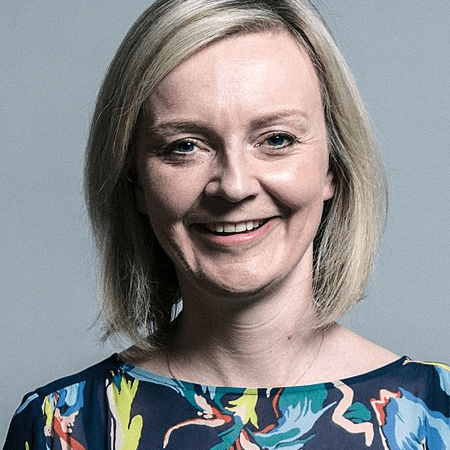
Image: Liz Truss. Source: https://api20170418155059.azure-api.net/photo/aB12tA6N.jpeg?crop=MCU_3:4&quality=80&download=true. Author: Chris McAndrew, licensed under the Creative CommonsAttribution 3.0 Unported license.
 Labour Hub
