
Sir Keir Starmer’s love-in with the National Farmers Union continues, reports Kevin Flack.
One of Keir Starmer’s early visits as Party leader was to NFU President Minette Batters’ farm just up the road from me in Downton, Wiltshire. This week he addressed NFU Conference again. His first job, he likes to tell them, was picking up stones on a farm.
I’m not an expert on farming – but I have studied the lobbying of the NFU for decades. The NFU is an odd beast – the natural supporter of the Tories has turned on them in recent years, particularly under Michael Gove’s leadership of the Department of the Environment, Food and Rural Affairs (Defra) which severely threatened their vast subsidies post-Brexit. No industry in this country is as subsidised out of our taxes as agriculture. Under the Tories, the exodus from the farming sector has continued.
Starmer’s speech included the ritual attack on the Government – which went down better than you may think – and began to address major issues facing farming today: environmental land management changes, the problems from avian flu to feed and fertilizer price increases, the need for an effective bovine TB vaccine. He said, “Where there are problems, we will work with the NFU.”
But who are the NFU? It is a little-known fact (they certainly won’t tell you) that the NFU only represents a minority of farmers – particularly the huge agri-businesses that do so much to turn our countryside into a monoculture. However, it is without doubt the most powerful ‘union’ in the country in terms of its influence on Government – and the Opposition. Just look at the millions of pounds that are spent carrying out the ineffective and unscientific badger cull.
Unlike many of her predecessors, Minette Batters ‘gets’ politics. The NFU’s lobbying of Parliament is extremely powerful. As a newly-elected MP one of the first visits you will be asked to undertake is to an NFU member’s farm. And the majority of constituencies do have at least one farm in them.
On the days the NFU lobbies Parliament, you will see the majority of MPs wearing a wheatsheaf badge in their lapels.
The NFU has a parliamentary office in the prestigious Smith Square, formerly home to both Labour and Tory Parties. It is well staffed, and indeed one of its recent lobbyists was Fay Jones, now a Conservative MP. During the NFU conference, its public affairs team tweeted four sections of Starmer’s speech and reported enthusiastically on a “very productive meeting with the Shadow Defra team.”
The election opinion polls have not passed them by. The NFU employs the expensive Portland PR agency, which used to employ none other than George Eustice, who until recently was Secretary of State for Defra. It has gone a long way since 1918, when it ran six candidates for Parliament under its own banner.
In 2002, it was estimated that the NFU represented less than a third of farmers, and has inflated its membership with non-farming ‘countryside members’ and those working in agri-businesses. According to a past edition of Farmers Weekly, the NFU lost members who felt it wasn’t representing them. Before he was an MP and then Defra Minister, editor of the Ecologist, Zac Goldsmith criticised the NFU’s reluctance to stand up for its members. What it does represent is big business in agriculture. It certainly doesn’t represent hill farmers or farm labourers.
In his speech this week, Starmer repeated the myth that there are four million jobs in farming. That’s an impressive figure. But according to the Government’s own records, just 301,000 people were working on agricultural holdings of all sorts as of 1st June, 2022. Lazy research or deliberate obfuscation? It is estimated that today just 1% of the British workforce work in agriculture.
What was interesting about Starmer’s speech is what was missing. Around a third of UK farmland is worked by tenant farmers – who make up a much higher percentage of farmers overall as they tend to farm smaller properties – yet there was just one mention of them in his speech. The biggest long-term threat to farming is climate change, with its associated extreme weather fluctuations – yet where were the commitments on how to challenge this?
As with so many Labour policies, sympathy was gained by identifying the problems but solutions were in very short supply. He rightly identified the need to remove barriers to trade – but did not say how this would be done. He talked about addressing the tight labour market with vague policies to supply more workers while weaning the economy off “immigration dependency.” Farmers are dependent on migrant labour all year round not just seasonally when crops need to be gathered. They have always exploited those willing to do this – as with south Londoners travelling to the Kent hop fields for annual ‘working holidays’, staying in wooden sheds. The problem in the UK now is the highest areas of unemployment are nowhere near farms, and there are no incentives to uproot yourself and move to where they are – so in agriculture at least, that “immigration dependency” must continue.
Coverage of the NFU Conference in the mainstream media included opinion polling showing those living in the countryside moving away from voting Tory in significant numbers. The problem is very few commentators looked in depth at this or they would have seen it was actually carried out twelve months ago. The NFU likes this because it helps them put pressure on the current Government – but there has been no recent evidence to back this up.
Starmer talked about rural crime, NHS and mental health service needs and did commit to increased staff for these areas, which is very much to be welcomed. Another concrete commitment was to use public procurement to ensure 50% of food bought by the public sector comes from UK farms. This was retweeted by the NFU’s aforementioned public affairs team.
Starmer ended by, rather bizarrely, promising “certainty and change” – the all-things-to-all-people vague sloganizing we are getting used to. They say speeches like this can be written by Artificial Intelligence bots, but I’m sure this wasn’t the case here. Honest.
As you may have guessed, I’m not a fan of the NFU – but those of us who care about the countryside, about pollution, about agricultural workers and about food safety ignore them at our peril. One of my main worries is that the Labour Leadership think that addressing the NFU once a year fulfils its commitment to rural affairs. It most certainly does not.
Kevin Flack is a member of the Labour Party in a rural constituency and a member of Unite, which represents agricultural labourers and those who work in food manufacturing.
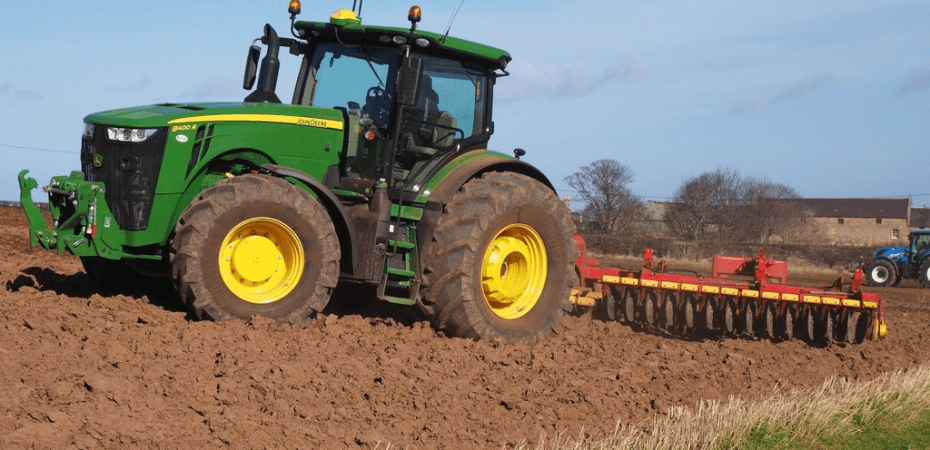
Image: https://www.geograph.org.uk/photo/6413955 © Copyright Jennifer Petrie and licensed for reuse under this Creative Commons Licence.
 Labour Hub