
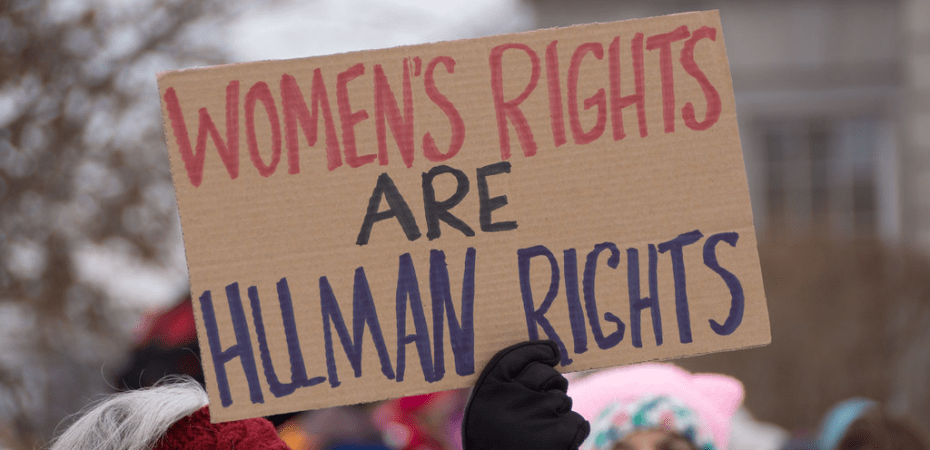
On International Women’s Day, Ruth Hayes explains why its need is as great as ever
The situation for women this International Women’s Day is grave – in many parts of the world, women face war, the impact of the climate emergency and direct oppression. Women’s rights to education, to healthcare and to reproductive rights are being rolled back and the UN calculates that gender equality will take 300 years to achieve.
Domestically, women still earn on average 14.9% less than men, with more than half a million more women than men earning less than the real Living Wage.
The Tory Government has overseen a rise in poverty, with women bearing the brunt of austerity measures.
And yet women continue to fight back, internationally and across Britain.
Many of the workers involved in the recent and current rounds of industrial action are women – with unprecedented strikes amongst workforces with particularly high levels of female representation such as nurses and teachers.
Privatisation and failure to invest in both our social and physical infrastructure over decades mean that public sector jobs which used to offer women job security, equal pay and decent pensions, are now often outsourced or hourly paid. The lack of council housing and the lack of regulation of the private sector rental market leave women with few routes to a long term home.
Economic insecurity leaves women and children at greater risk of exploitation and makes it harder to leave domestic abuse and violence, with a huge increase in reports of violence against women during lockdown.
As employers report shortages of workers in some parts of the economy, the failure to recognise the double shift worked by so many women and the lack of support is prompting debate about how to get workers back into the workplace.
A serious attempt to address the barriers to work would include:
- Free, universal childcare, delivered by a well-paid workforce as a public service
- Genuine support for disabled adults of working age, based on their own decisions about how to live their lives
- High quality care and help for older people, addressing not just basic needs but enabling people to play a full role in society
- A right to housing, centred around a new generation of council house building
- Good quality, cheap and safe public transport
- Recognition of the role of unpaid carers, with new rights at work and adequate financial support.
There is also growing evidence that lack of investment in the NHS is leading to an increased number of people who are not able to work, or not able to work full-time, as a result of waiting for treatment for health conditions. Women also appear to be much more likely to experience Long Covid and be unable to work full time as a result.
While of course workers are fighting to protect real-terms pay, many of the current industrial disputes are also about the ownership and quality of public services and conditions at work.
Changes in shift patterns can lead to significant additional costs as a result of new childcare demands, or problems in getting to and from work due to lack of public transport. Stress levels, unpaid overtime and continually having to cover for unfilled posts mean that work takes a greater toll on workers’ health and their time and this has particular impacts for women also juggling unpaid caring roles.
A government that was serious about tackling gender inequality has a number of options open to them and we need to support women taking action in our workplaces and in our communities. The Tories will not resolve these issues, and we need the Labour Party to outline clear commitments which will address the scale of the problem.
While the corporate world commercialises International Women’s Day, the labour movement needs to show real solidarity. It is vital that we all join in the fight to save the NHS and that we support women on the picket lines.
Women have taken a leading role in practical responses to the cost of living emergency – in Mutual Aid, food projects and community warm spaces. There is no shortage of women with lived experience of the issues and of what works at a local community level, and there are tremendous talents working to improve the situation across the globe.
This year, the need for International Women’s Day is as great as ever – let’s celebrate what women are already achieving and commit to ensuring that that progress is not rolled back for the next generation.
Ruth Hayes is a trade union and Labour Party activist. She sits on Unite the Union’s Executive and chairs Labour Women Leading and the Labour Party’s National Women’s Committee.
Image: Source: https://www.flickr.com/photos/marcn/32325782351. Author : Marc Nozell. Licence: Attribution 2.0 Generic (CC BY 2.0)
 Labour Hub