

By Lou Calvey
I get a few messages from lovely people asking for basic information to counter hostile anti-migrant narratives. So I’ve pulled this together to try and cover the typical points – hopefully it helps with those awkward dinner discussions or difficult family members.
1. We can’t help everyone. This is often said by otherwise liberal people. And it’s because this government and their media propaganda have done a really good job in planting seeds of ‘invasions’. They’ve frightened folk. The reality is that numbers are very modest.
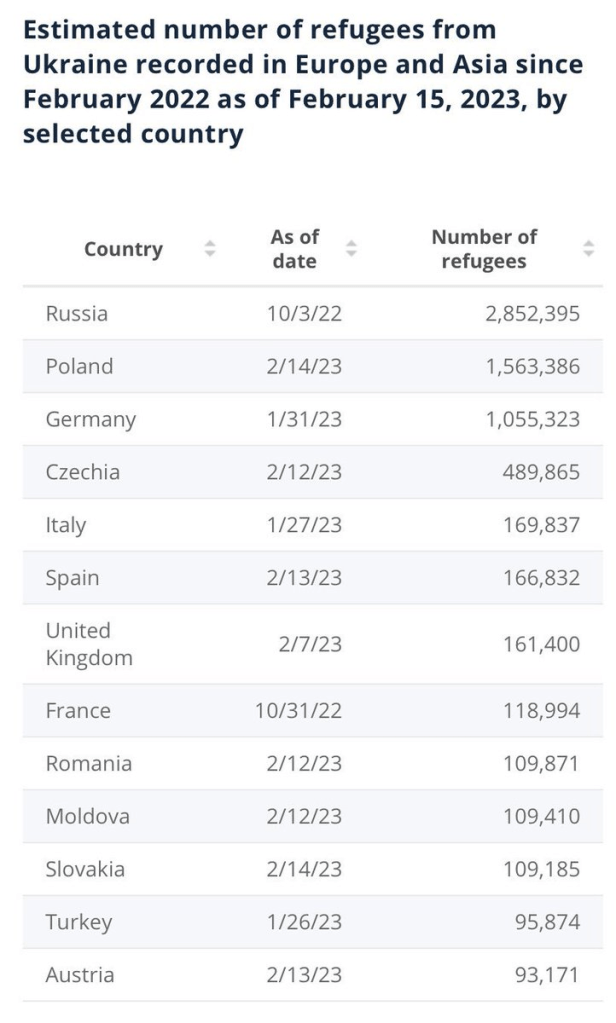
Globally the vast majority of people want to stay in their home country, or as close to it as possible – 69% in 2022. The UK takes far fewer applications than most other EU countries, including Germany, France and Spain.

Safe routes doesn’t mean everyone would come here. It’s a myth the Tories have constructed. We have an open visa route with Ukraine – the only country we have an open visa route with – and very few people have used it contextual to the scale of displacement.
Safe routes are managed pathways to protection: they include refugee resettlement in partnership with UNHCR, a proper family reunion process so those with family here can reunify, and a functioning visa system. Safe routes aren’t Open Borders.
2. People should stay in France. People do stay in France. France’s numbers are higher than ours. But if some want to come to the UK, why shouldn’t they? Why should the UK be able to not help people just because of geographical location? Do you want to live in a country that doesn’t help anyone?
The Government impose carrier fines on airlines for boarding people onto a flight without a visa. But the Government won’t grant you a visa if they suspect you’ll claim asylum. You can’t claim asylum unless you’re here physically in the UK. This necessitates irregular border crossings – it’s the only way.
Irregular crossings aren’t new. Pre-pandemic, it was via lorry, ferry and train. Those ports were made more difficult and during the pandemic travel stopped. So people smugglers spotted a gap in the market and proved the route of beach crossings worked – they’ve got a real stranglehold now.
3. If they can afford to pay thousands they’re not refugees. Some pay by using the last of their money or borrowing. Some take on a debt to a third party or the smuggler; often some are forced into awful situations to repay it.
4. They’re all men. They’re not. Around 67% are – because it’s such an awful journey and people think they can reunify if they can get one family member here to claim asylum.
5. They are all from Albania. Some are, but the majority are from Afghanistan, Iran, Eritrea, Sudan and Syria. Despite the rhetoric, Albania does have some protection needs; there’s lots of persecution in the Gypsy Roma Traveller community and the issue of blood feuds. But really – what we’re asking for is asylum decisions to be made.
Make Asylum Decisions
All these arguments mean nothing – men, Albania, criminality – whatever: make asylum decisions! A swift, fair, effective asylum process that explores all the factors and makes decisions about who should be here – there’s really no argument against that.
Asylum decision making has plummeted. That’s why we’ve got people in hotels and in overcrowded conditions. We have just got to make decisions so people can get out of hotels, start working and rebuilding their lives.

Keep countering these myths, in your everyday conversations. That helps massively.
And if you have any good faith questions ask them, anytime. The more good people we have understanding the real situations the better.
Lou Calvey is a Refugee and Asylum service delivery specialist. She recently shared some thoughts on these issues on Novara Media here. This article is edited from a twitter thread here.
Image: Migrants welcome here GJN banner. Author: Global Justice Now, licensed under the Creative Commons Attribution 2.0 Generic license.
 Labour Hub