
By Stewart Lansley
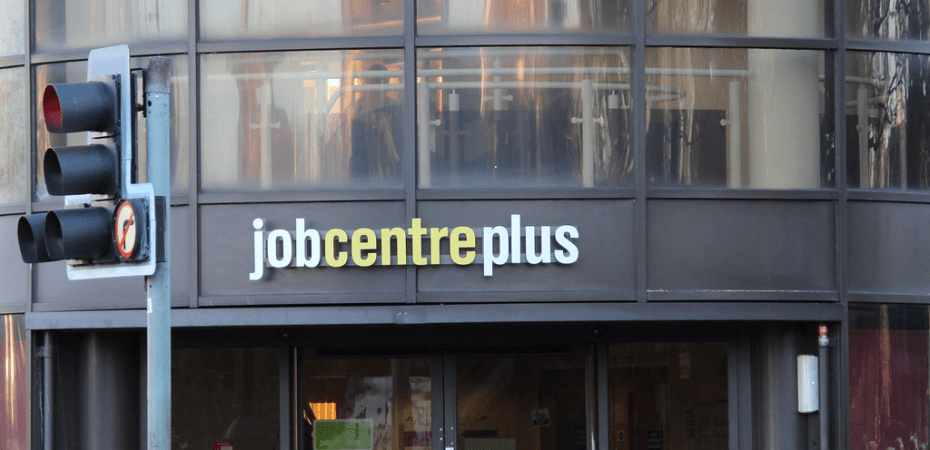
In the latest attempt to force the jobless into work, the Government is tightening the highly punitive sanction system still further. This, the Government claims, is aimed at reducing the recent rise in the number of ‘economically inactive people’ – those who are not working and not looking for work. Greater pressure is to be applied on unemployed claimants, including main carers of children, to take available jobs, even those outside their skill or experience, or face cuts in their benefits.
In the last 40 years, Britain’s benefit system for working-age adults has become both increasingly mean and more and more punitive. Since 2010, around 8 million sanctions – or fines – have been issued against claimants often for minor breaches of Department for Work and Pensions rules such as missing or being late for a job centre interview. According to the academic David Webster, the DWP was, in the mid-2010s, levying more fines than the criminal justice system.
The social security system is built around the idea of social reciprocity – that rights come with duties. The principle of entitlement laid out by the Beveridge Report in 1942, and enshrined in the post-war national insurance reforms, also came with a duty to seek work. But initially, these conditions were applied relatively softly.
While reciprocity has been an important source of public support for collective social security, today’s emphasis on coercion is at odds with the principle of entitlement and national insurance. Coercion is also not in the interest of the wider economy or of those without work. Because of the risk of being forced into unsuitable jobs, some with skills will not bother to apply for benefit. The evidence is clear: the great majority of new claimants of working age are actively looking for work, while more severe sanctions have failed to bring better long term employment prospects and mostly pushed the jobless into deeper poverty and ill-health.
The Department for Work and Pensions is aware of this evidence. Following pressure from a cross party committee of MPs, the Department commissioned its own study on the impact of sanctions, one that it has until recently refused to publish. In March, the Information Commissioner ordered the Department to publish its report. It initially claimed it would appeal this decision, but has now backed down.
This latest crackdown can be seen as another step back to the era when parts of the workforce were treated as a mere factor of production, and expendable, to be hired and fired as required, or as the headmaster of Rugby School Dr Matthew Arnold declared in 1845, as “hands… not as heads, hearts or souls”. It seems that the principles of the Victorian Poor Law, and its assertion that poverty was self-inflicted and that support should come on the harshest of terms, carries as much, if not more, influence over social policy today as the fundamental value system laid down by Beveridge.
The principle of reciprocity is today applied in a heavily one-sided way taking Britain back to a pre-war system based on a hierarchy of rights and responsibilities. As George Orwell then warned, Britain is like a family, with “rich relations who have to be kow-towed to, and poor relations who are horribly sat upon.”
Rich and poor citizens are treated by different standards, a built-in, state supported, source of inequity exacerbated by near peak post-war levels of poverty and deepening divisions across society. While the Department for Work and Pensions is seen as alien by large numbers who seek its help, HMRC and the Department for Business, Energy and Industrial Strategy are, for the rich, essentially benign.
The political philosopher Adela Cortina has described these deep-seated and still prevalent anti-poor attitudes as ‘aporophobia’, a process of pervasive exclusion, stigmatisation, and humiliation of the poor.
Despite question marks about the source and wider impact of today’s towering and lowly taxed personal fortunes, lavishly paid and over-powered corporate leaders and financiers mostly get a free ride from government and little proper public scrutiny. Today’s business elite, free of the ‘deserved`/‘undeserved’ distinction applied to benefit claimants, first introduced in the nineteenth century, has been handed a license to secure an inflated share of national wealth out of proportion to their contribution.
Runaway rewards for the rich and sanctions for the poor is not a politics of the common good. Rights and duties have only been close to alignment across society in the post-war era, a time when the business class mostly accepted that corporate leadership came with obligations to employees and the local and national community as well as shareholders.
Today’s plutocracy mostly view their self-interest and that of society as one and the same. Business makes a big contribution to jobs and prosperity but is supported in that role by significant and growing state support including a system of ‘corporate welfare’ in grants, subsidies and tax breaks worth some £93 billion a year (close to the total benefit bill excluding pensions). This comes free of conditions on tax dodging, employment practices, or social responsibility.
Contrast this with the ‘rewards’ offered by society to a growing section of the workforce – from care workers to hospitality staff – of insecurity and low pay, despite performing, as the pandemic has revealed, the essential but poorly compensated tasks on which society depends. Millions are active citizens, carers and volunteers, mostly women, typically giving a good deal more than they take and more than fulfilling the obligations of social membership.
The spate of recent shocks – from the 2008 financial crisis, to rolling austerity and then the Covid pandemic – has provided a wake-up call to create a more even pattern of rights and responsibilities across society. Yet state policy is once again, taking us in the wrong direction.
Stewart Lansley is the author of The Richer The Poorer, How Britain Enriched the Few and Failed the Poor, a 200-year history. He is a visiting fellow at the University of Bristol and a Council member of the Progressive Economy Forum.
Image: https://www.flickr.com/photos/129925844@N07/16832249802. Creator: Max. G. Licence: Attribution 2.0 Generic (CC BY 2.0)
 Labour Hub