
By David Osland
Mike Dukakis looked all but certain to win the race for the White House in 1988. Then the Republicans hit him with what remains the most notorious attack ad in American political history.
The television commercial centred on the story of William Horton, a black convicted murderer who raped a white woman and then stabbed her partner while on weekend leave from jail in Massachusetts, where Democrat Dukakis served as Governor.
Pictures of Horton, Dukakis and Republican opponent George Bush Senior flashed across the screen as the horrific events were related. Bush supported the death penalty for murderers, viewers were reminded.
“Dukakis not only opposes the death penalty, he allowed first-degree murderers to have weekend passes from prison,” the narrator enunciated. The ad ended with the tag line: “Weekend prison passes, Dukakis on crime.”
There was no actual mention of Horton’s skin colour. But there didn’t need to be; the photograph more than did the job. Nobody missed the implicit play on white fear and African-American stereotypes.
The ad was not the sole reason the impeccably centrist Dukakis blew the 17-point poll lead he held in July that year and ended up losing by a margin of almost eight points when votes were cast for real in November.
But it was certainly central to Republican electoral strategy, with Bush campaign manager Lee Atwater commenting: “By the time we’re finished, they’re going to wonder whether Willie Horton is Dukakis’s running mate.”
The first of Labour’s current run of advertisements directed at Rishi Sunak was launched online last week and has reportedly been seen 21 million times. The family resemblance to its ugly predecessor should be readily apparent.
As ever, framing is dependent on context, which in this instance is the online “Labour councils ignored Pakistani grooming gangs” meme. Initially popularised by the openly fascist far right, the trope has recently been reheated by Home Secretary Suella Braverman on a Sunday morning television show.
The Prime Minister, we are told, does not think adults convicted of sexually assaulting children should go to prison. How that unlikely conclusion is reached is not spelled out.
There follows a statistic of unknown provenance, stating that under the Tories, 4,500 adults convicted of sexually assaulting under 16s have escaped prison sentences.
The inevitable backlash has enabled Tory deputy chair Lee Anderson, no stranger to courting news coverage through rent-a-gob reactionary outbursts himself, to accuse Labour of gutter politics.
Even David Blunkett, a hardline Home Secretary from the New Labour era, fulminated against “baseless allegation and spurious slurs”.
Cue some discreetly embarrassed squirming from the front bench, with shadow home secretary Yvette Cooper distancing herself from the ads.
Those wheeled out to utter mealy-mouthed apologetics for the policy in broadcast interviews – and yes, Emily Thornberry, I’m looking at you – sounded as if their heart wasn’t in it.
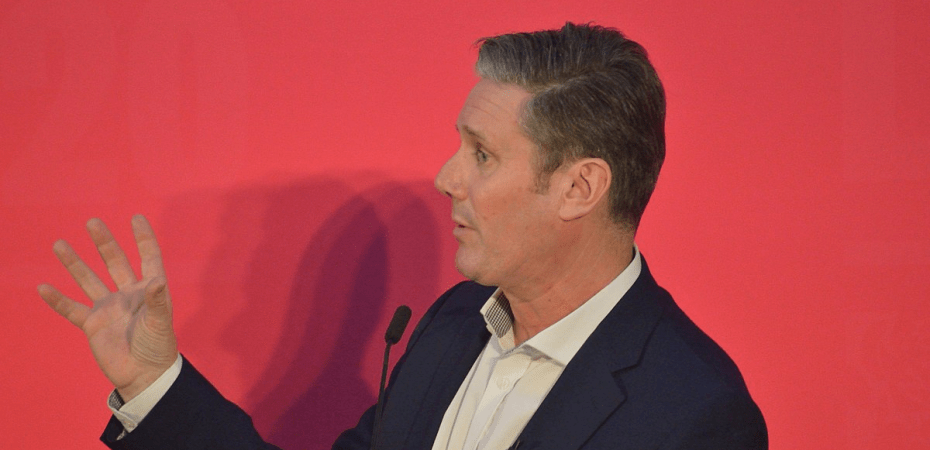
But an intervention from Keir Starmer makes it clear that the comms team hasn’t gone rogue on this one. The Labour leader has stressed that he “stands by every word” of the campaign and will “make absolutely zero apologies for being blunt”.
Those who favour such tactics are essentially arguing, to use a US aphorism, that politics is a contact sport. Given the imperative of an appeal to the older demographic in the Red Wall, whose desertion in 2019 is blamed for the loss of the last general election, anything goes.
If people are talking about it – and the story generated a lot of headlines over the long bank holiday weekend – it has to be working, they insist.
That is a stupendously short-sighted take. Ads can lose votes as well as win them, creating a mood music that many left-leaning and small-l liberal voters will find repugnant.
Then there is the real prospect of alienating British Pakistanis and Muslims more generally, an important constituent of Labour’s electoral bloc.
There are now an estimated two million Muslim voters in Britain, who have historically broken down by 70%-80% to Labour. They represent the difference between victory and defeat in several dozen seats.
The relationship is already under strain, thanks to accusations of Islamophobia and perceptions that left-wing Muslim MPs have not been treated fairly by the Party machine. This is no time to push an incipient risk further.
One potential rationalisation of the 1988 Horton ad was Republican desperation. With a poll lag on the scale they were then seeing, the GOP had nothing to lose. Labour, given its current poll standing, does not even have that excuse.
But in any case, the bottom line is not electoral calculus. It’s ethics. Whatever political advantages accrue from a flirtation with racism, it’s not acceptable to say any damn thing.
When it comes to the wider morality of attack ads, I’m nobody’s idea of an enervated squeamish wimp. Tony Benn’s repeated injunctions to “stick to the issues” and avoid personal abuse – scrupulously observed during the Corbyn leadership, incidentally – are relics of a bygone political age. Marquess of Queensbury rules no longer apply.
Go in repeatedly on Tory corruption, backhanders, tax-dodging, second jobbing, simony and sleaze, and go in hard. But do so within constraints.
Labour supporters do expect politicians of the left to be ethically better than politicians of the right.
It is a common sympathetic critique of Labour under Starmer – recently voiced in a Guardian editorial – that it is ideologically adrift. It cannot afford to be morally bereft as well.
As the firebomb attacks and fascist riots outside asylum seeker accommodation testify, the chosen stance of the country’s main opposition is not inconsequential.
Antiracism has to be consistently resolute, or not at all: it is not a question on which Labour can dip in or dip out, as suits momentary expediency.
Some will maintain that if the right can play dirty, the left should too. They should remember that however nasty the left gets, the online right can get far, far nastier.
Whatever the apparent head rush from transgressive triangulation, the next election needs to be fought by offering voters a clear choice of visions for Britain, not on the Lee Atwater playbook.
David Osland is a member of Hackney North & Stoke Newington CLP and a long-time left wing journalist and author. Follow him on Twitter at @David__Osland
Image: Keir Starmer. Author: Rwendland, licensed under the Creative Commons Attribution-Share Alike 4.0 International license.
 Labour Hub