
By Martin Franklin
To halt accelerating environmental breakdown and its consequences, we need a politics that transcends the tribalism entrenched in our current political system and develops a new spirit of solidarity.
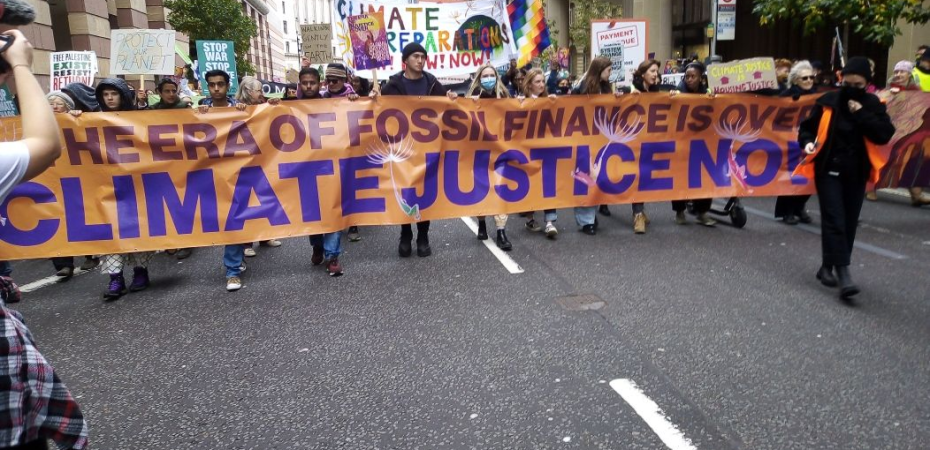
On 21st April, four days of occupation in Parliament Square will begin. The protest aims to push our politicians to take real and effective responses to the climate crisis. Extinction Rebellion (XR) are calling it ‘The Big One’ and it is in everyone’s interests to be there or support the protest and its objectives in some way.
XR have been innovative in their campaigning, pushing the environment crisis to the top of the news, though not without controversy and criticism. Recently, they have made a shift away from the more disruptive forms of direct action and disobedience in favour of inclusive and popular campaigning.
A few weeks ago, I attended a workshop organised by XR to develop a network of environmentalists across neighbouring boroughs. It was attended by people from social and commercial enterprises, campaigns and political parties (no Tories, of course). We sat at tables completing a series of tasks to establish shared goals and build collaboration to achieve them. Finding common ground and common purpose with people who you might be competing with during an election proved relatively easy, though a potential row between myself, a member of the Labour Party and a Green Party member next to me flared briefly.
I’m involved with local environmental groups, and in campaigns to defend NHS services and monitor a local housing development. These groups are successful in uniting people around a cause and to work towards specific goals. They are not shaped or inhibited by the limitations of partisan politics.
The Labour Party is currently demonstrating the worst of our tribal, Westminster-focused political culture. Factionalism in the Party is not new but in recent years divisions may have reached an unprecedented level and turned into a polarised and escalating war. Labour’s leadership is gripped by the belief that two campaigns must be fought to win the next general election, one against the Tories, the other against the left in their own Party. The casualties from this are the mutuality and solidarity necessary to maintain a mass membership. Where top-down management stifles dialogue and the exchange of ideas, political creativity cannot thrive. Membership involvement is reduced to campaigning at election time in a constrained and bureaucratised political arena.
Meanwhile, we are living through geopolitical and global economic shifts entwined with advancing climate heating and environmental degradation. In the global north we face greater risks: unstable supply and rising prices for energy and food, increasing rates of storm, flood and fire damage to our homes, health problems from pollution, pandemics and so on. In the global south the impacts of climate heating are further advanced and intense, costing lives and destroying the chances for a peaceful and stable life for millions of people.
The environmental movement often predicts that without changes to social and economic systems we face a looming apocalypse and collapse of civilisation. But it’s more likely that current trends will advance steadily over decades causing an intensification of global and local inequalities. A diminishing number of the advantaged few will witness worsening conditions for a growing proportion of the world’s population whose lives will become steadily more nasty, brutish and short. Preventing this future is the essence of demands for climate justice.
In March, the Intergovernmental Panel on Climate Change (IPCC) warned that global emissions must be reduced by nearly 43% by 2030 to achieve the Paris Agreement’s goal to limit a global temperature rise to 2 degrees Celsius (1.5 degrees is increasingly a distant aspiration). They also gave a ‘final warning’ that we are reaching the limit to which we can adapt to severe changes, and weather extremes resulting from climate heating. Despite this, our government is issuing new licences for oil and gas exploration in the North Sea, approving a new coalmine in Cumbria along with other policies supporting fossil fuel extraction and use.
These policies result from a toxic mixture of institutional inertia, a heady mix of right libertarianism and neoliberal ideology. Systemic lobbying and dirty money from bodies with commercial interests in fossil fuels inhibits policies for a sustainable future. Additionally, we have a tsunami of greenwashing and gaslighting from politicians and business to quash concerns and distract an increasingly sceptical public. These are formidable obstacles to a just transition, climate justice and sustainability.
All progressive struggles have faced opposition from powerful elites and history shows us that coalitions are needed to achieve change. The post-war welfare state resulted from a coalition of politicians, academics and trades unions. The abolition of the slave trade was based on the collaboration of groups in civil society.
The Big One is backed by a coalition of trades unions and many other organisations that were unlikely to have been involved until recently. This reflects a recognition that a healthy planet is in our collective material interests and that the natural environment is the ultimate commons which needs to be both maintained and reclaimed. We see this expressed in films like Don’t Look Up, in the arts, literature and widely in popular culture but politics lags behind.
We cannot continue with business as usual in our economy or our politics. Progress towards climate justice will have to come from us: there is no one else to look to. It will require building a sense of solidarity between people and with nature to overcome current political and social divisions.
This is already happening but it needs to expand. Some may dismiss this as idealistic, even verging on utopian but many causes and campaigns in the past have seemed unrealisable until they were won. Unfortunately, unlike past struggles for change this one faces an addition problem – as the IPCC make clear – it’s time. So, I look forward to seeing you on The Big One.
Martin Franklin is one of the Environment officers for Islington North CLP.
Image: c/o Mike Phipps
 Labour Hub