
Earlier this month, Labour Hub ran an initial analysis about why the local election results in Leicester bucked the national trend, with Labour losing 22 council seats. Here Peter Kenny explores in detail the factors underpinning this shocking defeat.
When we look at the Mayoral and Council elections in Leicester in May 2023 we can see that they are strikingly different from the general pattern of results around the country. Nationally, the Labour Party gained over 500 seats, gaining more than 7% on its performance in 2019. In Leicester we lost 22 seats, and our vote share for the council went down by 16%, and for the Mayor 21.7%.
It is striking that in 2019 Peter Soulsby outpolled the Labour council candidates, getting 61% of the vote to their 57%. However, by 2023, he was polling 1% behind them.
The Party has been doing poorly in by-elections since 2019, losing Humberstone and Hamilton, and North Evington, both previously safe seats, to the Conservatives. Leicester East had also experienced a higher than average swing to the Conservatives in the 2019 General Election.
The Labour Party vote, as a percentage, fell in all but two wards this year. Eyres Monsell and Aylestone saw small rises, although we lost our only seat in Aylestone due to an 11% increase in the Lib Dem vote. These percentage falls ranged from enormous in Belgrave and North Evington (both 56%) and Rushey Mead (49%) to very large ones in Castle (22%), Stoneygate (28%), through large ones, such as Westcotes and Beaumont Leys ( both 16%), to relatively small losses in Knighton and Thurncourt (both 5%) and Spinney Hill (4%).
Three opposition parties gained seats, with the Conservatives doing best with 17 seats, and the Greens and Lib Dem’s taking three each. In addition Independent candidates took up to a quarter of the votes in some wards, with particularly strong performances in Stoneygate, Western and Belgrave.
Although the Party retained control of the council and mayoralty, it’s important to think about these results in more detail, firstly because we need to see election setbacks as opportunities to think about our performance, and make necessary changes, to hopefully increase our support in future, and secondly because the results would threaten our hold on two of the three Westminster constituencies we currently represent in the city, East and West.
It should be said that there have been anomalous results in Leicester before: our performances in the 2019 local elections, and that year’s Euro elections were much better than our national results. Our Euro performance was the second best in the country, after Newham. We have lacked curiosity about these sometimes puzzling, although positive, outcomes, which indicate factors and processes that we don’t know enough about.
The national issues in 2019 mostly followed the failure of the UK to leave the EU at the end of March, and the increasing polarisation around the Brexit question, leading to the Brexit Party and the Lib Dems topping the Euro poll, and the Labour Party and Conservatives both polling in third and fourth place.
Austerity and the high levels of funding cuts to councils were also key issues, and remain so.
Given that only Leicester South voted by a majority to Remain, we were remarkably untouched in Leicester electorally until the General Election. Even then, we still got 49% of the vote in West, 51% in East, and 67% in South.
These national issues were all reflected in local politics and debates; the issue that was distinctly local was the increasingly beleaguered position of Keith Vaz, MP for East, who faced a number of crises related to his behaviour in Parliament and his personal life. He decided to resign his candidacy in November 2019, just before the General Election.
Keith Vaz was Labour MP for East for 32 years, and in that time built up a formidable machine for responding to constituents’ problems, and campaigning. This included high levels of influence on selections for prospective councillors, and a ‘big tent’ model of politics which attracted some who were not naturally Labour supporters, who were then elected as Labour councillors, as shown by three of them standing for the Conservatives when deselected.
It is widely recognised that East CLP was generally very far from democratic in its culture and processes for many years, and the possibility of becoming the MP there, after Keith Vaz’s retirement, is likely to have influenced some key people in their behaviour.
The NEC appointed Claudia Webbe as candidate, who won the subsequent election. However, her selection, in particular, led to six Labour councillors, from wards in East and West, publishing a letter accusing Labour of being an anti-Indian Party. They focused on the Party not selecting Hindus to contest winnable seats with large Hindu populations, Labour’s support for the UN position on Kashmir, and our opposition to the BJP government in India.
Claudia Webbe’s subsequent conviction for harassment, and expulsion from the Labour Party, has also been a continuing factor.
It is very clear from the election results this year, and the demographics of particular wards, that large numbers of Hindu voters have switched from voting Labour to voting Conservative. The combined message that we have discriminated against Hindu councillors, by deselecting them all, and not selecting any Hindu politicians to stand in seats with large Hindu populations, together with some support for the BJP/RSS, plus other local issues, has cut through with spectacular results.
It should also be noted that the Conservatives have consciously attempted to increase their support in Hindu communities for some time, and these efforts must have been helped by Rishi Sunak becoming Tory leader.
This is a very serious issue, which had already cost us council seats, but more importantly has been reflected in significant street disturbances last year. This cannot be ignored, as it has been in the past, or glossed over: it is a major challenge not just to the politics of our city, but also its community cohesion.
However, important though it is, it isn’t the only issue, as shown by the falls in our support across the city. To make a simple, but pertinent point, the fall in our support in twelve wards is greater than the Hindu population in those wards.
These other issues include the unpopularity of the Mayor and the Mayoral system.
Leicester was alone in deciding to change to that system without a local referendum; that and the failure of the Party machinery to have an open selection process, in the context of Peter Soulsby wanting a fourth term, has increasingly negative resonance for the Labour Party.
Opposition to the Mayoral system was a key part of the opposition parties’ manifestos, and it was one they pursued vigorously. Of course, the Conservatives in particular were wholly opportunistic in doing so, as their government introduced, and promoted, the possibility of this change after 2010.
However, opportunism works by picking up real issues, and their stance in favour of revocation did that. Labour canvassers described high levels of negativity about the Mayor, from voters across the spectrum, and some concentrated on attempting to have positive conversations about council candidates instead.
This unpopularity is complex, but rests on a perception of the incumbent being distant, out of touch and autocratic; his breach of lockdown regulations was a theme, as was the costs of his role, and the executives he appoints. Some policies such as the workplace parking levy were mentioned, as was his strategic orientation towards city centre improvements.
Many voters found it difficult to see the value of larger scale developments, often costing millions, when much needed local services were being cut. They often were unconvinced by his priorities, in a city badly affected by central government cutbacks.
We could also reflect on his political longevity; he was leader of the council for 19 years between 1981 and 2003, and has been mayor for 12 years. He has been in charge of Leicester council and its services for 31 of the last 42 years, and is a very familiar figure, and is now the focus for a range of discontents.
The mass deselections were also an important factor; at the simplest level, three deselected councillors stood for other parties in their wards and won. In both these wards we lost all three seats, to the Greens in Castle and the Conservatives in Beaumont Leys, and it is probable that the candidacies of existing councillors boosted both parties sufficiently to do that.
No councillor who stood as an Independent was elected, although most achieved good vote shares, much higher than Independents usually achieve, indicating that their arguments about their treatment had real resonance in their wards. It seems very likely that this confirmation of the existing negative perceptions of the Mayor, and the Party, also had some wider influence, as it confirmed the validity of others’ messages.
The mass deselections also confirmed existing negative perceptions of the Mayor and the Labour Party, being public evidence of autocracy and severe division. The debate and vote in the council about the Mayoralty also validated the possibility and rationale for change. As these deselections appeared to be a punishment for dissent, they cemented the view of the Mayor as autocratic, and that the system gave him too much power.
It is hard to clearly understand the deselections, because the reasons for proceeding in that way are highly opaque. There was an anodyne reference to problems with the existing process, a report from the Campaign Improvement Board, quoted in the Leicester Mercury, talked about internal divisions and power struggles, and that these impeded the Party’s campaigning. Peter Soulsby said he hoped that as a result of the NEC/Region taking over selections the Party would have more of a single voice.
Apart from that, people can only speculate on the reasons for this intervention and its initial outcomes.
These have included the Party’s loss of North Evington to the Conservatives in late 2022 when the Labour candidate came third to the Greens, in a previously safe seat. The Greens had campaigned successfully against the pro-BJP views of the Labour candidate, and together with the fallout from the disturbances of that year, many previous Labour supporters clearly voted to prevent that candidate from winning.
Another area of speculation was that the Mayor, in conjunction with the NEC/Region wanted to remove dissenting councillors. Peter Soulsby has denied having any knowledge or involvement in the process, but this is widely disbelieved, and anecdotal accounts of meetings and discussions describe him as deeply involved.
What is clear, however, is that the intervention actually increased division, as it was the key context for a concerted attempt to abolish the Mayoralty, by a significant proportion of the Labour Group.
When the results of the selection process were announced, it was very radical, with 19 sitting councillors deselected, including all the Hindu councillors, and a high proportion of BAME councillors. This, of course, gave further currency to the belief that Labour was anti-Hindu; made worse by the Party’s assertion that it had increased BAME representation, having selected no Hindu candidates, as if BAME people are simply interchangeable.
The Party, of course, could always have prevented pro-BJP candidates from standing, by deciding to make that an excluding factor in compiling the long list of candidates. Of course, this would have meant making a clear political decision, and then promoting and defending it, a course of action largely outside its capabilities.
The undemocratic, unfair and opaque nature of the process led to a high percentage of those councillors affected leaving the Party and standing against it, either for other parties or independently. Most councillors who are deselected by democratic means accept the decision, however bruised their feelings might be, as they will have had a fair hearing, a properly conducted vote, and will still have the opportunity to be selected in other wards.
A further effect of the deselections was the disengagement of many Labour activists. Some had already left the Party due to the national Party’s move to the right, and its increasingly authoritarian culture, but many of those who remained did not engage actively in the election campaign.
This left candidates and a much smaller number of volunteers having to do high levels of work, sometimes at great personal cost. Some of the selections gave candidacies to people with no local connections, and many to people with no previous experience of standing for elected office. They faced engaged and motivated opponents, and an electorate with significant hostility to them, in previously safe seats.
The NEC/Region, having played a major part in creating and exacerbating their difficulties, then had little support to offer, although there were reports of some outside volunteers in East.
The Labour Party in Leicester has lost councillors, activists and vote share this year, leaving it weakened and disoriented. The immediate explanations in the Party have focused almost completely on the loss of support in the Hindu community, generally ignoring the significant falls in support elsewhere. There is also no acceptance of responsibility for the creation of these problems.
In my view, the culture of ‘boss politics’ in Leicester has played a significant role in these problems. Keith Vaz remains a powerful, although reduced, influence in East and the Mayoralty has been a strong force for the development of careerism, patronage and a marked reduction in democratic accountability.
In order to improve democracy in the Labour Party in Leicester, we have to improve it more widely. In particular we need to work towards a local referendum on the Mayoral system. As opinion currently stands this, would be highly likely to result in its abolition, but if it didn’t, it would at least put it on clear democratic foundations.
Peter Kenny is a member of Leicester West CLP.
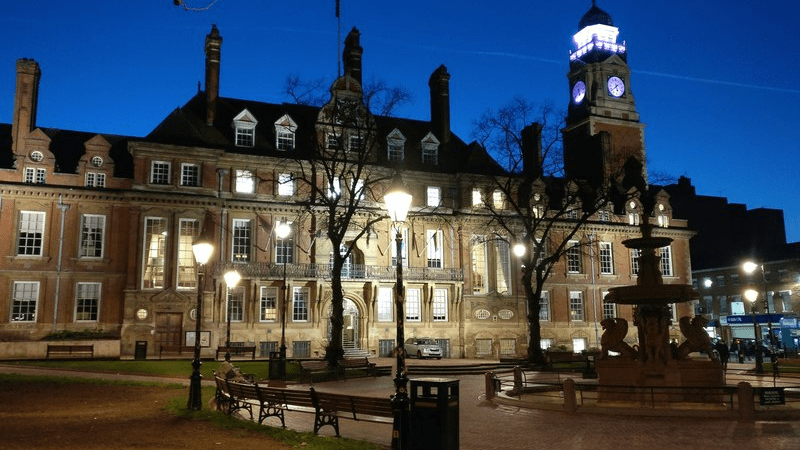
Image: Leicester Town Hall and Square. https://www.geograph.org.uk/photo/6047412. Creator: Mat Fascione | Credit: Mat Fascione Copyright: © Mat Fascione and licenced for reuse under cc-by-sa/2.0
 Labour Hub
[…] undemocratic selection process resulted in a major cull of sitting councillors. Nineteen sitting councillors were deselected, including all the Hindu councillors, and a high proportion of BAME […]
[…] council elections, and local Party members were denied the opportunity to select their candidates. Nineteen sitting councillors were barred, including all the Hindu councillors, and a high proportion of BAME […]