
By Alex Colás
Hours after the right-wing Popular Party’s (PP) landslide victory was confirmed at Sunday’s municipal and regional elections in Spain, Socialist Premier Pedro Sánchez announced snap general elections for July 23rd. This brazen move is more a calculated act of political survival than some principled democratic gesture, but it is also both expedient and commendable.
Sánchez’s coalition government with radical left Unidas Podemos has just about held together over the past four years despite serious and persistent cabinet infighting and inter-party antagonism. This has been further stoked up by a largely hostile media and right-wing weaponisation of the country’s judiciary against the Government’s big legislative initiatives over Catalonia, housing, labour reform, and women’s rights. General elections were due by the end of this year anyhow, and the danger of a downward spiral in the cohesion and popularity of the incumbents was real and present.
Sunday’s local elections across the whole of the country, and regional ballots in 12 of Spain’s 17 autonomous communities have unequivocally shifted institutional power to the right. Big cities like Madrid, Valencia, Zaragoza and Seville are now under PP control, as are at least six of the autonomies disputed over the weekend – including key political battlegrounds like Madrid, Valencia and Aragón which join Andalucia and Galicia as existing right-wing bastions.
Centre-right nationalists won in Bilbao and Barcelona, the trailblazing municipal leftist Ada Colau narrowly losing to the neo-liberal pro-independence candidate and former mayor Xavier Trias, while the local left coalition which at the last municipal elections seized a historically conservative Valencia from the PP will now hand back power to the right.
There are very few silver linings for the Spanish left. Extrapolations from Sunday’s results point to a PP victory nationally on a similar 65% turnout – voter participation in general elections has only exceeded 70% once in the five national ballots over the past decade. The far-right Vox party has extended its territorial range and representational depth across much of the country, becoming a kingpin when ruling cities like Seville as it already is for regions such as Castile-León. The Socialist Workers’ Party (PSOE) did not lose its share of the vote, but the PP saw it soar, chiefly as a result of absorbing the electorate of the now-defunct centrist Ciudadanos.
Several contours of Spain’s new political landscape are now becoming apparent. The insurgent moment that followed the country’s mass anti-austerity mobilisations in 2011 may be coming to an end, as Podemos’ electoral support collapses, and its social base dissipates. The two-party logic involving PSOE and PP which dominated the decades either side of this century will shape the elections on 23rd July, with the former needing the support of a radical left ticket in the shape of second Deputy Prime Minister Yolanda Díaz’s Sumar, more than the PP relies on Vox to form a national government.
Time, however, is running out for those on the left of the Socialist Party aiming to present a single, united and coherent electoral offer ahead of July’s poll. Díaz’s Sumar – supported by communist-led Izquierda Unida, plus various independent ecosocialist outfits – and Podemos have thus far been at loggerheads over the selection of candidates and distribution of prospective seats.
But Sunday’s results suggest there may be no seats to distribute at the next election should personalised factionalism prevail. They have just over a week to reach an agreement on a joint national platform, having failed for months to do so for the local and regional elections.
Lessons from previous regional contests have not been learnt. The recurring tendency of the left to self-sabotage by publicly focusing on the narcissism of small ideological differences and tribal affiliations to one or other individual leader was predictably punished by the Spanish electorate over the weekend. The radical left knocked itself into the ropes and will now somehow have to pick itself up again for one final and potentially life-defining round of political pugilism.
Alex Colás is Political Education Officer for Brent Central Labour Party.
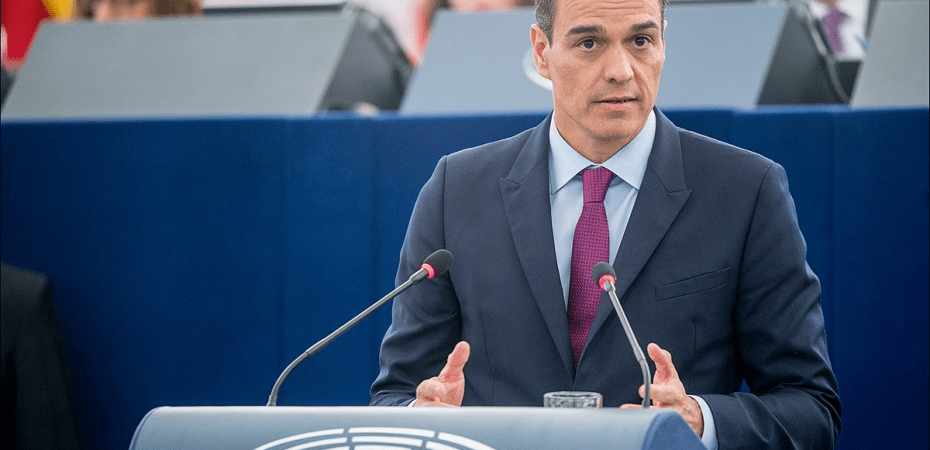
Image: Pedro Sánchez. Source: Pedro Sánchez: We must protect Europe, so Europe can protect its citizens. Author: European Parliament; Pietro NAJ-OLEARI, licensed under the Creative Commons Attribution 4.0 International license.
 Labour Hub