
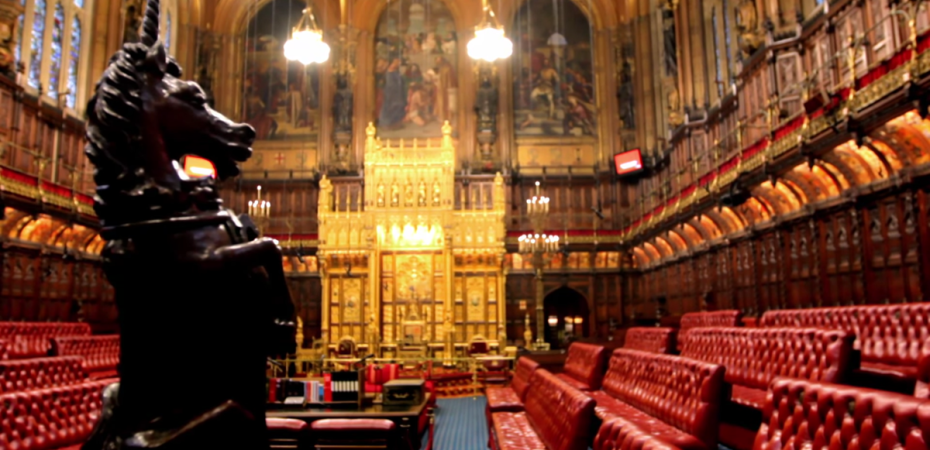
The House of Lords voted to approve new regulations last night that will seriously curtail the right to public protest.
The changes were not included in the Public Order Act which was passed last month, but sneaked through in a Statutory Instrument which the House of Commons approved without debate on Monday.
The unelected Lords voted yesterday to approve the measure, despite an attempt by Green peer Jenny Jones to kill it. Shamefully, Labour peers were instructed by their whips to abstain, although some, like Prem Sikka, did the right thing and voted against.
Ahead of the vote, a wide range of pressure groups, NGOs and charities, including Amnesty International, Liberty, and War on Want, had written to the Lords, spelling out the full implications of the measure, which lowers the definition of “serious disruption” on the basis of which the police can impose conditions on – and even ban – protest marches.
The letter, published in full below, explains what is at stake.
Dear Member of the House of Lords,
We are writing to ask you to support the motion tabled by Baroness Jenny Jones of Moulsecoomb to not approve the Public Order Act 1986 (Serious Disruption to the Life of the Community) Regulations 2023.
The past two years have already seen two major and highly contested Acts which have transformed the framework of public order legislation. The Statutory Instrument (SI) now before parliament would amend the Public Order Act 1986 using controversial broad powers granted to the Home Secretary by the Police Crime Sentencing and Courts Act 2022 (PCSC Act) to change the definition of “serious disruption” – the threshold for the police to impose conditions on protest marches and assemblies.
The same measure was rightly previously rejected by Peers as an amendment to the recent Public Order Act 2023. The government is now using secondary legislation in an unprecedented way to bring these measures into law, further restricting the right to protest and free speech.
Reducing the definition of “serious disruption” from “significant delay” and “prolonged disruption” to “hindrance”, “delay” and “disruption” that is merely “more than minor”, could bring almost any possible protest activity within the threshold of the Public Order Act 1986 for the police to impose conditions.
The penalty for breaching such conditions was increased by the PCSC Act and it became possible for a person to be prosecuted even if they weren’t aware of the existence of the conditions, merely that they ought to have known about them. These changes were highly controversial and opposed by significant proportions of civil society and the public. This SI would go even further and give the police – and therefore the state – almost total discretion over which public protests are allowed to proceed, when and in what form. This extreme and chilling measure would mark yet another significant shift in public order policing even beyond the huge expansion of powers, offences and increased penalties contained in the two recent Acts.
The wording of the SI would now see common protest activities captured by public order legislation that have previously been lawful and that parliament has not considered restricting. Week in and week out communities, charities, unions and campaigning groups organise protests in towns, cities and villages which might in future be considered by the police to cause “more than minor” delay, hindrance or disruption. It will become almost impossible to give certainty to members of the public who wish to take part in protests of practically any kind, that it will not be subject to police conditions that they could face arrest for unknowingly breaching. This will deter the public from exercising a fundamental democratic right, which has so often been used to improve our society and environment for the better.
The House of Lords Secondary Legislation Scrutiny Committee has drawn special attention to the SI for raising constitutional issues. It is the first time a government has attempted to use secondary legislation to reintroduce measures that have already been recently rejected by parliament in primary legislation. It has not consulted civil society and those who organise protests to understand the threat this change poses to our activities and the right of the public, our members and supporters to speak out and protest about the issues that matter to them and affect their lives.
We are opposed to these changes and urge you to support Baroness Jones motion to not approve the Public Order Act 1986 (Serious Disruption to the Life of the Community) Regulations 2023.
Yours sincerely,
Hugh Knowles and Miriam Turner, Co-Executive Directors, Friends of the Earth (England, Wales and Northern Ireland)
Stephanie Draper, Chief Executive, Bond
Tom Brake, Director, Unlock Democracy
Louise Hazan, Co-founder, Tipping Point
Estelle Du Boulay, Director, Rights of Women
Nick Dearden, Director, Global Justice Now
Julie Williams, Chief Executive, Butterfly Conservation
Sacha Deshmukh, Chief Executive, Amnesty International UK
Zara Mohammed, Secretary-General, Muslim Council of Britain
Nabil Berbour, Campaign Director Europe, Ekō
Mark Kieran, Director, Fair Vote UK
Asad Rehman, Executive Director, War on Want
Dame Sara Llewellin, Chief Executive, Barrow Cadbury Trust
Shane Tomlinson, Co-CEO, E3G
Martin Drewry, Director, Health Poverty Action
Tessa Khan, Executive Director, Uplift
Chris Butler-Stroud, CEO, Whale and Dolphin Conservation
Shameem Ahmad, Chief Executive, Public Law Project
Rebecca Shaeffer, Global Legal Director, Fair Trials
Kitty Arie, CEO, RESULTS UK
Neil Thorns, Director of Advocacy and Communications, CAFOD
Jonathan Cohen, Executive Director, Conciliation Resources
Imogen Mcintosh, CEO, Aid Box Community
Sarah Vibert, Chief Executive, National Council for Voluntary Organisations
Sue Tibballs, Chief Executive, Sheila McKechnie Foundation
Chris Luffingham, Director of Advocacy, League Against Cruel Sports
Melissa Green, Chief Executive, The Women’s Institute (WI)
Kit Stoner, Chief Executive, Bat Conservation Trust
Nic Hailey, Executive Director, International Alert
Sarah Fowler, Chief Executive, Wildfowl & Wetlands Trust (WWT)
Peter Herbert OBE, Chair, Society of Black Lawyers
Kate Ashbrook, General Secretary, Open Spaces Society
Sophie Neuburg, Executive Director, Medact
Jane Ide, Chief Executive, Association of Chief Executives of Voluntary Organisations (ACEVO)
Pete Kent, Programme Development Director, Railway Children
Paul Parker, Recording Clerk, Quakers in Britain
Catherine Pettengell, Executive Director, Climate Action Network UK (CAN-UK)
Silkie Carlo, Director, Big Brother Watch
Katie Fallon, Advocacy Manger and Director, Campaign Against Arms Trade
Akiko Hart, Interim Director, Liberty
Emma Bridge, Chief Executive, Community Energy England
Natasha Tsangarides, Associate Director of Advocacy, Freedom from Torture
Bronwen Smith-Thomas, Interim Co-Director, The Climate Coalition
Julian Tait, CEO, Open Data Manchester CIC
Tahir Latif, Secretary, Greener Jobs Alliance
Andrea Simon, Director, End Violence Against Women Coalition
Fiona Rutherford, Chief Executive, JUSTICE
Amy McDonnell, Co-Director, Zero Hour
Nicolò Wojewoda, Europe Regional Director, 350.org
Image: House of Lords Chamber. Source: https://www.youtube.com/watch?v=_sLZBWcPklk&t=66s. Author: UK Parliament, licensed under the Creative Commons Attribution 3.0 Unported license.
 Labour Hub