
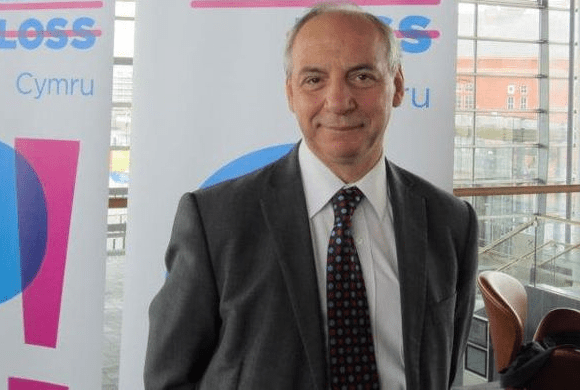
By Mike Hedges AM
There were council election in May 2023 in most of England. The results will be examined by some to predict the next general election, but council elections are not a referendum on the government or on opposition parties. There were no elections in Wales, Scotland, and London which is excluding almost a quarter of the British electorate.
When you look at the election results you see how fragmented local government has become. In these elections we had four mayoral elections, one third of councillors in metropolitan districts, unitary authority elections and district council elections, some with a third of members up for election and others in all-out elections. There are two main methods of holding elections to district councils: some whole council and others in thirds.
Stating the obvious, when only a third of council seats are up for election it becomes more difficult to win control. The results were very disappointing for the Conservatives losing over one thousand seats. They were promising for Labour, pleasing for the Liberal Democrats, very good for the Greens and spectacular for the Ashfield Independent Party.
The Labour Party achieved its largest lead in local elections over the Tories since 1997. Its support recovered after a series of mediocre local election results over the previous few years. However, its projected national share of the vote remained at 35%, the same as in 2022.
The Conservative Party fell to 26% in the BBC Projected National Share, its worst result ever in local elections, apart from 1995 and 2013. The Liberal Democrats and Greens made significant gains in the south of England, with some councils with safe Conservative seats at the parliamentary level voting for opposition parties.
The Liberal Democrats achieved their best result in local elections since the Cameron–Clegg coalition in 2010 with a projected national vote share of 20%. The Greens achieved their best ever result in English local elections, winning majority control of a council for the first time.
Labour won 33% of the seats up for election on 4th May 2023, up by nine percentage points on the proportion it won in 2019, when these seats were last up for election. The overall number of councils controlled by Labour increased by 22 compared with immediately before the election; the Party now controls 99 councils, the highest number since 2017.
The mayoral elections saw three Labour wins and the Conservatives gain Bedford from the Liberal Democrats in a very close three-party election.
Whenever discussing council elections, it is important to remember they are not a referendum on the Government and the result can be affected by the view of the council and also by the popularity of candidates including where they live. Individual candidates can massively outperform candidates of the same party in the same ward.
To quote Andrew Teale, Tavistock is home to the small West Devon district council and it is a remote enough place that the candidate can matter more than the party. North ward has returned Conservative, Lib Dem, Green and independent councillors this century. I can think of no better example of why candidates matter than the Eastlands by-election in Scarborough for the North Yorkshire unitary authority, where former Labour councillor Tony Randerson resigned from the council and stood as an Independent and won comfortably, polling almost three times the Labour candidate’s vote.
Slough, after being Labour-controlled for 15 years, fell to no overall control with the Conservatives becoming the largest party. One possible cause could be the way the council was run. In 2021, Slough declared itself effectively bankrupt after the discovery of a £100m black hole in its budget which was the result of what it admitted had been years of poor fiscal management and mishandling of commercial investments. It issued a section 114 notice after admitting it could not meet its legal obligations to meet planned running costs.
In Leicester, Labour retained its majority on the council, but with the loss of 22 seats, compared to the 2019 election. The Conservatives gained seventeen extra seats against the national trend. The Green Party and Liberal Democrats also made gains.
There had been several high-profile deselections and those councillors deselected include five Hindu councillors who signed a letter during the 2019 general election, accusing Labour of being anti-Hindu. Others were allegedly the victims of internal quarrels, but this result again shows divided parties do badly.
For the Green Party, as well as taking 24 seats on Mid-Suffolk council to gain control, doubling their previous tally, the Greens further showed their threat to the Conservatives by becoming the biggest party on East Hertfordshire council.
Different views on the election in an area come from the parties. In Harlow the Conservative leader of the council, Russell Perrin, said the election was a “brilliant result” for the party. Robert Halfon, the Conservative MP for Harlow, noted that the gain from Labour in Staple Tye resulted in the ward having all Conservative councillors for the first time. The leader of the Labour group on the council, Chris Vince, called the election a “good result for Harlow Labour”, pointing to the Party winning the popular vote and the majority of seats up for election.
In Brighton Labour won 38 of the 54 seats to gain control with the Green Party losing thirteen seats, being reduced to seven councillors.
Overall, it was a good result for Labour and a poor one for the Conservatives.
Mike Hedges is the member of the Welsh Senedd for Swansea East.
Image: Mike Hedges. Author: Steve Cushen, licensed under the Creative Commons Attribution-Share Alike 3.0 Unported license.
 Labour Hub