
By Guy Standing
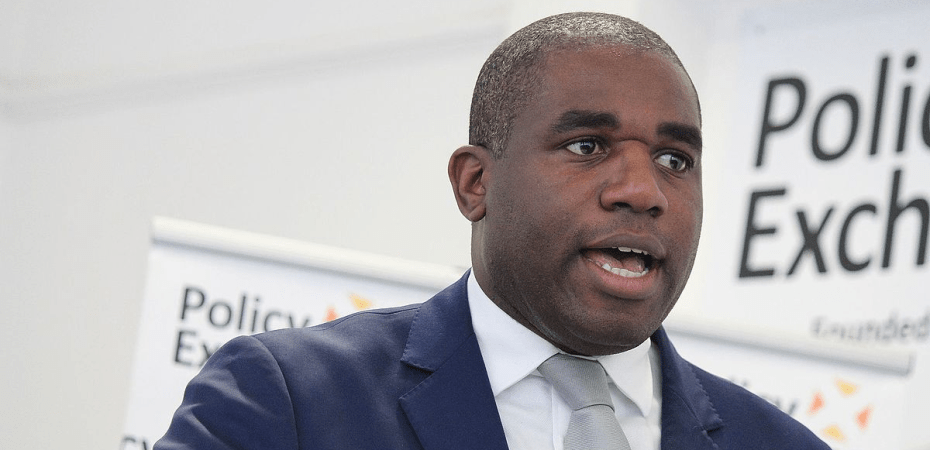
David Lammy is the son of Guyanese parents and is rightly proud of his heritage. As Shadow Foreign Secretary, he is faced by one of the biggest challenges of foreign policy, in which what could be about to happen could become the biggest neo-colonial resource grab in history.
On July 9th – as warned in my book The Blue Commons – under the UN’s Convention on the Law of the Sea (UNCLOS), applications to start deep sea mining could be made. The reason is now widely known. On July 10th, David belatedly said that if Labour is elected it will join other countries, led by France, Germany and Spain, in demanding a moratorium. Echoing the position of the governments of those countries, he said mining should be halted “until and unless there is clear scientific evidence it can be done safely and the marine environment can be effectively protected by new regulation.”
He was right to take this position. But he should go much further and make himself an international leader in speaking up for all developing countries. In the process, he could also help forestall what could become one of the world’s geopolitical flashpoints in the next decade.
Let me explain, to emphasise the gravity of the moment. UNCLOS was agreed in 1982 after 25 years of tortuous international negotiations. It was a set of delicate compromises, with different groups of countries gaining some advantages while giving ground on others.
One particular agreement was that mining and taking resources from what is known as The Area, that is, the 54% of the ocean seabed outside countries’ Exclusive Economic Zones, would be banned until two sets of regulations were formulated and accepted, a mining code to cover environmental issues and a formula to ensure that the benefits were shared equitably by all countries of the world.
The International Seabed Authority was set up to draw up those two codes. Established in 1994 and based in Jamaica, after 29 years it has failed to produce either. Understandably, the environmental issues are attracting a lot of last-minute anguished attention, although observers including myself have been warning for years that action had to be taken before July 9th this year.
On July 13th, a cross-party group of MPs joined the chorus. We should support them. However, David should take the lead on the other key part of UNCLOS. He should do nothing less than speak up on behalf of principles it enshrines.
If nobody takes the lead, developing countries could be major losers. As I write, the world is sleepwalking into a deeply unfair situation, since negotiators in Jamaica in the second half of July are haggling over a sharing arrangement that would be a deep betrayal of the ethos that led to UNCLOS.
Ironically, back in 1982 China took the lead for the G77, the group of developing countries seeking a New International Economic Order. In UNCLOS, those countries accepted some limitation on their national sovereignty in return for the promise of a benefit-sharing system, based on the principle that everything in the sea was “the common heritage of mankind”. Many developing countries accepted the right of rich countries to fish in their waters and to use sea routes freely in return for this promise. The quid pro quo was clear.
It would have been relatively easy to draw up an equitable benefit-sharing system in 1982, because deep sea mining was hypothetical, with no ratifying country having a technological or other lead. Today, with 167 countries and the European Union having ratified UNCLOS, reaching agreement will be much harder and what transpires will only be remotely equitable if there is an international clamour for it. Neither David nor any other progressive political leader has raised their voice, or even hinted that they understand the need to do so.
And here comes the irony. A group of African countries, led by South Africa, is lobbying at the ongoing ISA negotiations for a sharing mechanism, in which all profits from taking resources from the deep seabed would be taxed at a rate of 45%, with the revenue to be shared equitably among all countries, as stipulated by UNCLOS. Meanwhile, the government of China has sent a big high-level delegation to the meeting, led by the Beijing Hi-Tech Corporation, and China is demanding that there should be a royalty on revenue of just 2%.
The Chinese position is both sad and deeply hypocritical. Of course, it stems from the change in China’s economic position, having become the world’s second imperial economic power. Over the past few years, China has quietly become the leading country in deep sea mining, having paid $2.5 million to the ISA for ‘exploration licences’ in the Pacific, in an area covering over 1.5 million square miles. It wants to continue its domination of mining for rare earths and other lucrative minerals that are believed to exist in the depths in vast quantities.
It is not only China that would gain from a fraudulent sharing agreement, since 13 other countries have exploration licences, led by a Canadian company. But if David does not take this opportunity to show leadership in combating the oncoming gigantic resource grab, one can sadly predict that deep sea mining and the extraction of marine resources that do not require mining at all will become a major geopolitical flashpoint in the years ahead.
David: remember the Sea Wall outside Georgetown and the multitude of kites flown above it around Easter! Stand up for the ‘little people’ of the world, which in this instance definitely includes you and me!
Guy Standing is Professorial Research Associate, SOAS University of London, and author of The Blue Commons: Rescuing the Economy of the Sea, published by Pelican.
Image: Rt Hon David Lammy MP. Source: Rt Hon David Lammy MP speaking at the launch of his report Taking Its Toll. Author: Policy Exchange, licensed under the Creative Commons Attribution 2.0 Generic license.
 Labour Hub