
By Michael Calderbank
It was famously said of the Holy Roman Empire than it was neither Holy nor Roman, and nor was it an Empire. Labour members are increasingly in danger of feeling the same way when it comes to the Party’s claim to be “democratic socialist”.
The National Policy Forum (NPF), which takes place this weekend in Nottingham, is a case in point. It’s a big deal for the Shadow Cabinet, NEC members, trade union leaders and officials and a handful of CLP representatives. But most members barely realise it’s happening and will only read what has happened in the papers, as mediated by the spin operation of the leadership.
What actually goes on at this NPF, like all previous ones, will be highly obscure. The honest answer is that only those who have directly participated in one actually know what happens, and even then, only in the plenaries and the Commissions they happen to sit on.
Representatives may report back to CLPs (although often they don’t). But even then, we’ve no way of verifying whether the content of those reports are accurate or a work of creative fiction.
As a Roman Catholic, the nearest analogy I can think of is a papal conclave. Here, centrally appointed clerics sit in secret to make a critical decision on the future of the institution, while the assembled laity throng into St Peter’s Square or watch their TV screens until the grey smoke turns white, which signifies that a decision has been reached.
But like all analogies this one, too, is imperfect. At least at the end of conclave it’s clear that something of decisive significance has occurred. After an NPF, by contrast, it will take weeks before further policy commission papers are published for consideration (though not much discussion) at Annual Conference. If the NPF report becomes “policy” does this take precedence over the outcome of contemporary motions voted on democratically by Conference less than a year ago? And do either motions or NPF positions count for a jot when it comes to what goes into the manifesto at the equally obscure “Clause V” meeting before a General Election?
Its supporters would point to the justification for setting up the NPF process in the first place, as part of the Partnership into Power reforms of the Blair era. Previously, it was argued, Labour’s policy was thrashed out in the confrontational arena of Party Conference, in full view of the public and the world’s press. This, it was felt, accentuated the appearance (and reality) of divisions between the Party in government and the Party membership in the country – encouraging grandstanding and aggro rather than forensic policy deliberation and getting the detail right.
Meanwhile Party Conference became essentially just a rally to showcase the position of the leadership, and became so dull for long periods that even the BBC Parliament channel no longer bothers broadcasting it.
But the NPF bent the stick in entirely the other direction, moving from open conflict to the secretive collaboration of a small cabal.. Don’t we, as fee-paying members of the Labour Party, deserve to see how our representatives are arguing on our behalf? It doesn’t need to be broadcast to the wider public. But in the days where livestreaming is relative easy, what’s the problem with streaming the plenary discussions and policy commissions live to Members Hub?
Critics of this idea will say it’s essential that NPF reps are able to raise concerns, differences and float potential drawbacks of current policies without giving ammunition to our political opponents. Or the media could eavesdrop on private discussions and make mischief. But this likely exaggerates the extent to which there would be any great interests in processes which don’t necessary culminate in manifesto promises anyway.
In any case, should any reasonably confidential or unusually sensitive topic be put on the agenda, a majority vote could always decide that this particular debate was held in closed session. That would also be irritating to members no doubt, but at least such instances would be exceptional rather than the default, and the necessity to go into closed session could be evaluated – as either a matter of prudent judgement or a cynical evasion of scrutiny. As things stand, scrutiny and accountability are virtually impossible.
Increasing levels of transparency would not alone suffice to make the NPF process fit for purpose. For that to happen, Annual Conference should have the ability to vote for and against specific measures in each policy report – not just vote through each document as a whole or “reference back” whole reports to the policy commission.
Any NPF proposals validated by Conference should, by default, make it into the final manifesto or – if this would make the document unwieldy and turgid – at least be included in more detailed briefing papers underlying specific manifesto commitments. Of course, it might on rare occasions be necessary for commitments to be reviewed in the light of changing circumstances between an Annual Conference and a General Election being called – in which case a two-thirds majority of the Clause V meeting should be required in order to overrule the democratically determined policy.
Ultimately Annual Conference doesn’t really satisfy anyone and tries to conflate different priorities. It could usefully be deconstructed into three separate classes of event. Firstly, a “rules conference” looking in detail at constitutional issues and internal procedures. This could be relatively small and held only every two years, perhaps even in an online only format.
Secondly, a focused policy conference which reviews and debates reports emerging from a more transparent NPF process in greater detail. These might be twice yearly.
Finally, a pre-election showcase event could allow the leadership to stage the kind of orchestrated and stage-managed rally which would present a consistent and united face to the wider public. The major opportunity for such an event would be before each General Election, but there’s no reason why smaller rally-type events couldn’t be held more regularly, and in different nations and regions of the UK, not just centralised in one place.
Frankly, I won’t hold my breath that any meaningful steps towards increasing Party democracy and member involvement will be forthcoming any time soon. David Evans’ tenure as General Secretary has given every indication of treating members and activists as a positive nuisance and potential barrier to Labour making itself electable.
It might be possible for such a Party to win an election by default, such is the mess the Tories are making of governing. But is it possible to sustain a political project without a popular base for very long? The jury on that question is very much out.
Michael Calderbank is Political Education Officer of Tottenham CLP.
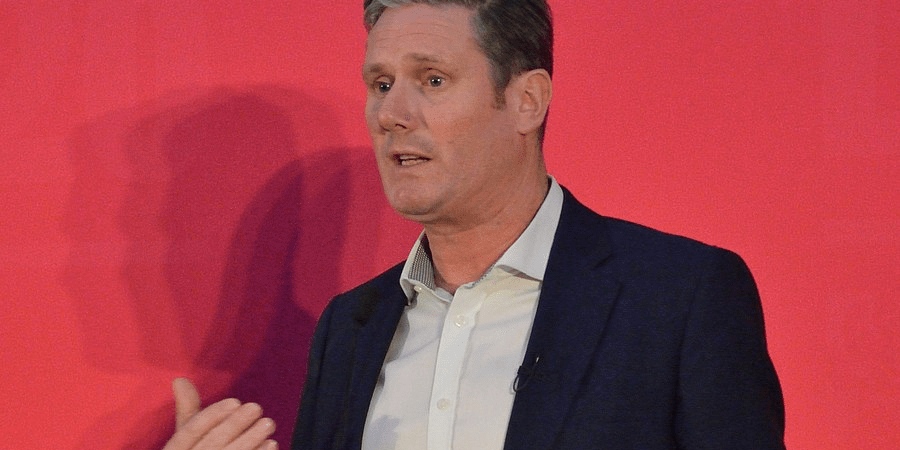
Image: Keir Starmer. Source; Own work. Author: Rwendland, licensed under the Creative Commons Attribution-Share Alike 4.0 International license.
 Labour Hub