
By Marion Roberts
It wasn’t always like this. Back in the day, before Miliband, Brown and Blair, before Kinnock, in the far far reaches of the 1970s and 1980s when Tony Benn and Dennis Healey were alive and Wilson and Callaghan were Prime Ministers, the Labour Party accommodated democratic socialists.
Cabinet ministers joined the picket lines of striking workers. Labour politicians were disgusted with the privatising politics of Margaret Thatcher and we took Party banners on marches chanting “Maggie, Maggie, Maggie, out, out, out.” Party Conferences were riven with passionate debates where opposing voices could be heard. There was a point to going to Party meetings and passing resolutions which could, just, sometimes, change Party policy.
Even in the Blair era I can remember getting a motion opposing the invasion of Afghanistan through my branch. This is not to say that there weren’t problems with misogyny and racism within the Party itself. And the unions’ block vote held back much of what the more progressive CLP’s were pushing for. Even within this, despite this, the Party had a living, breathing political culture.
It doesn’t have one now. Factionalism has taken over and stultifies any real exchange of views and quashes any position that the ‘centrists’ or ‘moderates’ disagree with. The Rule Book and disciplinary procedures have grown like topsy and are now being turned against even mildly left-supporting activists.
Natural justice no longer prevails. Members can be expelled for having liked a FaceBook post or signed a petition years ago. The guise for this is Clause 2 1.5B(v) which can trap such innocent actions under the heading of a ‘prohibited act’.
Selections for elected positions have been blocked on quite spurious grounds. Chris Mullin, who, as an MP, helped to reverse one of the greatest miscarriages of justice in British twentieth century history, writes that he wouldn’t have been able to get through Labour’s current selection processes.
Jeremy Corbyn’s character has been effectively assassinated, trashed, decried, although the 2023 Rule Book hypocritically asserts that every member should be treated with respect. Even CLP resolutions can be ruled out of order by unelected regional officials.
The pretext for this outburst of authoritarianism is the ‘crisis’ of antisemitism that is alleged to have occurred under Jeremy Corbyn’s leadership. Space does not permit even a cursory examination of this extraordinary narrative, but Al-Jazeera’s excellent series The Labour Files provides a good introductory route for analysis and explanation.
Ethnic and religious identities are complex and Labour members are understandably worried about being accused of racism. In this context, it is vital to note that the Forde Report, commissioned by Keir Starmer, confirmed that antisemitism has been weaponised within the Party.
The Party has brought in changes to its disciplinary structures, arguing that these were necessary to make the Party a safe space for Jews. These changes privilege one current of Jewish opinion over another. This is despite the undeniable fact there is no one singular, homogenised Jewish community – any more than for any other community. The Board of Deputies of British Jews represents only about a third of Jews living in the UK. They do not speak for me or other members of Jewish Voice for Labour.
Jewish Voice for Labour criticised the EHRC Report, about which there are a number of misconceptions. Again, space does not permit a full list, but the most significant is that the EHRC did not consider the Labour Party to be ‘institutionally antisemitic’. The EHRC identified problems with the Labour Party’s complaints system and championed an ‘independent body’ to review complaints of antisemitism. Changes made in response to the EHRC have led us directly into the situation we face now.
Disciplinary matters lie firmly in the hand of the General Secretary (GS) who is on record as wanting to turn members into supporters with no say over policy. More and more rule changes have been agreed that place power in the hands of appointed panels such as the Independent Review Board and the Independent Complaints Board.
The composition of the panels has been chosen by the GS together with members of the political current who have taken control of the Party machine and are pulling all the levers to support their particular brand of neoliberalism. So, changes that were instituted to provide a ‘safe space’ for Jewish members of the Party have led to over 60 Jewish members being subject to disciplinary action with dozens being expelled or resigning. These changes, as noted, have enabled a wider campaign against the left, with approximately 400-500 suffering expulsion because they are alleged to have supported ‘proscribed’ organisations, who in the Party’s current Orwellian double-speak, are alleged to have ‘undermined the fight against racism’.
As the NEC member Ann Black’s July 2023 report records, the National Constitutional Committee has been effectively eviscerated. Rather than performing the function of a Supreme Court, to which Party members could appeal in person, it now rubber-stamps the decisions of the lawyers selected by the GS.
The grounds for appeal have been narrowly defined in the current rule book although the interpretation of what constitutes their breach is wide. Even the Guardian’s political correspondent appeared to be shocked by this outcome. Labour members have little recourse against decisions they consider unfair or unjust, because – and this may come as a surprise to members – the Labour Party is regarded in legal terms as a private members’ club, like the association set up to run your local tennis courts. The fact that livelihoods and reputations may rest on its current procedures and decisions is of no import to the British judiciary.
So, in asking CLP delegates to Party Conference to vote for my election to the National Constitutional Committee, I cannot pretend, if elected, that I am going to be able to uphold fairness or justice or have any real influence on decisions. All I can promise to do, as with the child in the fairy tale, is to tell the truth as I see it. That should have some value.
Marion Roberts is a member of Camberwell and Peckham CLP, Membership no. A009691
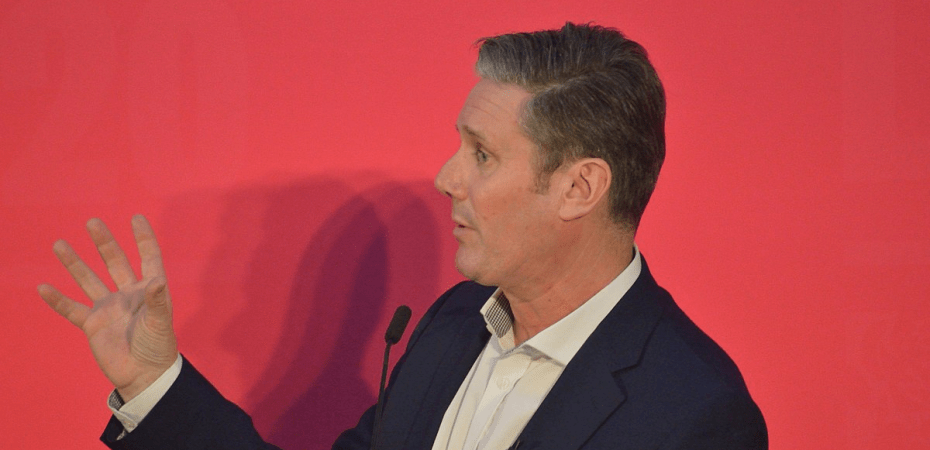
Image: Keir Starmer. Source; Own work. Author: Rwendland, licensed under the Creative Commons Attribution-Share Alike 4.0 International license.
 Labour Hub