
You’ve heard of Big Pharma: now meet Big Fashion. It’s controlled predominantly by corporate elites in the Global North, and is part of an economic system designed to maximise profit for the few, at the expense of the lives and livelihoods of workers around the world.
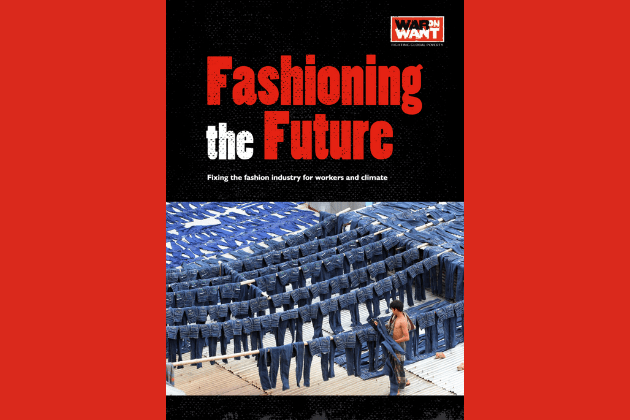
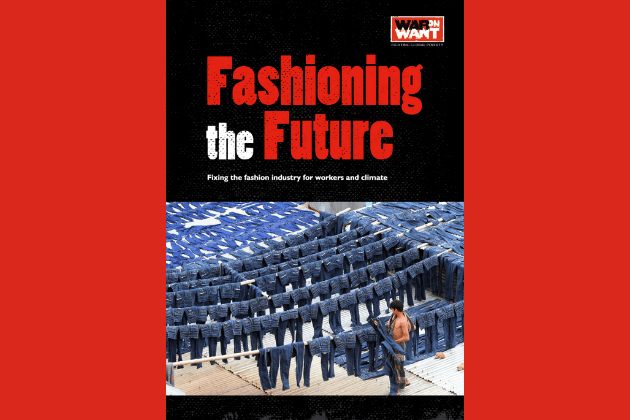
Fashioning the future, a new report released today by War on Want highlights some crucial environmental and socioeconomic issues.
The global fashion industry consumes enough water to meet the needs of 5 million people, dumps the equivalent of 3 million barrels of microfibre in our oceans every year and is responsible for 20% of all industrial water pollution. If current trends continue, it will, by 2030, have increased its greenhouse gas emissions by 50% on 2020’s levels. For all its self-promoting greenwash, the industry shows no sign of meeting international climate goals.
Each year, over 300 million items of damaged or unsellable clothing made of synthetic or plastic fibres are exported to Kenya, where they end up dumped in landfill, clogging up rivers, or burned –but providing no benefit to Kenya’s second-hand clothing market. Similar crises affect Chile’s Atacama Desert and Ghana.
Yet Big Fashion’s revenue in 2022 was £1.2 trillion. It takes the average fashion company CEO just 28 minutes to amass what a Bangladeshi garment worker earns on average in a year.
“In 2013 the Rana Plaza factory collapse in Bangladesh killed over 1,100 people and brought public attention to the devastating human cost behind the polished shopfronts and websites of both high end and high street fashion brands,” says the report. “Today, ten years on from Rana Plaza, big fashion is increasingly under scrutiny as a leading culprit of our ecological and climate crisis, as well as its continued exploitation of workers.”
Clothing and footwear account for 80% of Bangladesh’s exports but the country remain in a precarious trap, creating vast profits for powerful multinationals, yet unable to achieve financial stability – “a prime example of national ambition thwarted by neoliberal ‘solutions’.”
As with Big Pharma, the inequalities involved are perpetuated by the patenting system. Organisations in the Global North hold 97% of all the patents in the world economy. Were it not for patents, Bangladeshi manufacturers could sell their products and achieve whatever final price prevails in global markets for those goods.
The report is intended to honour those working in the supply chains of an industry notorious for exploitation and abuse, both of workers and of the planet’s eco-systems.
Is there an alternative? A degrowth approach would “prioritise moving to a socially just and ecologically sustainable society with social and environmental well-being replacing gross domestic product (GDP) as the indicators of prosperity.”
But simply calling for a reduction in consumption without factoring in economic justice could harm the rights and livelihoods of millions of farmers and workers in fashion supply chains.
The report offers some concrete solutions to the crisis, concluding, ”we must fundamentally change the way our economies and societies are structured, including shifting the core value set that shapes our economic system towards one that centres care and well-being and allows everyone to live with dignity.”
Fashioning the future: Fixing the fashion industry for workers and climate is available here.
 Labour Hub