
By Mike Phipps
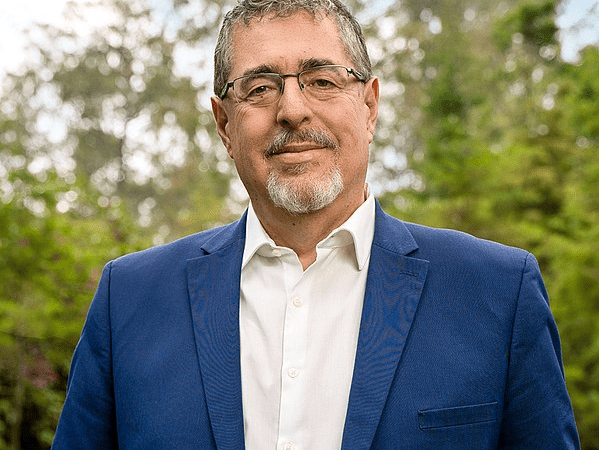
In a surprise victory, inconceivable just weeks ago, Bernardo Arévalo, a leading anti-corruption campaigner, has won Guatemala’s presidential election. In a landslide win, Arévalo beat the former first lady, conservative Sandra Torres, by 58.01% of votes to Torres’s 37.24%.
Arévalo is the son of the country’s first democratically elected president in 1944, who was forced into exile ten years later by a CIA-backed coup against his successor Jacobo Árbenz. Arévalo the younger only narrowly made this weekend’s runoff after coming second with 13% of the vote in June’s first round.
Corruption and growing authoritarianism have long been a problem in the country. Ahead of the first round of elections, Guatemala’s electoral tribunal disqualified three popular presidential candidates, all of whom had criticized government corruption. Arévalo benefited from the vacuum left by their absence.
Arévalo is a political outsider. Before entering Congress with the Movimiento Semilla (Seed Movement) in 2020, he had never participated in politics, building a career as a diplomat, sociologist and NGO worker instead. The Seed Movement itself was founded only six years ago after the mass demonstrations that led to the resignation of President Molina.
Since June, Guatemala’s corrupt elite has worked around the clock to try to prevent an Arévalo victory. Last month, the headquarters of his party was raided and the party briefly suspended as part of an investigation launched by the Public Prosecutor’s Office, whose head himself has been accused by the US State Department of involvement in “significant corruption”.
As Tim May explained in a Labour Hub article in 2021, Guatemala’s ‘Pact of the Corrupt’
“have led an assault on the rule of law, taking over Guatemala’s public institutions to neutralise dissent, evade justice and guarantee their impunity. They have already co-opted the Electoral Court, the Supreme Court of Justice, and the Constitutional Court, and they are using these public institutions to pursue and repress journalists, independent judges, and civil society. Recently, a new Guatemalan Law on NGOs was passed, allowing the government to close down NGOs which are deemed a ‘disturbance to public order’.”
Arévalo and his party are centrists, with support among the urban young. Arévalo says he wants to gradually universalize existing social assistance programs to include a greater share of poor Guatemalans, reduce the cost of medicines and healthcare, and link isolated parts of the country through new infrastructure. He also proposes a large job creation programme and to ramp up agricultural production by providing low-interest loans to farmers. But he says his priority will be confronting the corruption that has fuelled Guatemala’s slide into authoritarianism in recent years.
The new president will not take over until 14th January and already there are legal attempts afoot to undermine him. While it would be potentially explosive for Arévalo to be blocked from taking office with such a clear mandate, one possibility is that his party could be banned on spurious grounds and he could enter the presidency without any support in the Congress. In any case, he will not have a legislative majority, which will make passing new laws difficult. The Congress could also block him in other ways, including impeachment, a tactic used against President Pedro Castillo in Peru.
Popular protests against such manoeuvres may well limit their feasibility. Equally, the attitude of the US to the new president may be pivotal. Hundreds of thousands of Guatemalans have emigrated to the US in recent years, and the Biden administration believes Guatemala’s corruption is a major push factor for migrants.
To what extent an Arévalo presidency will be able to tackle Guatemala’s deep-rooted social problems is more questionable. In 1996, the country’s Peace Accords ended the long-running war waged by a succession of military dictators against Guatemala’s indigenous population, which left 200,000 victims. But this did little to affect Guatemala’s entrenched racial hierarchy, and meaningful reform has been elusive.
In fact, as Tim May explains, “The Peace Accords paved the way for a host of neoliberal policies, including the 1997 Mining Law which decreased the amount of royalties from 6% to only 1%. These policies led to a wave of extractivist development in mining, hydroelectricity, and agribusinesses, which has been accompanied by state policies of militarisation and criminalisation.“
Today, the country’s indigenous organisations are demanding a complete refounding of the state through the creation of a Plurinational Constituent Assembly, something far mor radical than anything the new government is likely to consider. With plenty of enemies in Guatemala’s elite institutions and mounting pressure from below, Arévalo may struggle to steer a course.
Nonetheless , his election is a real source of hope for many Guatemalans who celebrated in the streets following the result. His campaign took on the political establishment which resorted to administrative measures to marginalise his movement. Hailed by many in the international community, Arévalo’s victory is also a welcome respite from the spread of authoritarian populism infecting other countries in the region.
Mike Phipps’ book Don’t Stop Thinking About Tomorrow: The Labour Party after Jeremy Corbyn (OR Books, 2022) can be ordered here.
Image: Cesar Bernardo Arévalo de León. Author: Javier Arango, licensed under the Creative Commons Attribution-Share Alike 4.0 International license.
 Labour Hub