
By Simon Hewitt
“In the dark times,
will there be singing?
Yes, there will be singing
about the dark times”
– Brecht
Shane MacGowan wrote songs about life, which is the most radical thing a musician can do. The life he wrote about was frequently seedy, sometimes violent, and almost always drink-sodden. But it was life for all that and there is much to learn from what MacGowan had to say about it.
That is not to say for one second that the music of the Pogues was an earnest affair, written with one ear to the critic. A joyfulness and playfulness permeate their music, often drawing on the Irish folk tradition, which the Pogues so successfully welded to rock, especially punk, music. What is especially interesting is the way this musical upbeat-ness was so often married to dark lyrical content, dwelling on the kind of life mentioned above. This combination is present in familiar form in Fairytale of New York, but is also to be heard in, say, the beautifully obscene Sick Bed of Culchulainn. Here toe-tapping melodies carry stories of kicking in pub windows and beating up racists.
As this all suggests, the characters in MacGowan’s lyrics have the feel of anti-heroes about them. They are generally at best morally ambiguous and inhabit the darker recesses of society. They often belong to the Irish diaspora, either in London or in America. MacGowan was fascinated by London as a city (London Lullaby, London Girl, White City, A Rainy Night in Soho – this last was subtly about his drinking as well), as he was by the journey thousands had made from Ireland to America (The Body of an American, Thousands are Sailing). In the latter case he was keenly aware that emigration was effectively forced (‘”Where’er we go we celebrate the land that makes us refugees”). Once again, the bleaker side of life was clearly in his sights.
Why am I claiming this is radical? Why, for that matter, sully the legacy of a great singer-songwriter with politics? It is true, of course, that there is a certain kind of political song which is musically worthless. Anyone who has been on the left for any time will have been preached at in song to the backing of bad acoustic guitar playing. By contrast, there is none of this hectoring in MacGowan’s songs. He is entirely devoid of moralism, hence his ability to describe his morally ambiguous characters with sympathy and affection.
But for all that there is a radicalism about MacGowan’s music. This lies in his honest description of a world in which much is wrong, but which escapes by the skin of its teeth being completely bleak. Amid the squalor, despair and drunkenness, there is also romance, friendship and solidarity, even if the latter is often solidarity around a bottle. This combination – a keen sense of the extent to which things are inadequate, along with an insight into the potential of human beings in spite of that – is the best basis for revolt. If you can see that things are bad, but that they could be better, you are already radicalised. And MacGowan does all that without wailing at us about the NHS.
That is not to say that there is not explicitly political content to MacGowan’s songs. Famously the medley Streets of Sorrow/ Birmingham Six (MacGowan wrote the second) was banned from being broadcast under Thatcher era anti-terrorism legislation. Navigator describes the desperate situation of navvies working on the railways, and leaves no doubt regarding their social situation (“They died in their hundreds with no sign to mark where/ Save the brass in the pocket of the entrepreneur”).
The Pogues covered the anti-war song Eric Bogle’s And The Band Played Waltzing Matilda. Less well known is MacGowan’s collaboration with a group of Irish rebel artists on the track Mise Eire, yet collaborate he did, singing of “a workers republic and everlasting peace”. So there was an explicitly political side to MacGowan’s output. It is only occasionally manifested, though, and never in a moralistic fashion. As with all his songs, he tells us what he needs to tell us in a matter of fact fashion, rarely telling us what we should think about the situation he describes, but trusting us to make up our own minds. For all that, his most radical content is still in the songs that are not explicitly political.
Above all else, Shane MacGowan told the truth, an unwelcome truth about a broken world, but a truth suffused with a barely perceptible hope. For that we owe him.
Simon Hewitt is a member of Shipley CLP.
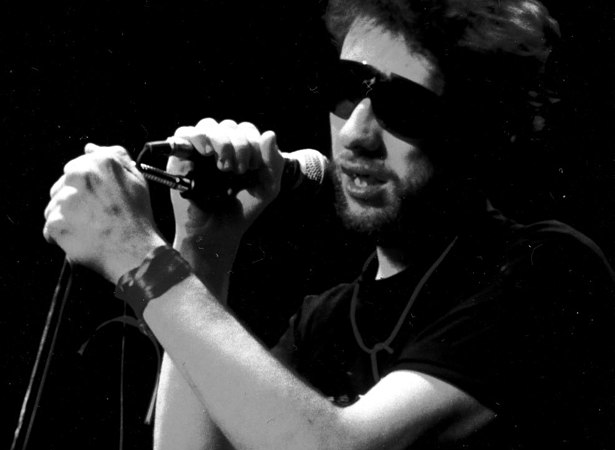
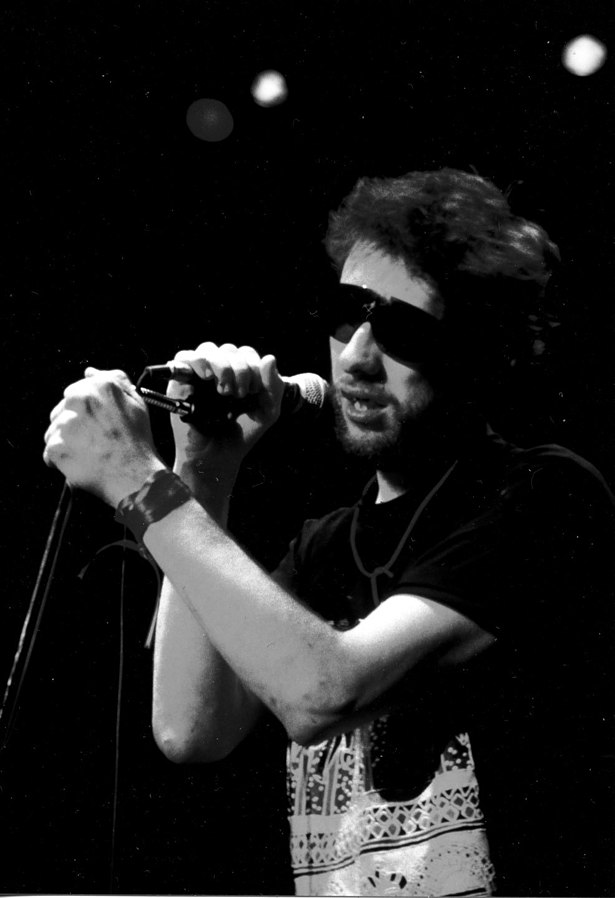
Image: Shane MacGowan. Source: https://www.flickr.com/photos/goro_memo/6969835462/. Author: Masao Nakagami, licensed under the Creative Commons Attribution-Share Alike 2.0 Generic license.
 Labour Hub