
By Mike Phipps
Two hundred years ago today US President James Monroe articulated what later became known as the ‘Monroe Doctrine’ – the tenet that any intervention in the political affairs of the Americas by foreign powers is a potentially hostile act against the United States. By extension, it licensed US military intervention across the Western Hemisphere from the 19th century onwards.
In 1842, the US applied the doctrine to Hawaii and began a process of annexation. In 1895, US Secretary of State Richard Olney stated, “The United States is practically sovereign on this continent, and its fiat is law upon the subjects to which it confines its interposition.” President Theodore Roosevelt concretised the idea in 1904, asserting the US’s right to intervene throughout Latin America, a statement which produced outrage in the region.
Central America particularly has suffered from this assertion of US hegemony. In 1899 President William McKinley declared a US Army general to have supreme power in Cuba. The US occupied the Dominican Republic from 1916 to 1924, Haiti from 1915 to 1934 and Nicaragua from 1912 to 1933. There were repeated incursion in this period into Honduras to protect US business interests.
During the Cold War, the Monroe Doctrine was frequently invoked to prevent the spread of so-called ‘Soviet-backed communism’ in Latin America. The US armed, funded and trained a military force to overthrow the Arbenz government in Guatemala in the 1950s and in 1965 invaded the Dominican Republic. President Kennedy cited the Doctrine during the Cuban crisis of 1962 and it was again invoked to defend the CIA’s programme of training a murderous guerrilla force to destabilise the democratically elected Sandinista government of Nicaragua during the 1980s.
In 1989, Panama was subject to a full-scale invasion, ostensibly to remove the President, a former CIA intelligence asset who had now gone rogue. But hundreds of civilians were killed in the process and the working class districts of Panama city were particularly targeted.
This cursory summary highlights only the most prominent interventions. The role of the US in destabilising and plotting against governments that were not to its liking touches on virtually every country in the continent, including Argentina, Brazil and Chile. The latter was subject to a full-scale economic war by President Nixon, whose Administration also helped orchestrate the bloody coup against the elected government of Salvador Allende in 1973.
Recognising its imperialist basis, President Obama’s Secretary of State John Kerry announced in 2013 that the “era of the Monroe Doctrine is over.” Yet even then, the US could not break the habit of interfering in the internal affairs of Latin American countries, especially when they did not like the governments elected there. Under Trump, the Doctrine was again dredged up to justify potential US military intervention in Venezuela.
Francisco Dominguez wrote recently: “In 2019, the fanatical cold warrior John Bolton claimed that the ‘Monroe Doctrine is alive and well.’ He is right. US racism, exploitation and military interventions – with their horrible trails of violence, exploitation, poverty, destruction and death all across Latin America and the world – are, appallingly, very much alive.”
There has been very little in the mainstream media about this anniversary, but US peace groups are not letting it pass unnoticed. Events are planned around the world to bury the Monroe Doctrine on its 200th birthday, including in Latin America and within the USA itself. The international peace group World Beyond War is publicising a range of activities and resources to mark the anniversary.
Mike Phipps’ book Don’t Stop Thinking About Tomorrow: The Labour Party after Jeremy Corbyn (OR Books, 2022) can be ordered here.
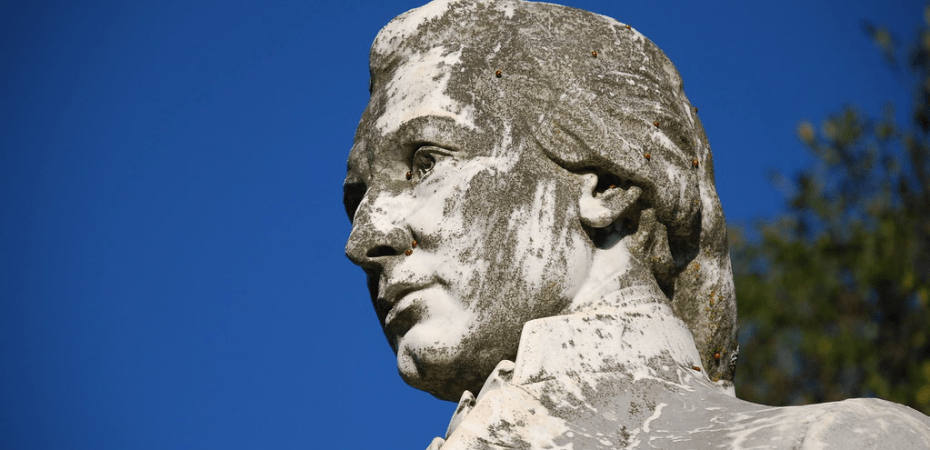
Image: President James Monroe. https://www.flickr.com/photos/afagen/2069754826. Creator: Adam Fagen. Licence: CC BY-NC-SA 2.0 DEED Attribution-NonCommercial-ShareAlike 2.0 Generic
 Labour Hub