
By Sue Lukes
I said that this government would clear the backlog of asylum decisions by the end of 2023. That’s exactly what we’ve done.” – Rishi Sunak, 2nd January 2024.
Well, as usual, you can tell when ‘Cleverly’ or Sunak are lying because their lips move.
- The backlog has not been cleared. According to Full Fact it still stands at almost 100,000
- Elsewhere, the government explains that what it really means is the “legacy backlog”: people who applied for asylum before 28th June 2022.
- But even in the “legacy backlog” this claim is not true. Over 4,500 cases have not been resolved but referred elsewhere for decisions and the Office for Statistics Regulation is now looking into the potentially misleading claim
How did the backlog happen?
- It is not due to the arrival of larger numbers, or people getting small boats across the channel (yes, boat arrivals did increase over the last year, with Afghans the largest group. Why? Because there are no safe routes out of Afghanistan in spite of the UK government’s pledges to look after or evacuate so many Afghans when the Taliban took over).
- At the beginning of 2018, almost 60% of asylum cases were decided within six months. By the middle of that year, the figure had gone into freefall, at under 30%. By mid-2019 it was less than 20% and has not gone above that since then. Why? Simply put: cuts. The numbers of decision-makers were drastically reduced and fewer decisions made. The government made the backlog.
- Because so many more people were waiting for decisions, unable to work or claim benefits, accommodation for them ran out and the Home office started using hotels in large numbers.
- For the people stranded in those hotels for months and years, that is terrible. But they are not the only ones affected. According to an answer given in the House of Lords in September 2023, one third of the government development assistance budget (meant to provide aid overseas) goes on asylum hotels.
And what does “cleared” actually mean?
- In 2023, of the 112,000 decisions celebrated by Sunak, over 35,000 were “non-substantive”, in other words no actual decision was made. Many of these are recorded as “withdrawn”; in most cases this was for “non-compliance”: people failed to respond to emails or letters, did not turn up to interviews or failed to complete a questionnaire.
- The questionnaires were part of the “backlog clearance” process. From February 2023 onwards, people of certain nationalities were sent a long questionnaire in English instead of getting an in-person interview. If they fail to include relevant information, they run the risk of being refused asylum, so they need legal advice to complete it, but because of the failure to fund legal aid properly, 51% of those needing that advice will not be able to get it.
- There is growing concern about the substantive decisions made: over 20,000 were made in one four-week period in November and December 2023, as staff, incentivised by bonus vouchers for extra shifts, felt the pressure to meet the target. Lawyers now report on very poor quality decisions, which then have to be appealed.
- And that is the backlog the government is not talking about: “The average time it takes for the First-tier Tribunal to decide an asylum case was 82 weeks in the period April to June 2023. This is up from 29 weeks prior to the pandemic. It was only 48 weeks as recently as 2021.”
And what happens to those who get the decisions?
- As soon as the decision is made, new refugees are given notice to leave their Home Office accommodation, but the documents they need do not arrive for some days or weeks, and sometimes longer.
- The hostile environment created by the government means that employers and landlords must not rent or employ people without seeing those documents. So people become destitute and homeless, often after waiting years in hotels or barracks. The Red Cross estimate maybe as many as 50,000.
Labour’s response to this crisis has been poor. Of course the front bench is right to highlight the crisis as one of the government’s own making, that has been exacerbated by political posturing by successive Home Secretaries. But by accepting the Tory framing of the issue in terms of “stop the boats”, Keir Starmer and Shadow Home Secretary Yvette Cooper make a grave error. Immigration is a fact of life: people have migrated ever since the first humans looked at the African horizon, and governments generally determine what happens to people once they are in the country: economics and fear are what moves people. Accepting the right’s “stop the boats” narrative will lead Labour in a race to the bottom with the government in the search for callous ‘solutions’ that will simply not work.
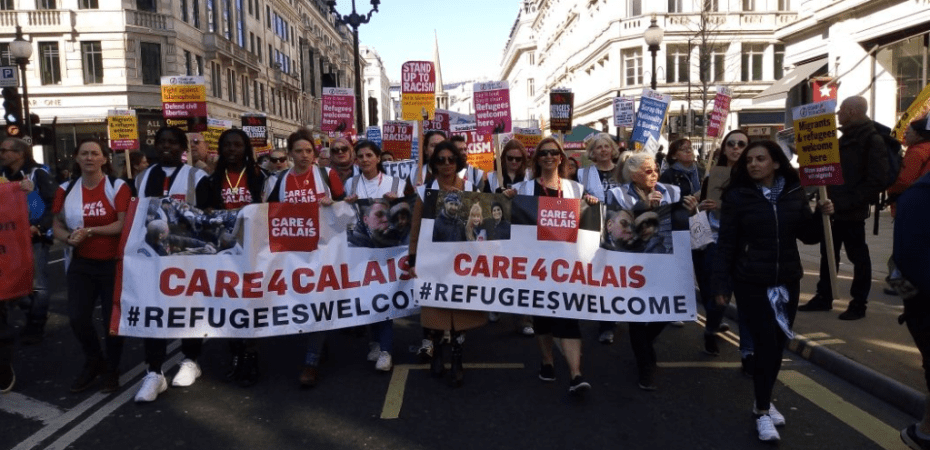
Labour must recognise the misery and terror that the Tories’ punitive approach has inflicted on tens of thousands of ordinary men, women and children fleeing conflict and oppression, and stand firmly against it. It should learn from the local communities it wants to represent, because across the UK so many responses have been about solidarity, humanity and a belief that people, asylum seekers too, belong in communities not hotels, bases, barracks and barges. Movements like Care for Calais and local community groups who have stepped up, found clothing, organised cricket matches, befriended and learned from their new neighbours see migrants as human beings rather than numbers . They put our opportunist politicians to shame and Labour must learn from and work with them.
Last May’s local elections – where a number of high-profile refugee rights campaigners were elected in areas where Tory anti-migrant rhetoric might have been expected to resonate – underline that bashing migrants is really not where voters are at. Labour needs to rediscover its humanitarianism and change tack accordingly. Savvy local politicians already have: Sadiq Khan’s #LondonForEveryone is a clever and principled start to his mayoral re-election campaign.
Sue Lukes was an Islington Labour Councillor from 2018 to 2022 and is a writer and consultant on migration issues.
Image: c/o Mike Phipps
 Labour Hub