
Mike Phipps recalls the significance of a shock measure introduced fifty years ago this week.
There is increasing support nowadays for a shorter working week. It would bring about a better work-life balance, improve health, well-being and productivity and ensure greater sustainability. But fifty years ago this week, Ted Heath’s Conservative Government introduced a mandatory three-day working week for entirely different reasons.
The three-day week was aimed at conserving electricity, which in those days was largely generated by coal-fired power stations. Stocks were already low after a strike by the National Union of Mineworkers in 1972, and when the miners implemented an overtime ban in late 1973, production was further hit. International oil supplies were also being adversely affected by Arab countries stopping exports to countries which supported Israel in the Yom Kippur War.
The miners’ action was motivated by the need to maintain the real value of their pay in the context of galloping inflation. Even the Government’s own Wilberforce Inquiry recognised the fall in miners’ wages in real terms.
In the face of dwindling coal stocks, the Government reacted with shock measures. From 1st January 1974, commercial users of electricity would limited to three specified consecutive days’ consumption each week and would be prohibited from working longer hours on those days. Essential services were exempt. Television companies were required to cease broadcasting at 10.30pm each evening in order to conserve electricity, a practice which had considerable psychological impact.
Every night, if power outages occurred, people worked by candlelight or torchlight, wrapped in blankets to keep warm and boiled water to wash in. Heatin g was limited to one room. Most pubs closed. Evening football matches could not be floodlit and were postponed. Such conditions were reminiscent of wartime, as perhaps the Government intended then to be.
The economy was under massive strain. Small businesses went under and workers were laid off in some sectors. Panic buying set in.
But it was also a time of great excitement and sustained confidence on the part of the workers’ movement, fresh from victories against Heath’s anti-union Industrial Relations Act, which had been rendered unworkable by defiant union action culminating in what was effectively an unofficial national strike to free the ‘Pentonville Five’. These were five shop stewards who had been imprisoned in 1972 for refusing to obey a court order to stop picketing. Mass walkouts forced their release – a moment of supreme humiliation for the Heath Government.
In January 1974, the miners voted for an all-out strike. Within two days of the action beginning, Heath called a general election, using the slogan “Who governs Britain?”
In the face of a largely hostile media, Labour in Opposition worked to reframe the election as a choice between the confrontation of the Heath years and Labour’s alternative: a new period of consensus and conciliation between Government and unions – what would later become known as the “Social Contract”. The idea was that Labour would maintain the real value of the social wage – pensions, health and social services spending, etc. – if union leaders voluntarily got their members not to press for above-inflation pay claims.
For a while it would work. But as Labour accepted the International Monetary Fund’s demands for spending cuts in 1976, it very quickly became a one-way exercise in wage restraint with no countervailing benefits. It also contributed to significant working class alienation from Labour at the end of the decade.
All that was later. In the February 1974 general election, Labour won more seats than the Tories and formed a minority government. Eight months later, Prime Minister Wilson called a fresh election and won a majority of three. Before that, the Labour Government increased miners’ wages by 35%, settling the dispute. If that seems high, it should be remembered that inflation was also in double figures at the time. The settlement simply brought the miners’ wages in line with the expectations set out by the Wilberforce Inquiry.
The three-day week lasted only two months. It ended with the conclusion of the miners’ strike at the end of February 1974. What was its significance?
The simple truth is that the miners effectively cut short the life of Ted Heath’s Tory government. The latter’s options were quite restricted: there was a real shortage of electricity, but at the same time, the Government was genuinely alarmed about how to tackle the crisis. Cabinet Papers from the time state, “Government must not appear to be working for a major confrontation with the unions… Government should not appear to use the three-day week as a threat to the unions. The facts must be presented in a low key emphasising the overriding need to meet the fuel shortage.”
The three-day week was not sustainable in the long term but equally, the Tory Government was worried that calling it off without a resolution of the strike would look like weakness. In the circumstances, calling a general election may have been the only way out for Heath.
The longer term impact was double-edged. Labour could pose as the Party which solved the crisis, which knew how to get a deal with the trade unions. In the 1979 general election, Labour reminded voters of the three-day week, with a poster showing a lit candle and bearing the slogan “Remember the last time the Tories said they had all the answers?”
The problem was that Labour lost that election. Labour had traded on its special relationship with the unions, but by 1979 the “Social Contract” had unravelled and the country was engulfed in a “winter of discontent” of strikes by low-paid workers, whose below-inflation pay increases had hit their living standards brutally hard.
The Conservatives under Thatcher won in 1979. In the Opposition years, they had worked out a strategy to ensure that never again would they be forced out of office by the power of the unions. The Ridley Plan, as it was known, prescribed a series of contingencies to ensure victory in future: building up coal stocks in advance of any dispute; laying plans to import coal from non-union foreign ports; using non-union lorry drivers to transport coal rather than relying on unionised rail workers; installing dual coal-oil firing generators; ending any financial aid to strikers; and training a large, mobile squad of police, ready to employ riot tactics against striking miners.
These tactics were unleashed in the year-long 1984-5 miners’ strike under Thatcher and helped ensure its defeat. Within a few years, deep coalmining would disappear from Britain and with it a major bastion of the labour movement and focus of opposition to the Tories. The ruling elite does not take defeat lightly and works tirelessly to reverse any setback. We must take the same approach.
Mike Phipps’ book Don’t Stop Thinking About Tomorrow: The Labour Party after Jeremy Corbyn (OR Books, 2022) can be ordered here.
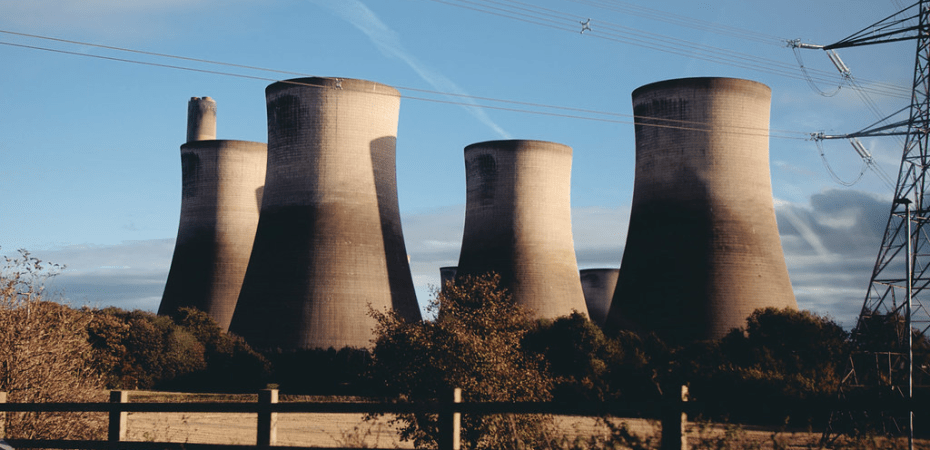
Image: Fiddler’s Ferry Power Station . https://www.flickr.com/photos/ianbetley/53291764478/in/faves-115338398@N03/. Creator: Ian Betley. Licence: CC BY-NC 2.0 DEED Attribution-NonCommercial 2.0 Generic.
 Labour Hub