

By Rosie Brocklehurst
In September last year Labour Hub ran the first in a series of articles about the Post Office scandal, bringing the story which has involved campaigning MPs of all political persuasions, to a leftish audience.
Millie Castleton
The article summarised the detail of the scandal and ended with a deeply affecting statement from Millie Castleton, daughter of Lee Castleton. As a young child she had been bullied due to the stigma associated with her father Lee’s prosecution. She developed anorexia and her weight went down to a life-threatening five stone. Millie, a core participant, had presented her story to the public Inquiry, chaired by Sir Wyn Williams as one of several ‘human impact statements.’
Huge miscarriages of justice allied with corporate malfeasance is an important subject, but there was something about the Post Office scandal that was failing to set people alight until an ITV drama, on January 1st this year, penetrated the nation’s psyche.
A voice but no response
The article I wrote had allowed Millie a voice, but it had failed to offer a response or to ask what she wanted, or even to consider the concept of redress for her or for any other adult child affected. I was reminded of this when a Subpostmaster father, Tony Downey contacted me about his daughter at the beginning of March this year.
Tony Downey had only found out in 2022 about the scandal and the Bates Group Litigation in the High Court. He had read the Labour Hub article with Millie Castleton’s story. He had heard I was now a campaigner and had the time because I was retired. Tony asked if I would contact his daughter Katie to talk about children of Subpostmasters and a potential campaign she was developing.
The last campaign of a similar nature, apart from the miners’ strike in 1984, that had touched me as deeply as the Post Office scandal for the sheer level of injustice, was Hillsborough where 97 football fans young and old, men, women and children, died. That tragedy not only profoundly affected the people of Liverpool, an area of Lancashire that was close to Ainsdale where I lived when young, but 37 years later there had been no redress. The people of Liverpool had been vilified. Victim blaming started on Day One, led by the Yorkshire Police, Kelvin MacKenzie of the Sun, and Margaret Thatcher.
In 1997, two years before Horizon was to be rolled out in Post Offices, Jack Straw, Home Secretary in Blair’s first administration, and coincidentally the husband of Alice Perkins who was to become Post Office Chair, refused a further Inquiry into Hillsborough following the disgraceful Stuart-Smith Inquiry which failed to expose the cover-up. The then Judge provoked outrage after he quipped during a meeting with families: “Have you got a few of your people or are they like the Liverpool fans, (going) to turn up at the last minute?”
I tore up my Labour Party Card for the first time and wrote the lead letter in the Times that same week despairing of the Party’s heartless stupidity. There are similarities, as well as many differences of course, with the Post Office scandal.
In the case of the Post Office Horizon scandal, the story has panned out over 24 years. Deaths came for some victims, exacerbated by stress. Over 251 people have died before seeing a final compensation payout.
Victim blaming has also been a characteristic of the Post Office culture, particularly among investigators. In commentary, Nick Read the Post Office CEO, channelling his very own two-faced Janus, laid on sympathetic words in public with a trowel while working behind the scenes to sow doubt about the honesty of Subpostmasters. He implied those successful appeals had been won on technicalities. He promoted the idea that 369 appeals could be opposed and did this in a letter to the Rt Hon Liam Byrne MP, Chair of the Department of Business and Trade Select Committee just five days after the transmission of the ITV drama. Byrne who has been the right heavyweight politician at the right time on the committee, was not impressed.
Four years after the Group Litigation in the High Court by Alan Bates and the 555, many of those Subpostmasters have still received little or no compensation. Contrast this reality with how often the Parliamentary Select Committee has heard the phrase “continuing at pace” about compensation and disclosure when ‘working at a deliberately and inordinately slow pace,’ would have been nearer the truth. In fact, the Post Office’s disclosure on Subpostmasters has been so profoundly inadequate and slow, it has held up the Inquiry proceedings more than once – this despite the vast bonuses received by the Board for ‘cooperating’ with the Inquiry.
It is poor disclosure which has delayed most compensation claims. It has also contributed to conviction and imprisonment for prosecutions of some SubPostmasters because important information was deliberately withheld from the defence.
Make mine a £million
One thing the Post Office seems to be quick about is to ask for vast pay rises for its CEO, allegedly of up to £1 million. He already earns £405,000 and got a bonus of £455,000 last year, only a small part of which he was forced to return. The Post Office is also pretty speedy at hiring lawyers to defend the indefensible, and at paying them to delay matters – an estimated £300 million so far, and of course this is money that comes directly from you and me via the Treasury, because the Post Office is owned, as an arm’s length body, by the Government which is the shareholder. Yet financially and in fact every other way, the Post Office is a basket case that Alan Bates suggested should be sold to Amazon for £1. God forbid that Amazon gets its clutches on it, but the potential for cooperative mutualisation is being discussed behind the scenes.
The Post Office scandal, called the biggest miscarriage of justice in British history, involves what now looks likely to be three thousand or even more Subpostmasters, most of whom at the very minimum lost their livelihoods. Many of the Subpostmasters had children and all family members were impacted. But this issue has been skimmed over, even if it has been raised with the Inquiry by campaigner Eleanor Shaikh in 2022 and by another victim, Subpostmaster Nichola Arch.
Children doing it for themselves
So how many children of Subpostmasters were affected? We just don’t know yet. We do not know for certain even now the exact number of Subpostmasters who have been affected. We can say for certain, however, that nothing has been done by the Post Office itself to hear the voices of the children who were harmed. Instead, adult children have taken it into their own hands to do something.
Lost Chances for Subpostmaster Children: LCSC
A movement is growing among the adult children affected. Between Tony Downey calling me about his daughter at the beginning of March and today, some of these Subpostmaster children have joined together to form a new support group. Lost chances – for Children of Subpostmasters (LCSC), founded by 25-year-old Katie Downey, held its first support group on March 11th via Zoom.
I was invited to sit in as a trusted adult and facilitator from experience gained as a trained counsellor and working within groups such as Adult Children of Alcoholics, and because of my own communications and PR background.
Sean Connelly’s football career spiked
Among the founder members of the group was Sean Connelly, now aged 28 who lives in County Tyrone, Northern Ireland. He and a small number of other children gave permission for me to tell their stories and took part in publicity for the launch of the Lost Chances on March 14th.
Sean’s mother Deidre ran Killeter Post Office. Investigators accused his mother of stealing £15,500 to give to paramilitaries. Sean, then aged 15, played football for the Northern Ireland under eighteens and was later asked to trial for Queens Park Rangers under eighteens.
“I started to get anxiety attacks because in our Catholic community such talk was terrifying. My footballing prospects were finished because of the closure of our post office, by the shame and the prosecutions. I still get panic attacks and I have not been able to share this before now.”
Rebekah Foot
Another Lost Chances member is Rebekah Foot, one of six children of Pamela Church, who served as a Subpostmistress for the Dog and Gun Post Office in Liverpool from April 1995 to May 2014.
Rebekah said: “Post Offices have always been integral to our family, with a lineage tracing back to my great-grandparents, aunties, uncle, and grandparents, who managed several post offices from 1984 to 2019. My initial encounter with issues stemming from the Post Office came when my mum’s cousin, who was employed by her, was convicted of false accounting at Christmas Eve 2006. Our mum was suspended and didn’t get her post office back until June of 2007. Both parties were told to cease contact to avoid jeopardising the case which would lead to further convictions. Our close-knit family, who had previously visited most weekends and shared summer holidays, were out of our lives.
“The words ‘stole,’ and ‘thief’ became frequent in our everyday conversations. Both my two older brothers and I began working from a young age. At aged 13, I worked at the local fish and chip shop. Weekends, summer holidays and half-terms were dedicated to ten-hour shifts, five days a week. There was a moment when my mum found herself short on cash to pay her staff’s wages, and she had to turn to me for a loan. Reflecting on it now, I realise it must have taken a lot for her to ask. Yet, as a young teenager, I didn’t give it much thought. It felt natural, as it mirrored the way she had always supported me.
“Ours was a family built on mutual aid, where helping each other out was simply second nature. During this period, our mother’s health took a decline, marked by severe panic attacks that left her incapacitated. We children tended to her. It often felt like we children had to mature faster than our friends. We missed out on the big milestone birthdays, vacations abroad, learning to drive and the latest gadgets or trendy trips to the hairdressers. Instead, our childhood was woven with a different kind of richness—love, and plenty of it. Despite the absence of material luxuries, the warmth and support within our family were abundant, grounding us in values that we still possess today.”
“In 2014, our mother faced bankruptcy due to the relentless pressure of trying to bridge the shortfalls imposed by the Post Office. Despite the valiant efforts of our grandpa, who provided some assistance, it proved insufficient to keep us afloat. To exacerbate matters, the Post Office denied her the opportunity to sell her business, sealing our fate with a devastating blow. With no recourse left, they reclaimed what was rightfully ours, leaving us not only bankrupt but also burdened with a tarnished reputation. It was a crushing blow that shook the foundation of our family’s livelihood that now lives with us forever.”
Katie Downey’s story
“Aged 11, I felt I was supposed to care for my own parents, because they were upset, in pain and shouting at each other about money and their perceived failures. They knew nothing about Horizon’s faults. Shortfalls resulted in huge debts. My dad had borrowed from everyone and had no means to pay it back. But for years he thought it was some inexplicable failure in him and not the Horizon system. My father is a clever man, but he lost his self-esteem. He was bankrupted. So, although I felt it was my job to look after them, I felt angry but could not express it. So, I silenced myself.
“Many years later I trained as a teacher. I managed to get a place at university. But I could not practice in a classroom setting, because memories of bullying came flooding back as soon as I stepped inside the school building. I now teach online, from where I live in Spain after we moved here from France.
“My father found out about the reasons he had had shortfalls just 16 months ago, fourteen years late. He had come across Nick Wallis’s book. He told me last summer what had happened. I felt all this pain and guilt and sense of loss about what might have been and should have been for my family and me.”
Tony Downey travelled from Spain where the family now live to give evidence to the Department of Business and Trade Select Committee on February 27th. His wife could not make it, so Katie agreed to accompany him and sat through the five-hour session at the House of Commons.
“I have never done anything like this before,” she said. “It was my first real experience of a political process, and I felt the Post Office chief was more interested in his own salary than in caring about what we went through. That day I decided to do something about the children of Subpostmasters.

“I had had an idyllic life in the lovely village of Hawkshead in Cumbria, where I was happy at school, and I was placed in a strange school in a strange land without explanation. I was bullied, held up against a wall and threatened. With the upset at home and being uprooted, I was a child in a state of shock and I became mute. I could not speak to anyone for two years, not to my parents nor to anyone at this strange school in Limousin in central France. I had to be coaxed out of my shell with therapy.”
The group, Lost Chances, which Katie has organised in a matter of three weeks, was launched to the media on Thursday March 14th and was widely covered by national television and radio. Katie now has 75 adult children interested in joining. The group cannot support anyone under the age of 18 but is offering advice to the parents of any child affected who is underage.
There is a simple website form for new joiners at www.lostchances.co.uk. The website will eventually become a central resource when they can get funding, hopefully from Fujitsu. They are also looking for understanding of what they went through and a much more profound awareness of the impacts that scandals have on whole families, not just upon the immediate victim. Future plans include a newsletter and regular online sharing with each other probably on a regional basis so people can meet up and develop buddying support.
Lost Chances has already had a positive response from Fujitsu as the MD for Europe Paul Patterson has said he will add Katie Downey to the list when he meets other core participants’ and their legal representatives.
“We are beginning to identify in those life chances that were lost to us as child victims of the Post Office Horizon scandal,” she added. “Meanwhile, I am paying with my own earnings from teaching, for the website hosting.”
Katie Downey has also written to Sir Wyn Williams to inform the Inquiry about their formation and plans.
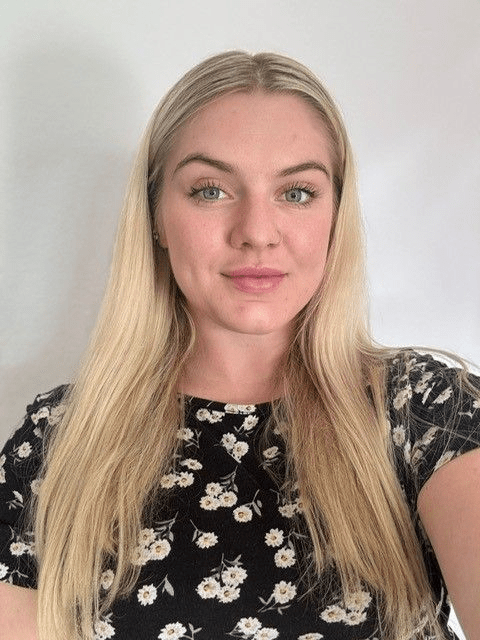
“I have this fire inside me now to speak up for all of us. I was mute once. Now I have been talking to everyone about us. I am still feeling my way. Everyone I have met so far has been incredibly supportive, but underneath I don’t really have that much confidence.”
It is extraordinary then, that within two weeks of visiting Parliament Katie had organised the first group meeting on March 11th where people shared their feelings for the first time and began to identify and bond with each other.
One of the first people Katie Downey spoke to after Liam Byrne and other supportive members of the Select Committee, was Professor Richard Moorhead from Exeter University who sits as an Independent on the Horizon Compensation Advisory Board, and Nick Wallis, journalist, and author of The Great Post Office Scandal. Moorhead runs a law and ethics project at the University.
Professor Moorhead said: “The law tends to draw a line in this country when it comes to compensating family members of those more directly impacted by scandals, although the Post Office is a unique case. Children of Subpostmasters might find it difficult to claim compensation through the courts.”
Moorhead, who has written widely on the Horizon scandal, added: “Legal responsibility tends to concentrate on those most directly affected by the harm. Children would ordinarily be treated as too ‘remote’ from the harms caused because it was not inflicted on them directly.”
If the Treasury were to start paying out to the children of Subpostmasters, that would “increase the cost of compensation significantly”, he said. However, he also said this issue has yet to be considered by judicial assessors, “who might take a different view” given their emphasis on justice as well as legal precedent. “Ultimately, the question is a political one not a legal one,” he said. “If for example Fujitsu can be persuaded justice requires it, then it can happen.”
Lost Chances vs Fujitsu’s lost reputation
Katie Downey said: “Compensation for harms in this country is poor in comparison with the USA. Automatic right to legal redress for children in these cases does seem a long way off. Perhaps if the law was to look at wider redress for families affected, businesses like the Post Office might take their responsibilities for their Subpostmaster workers more seriously. Similarly, if Fujitsu were to listen to the stories of harms done to the generation that grew up during 25 years of this scandal, they could perhaps restore some of our lost chances and their own lost reputation.”
Nick Wallis is organising a theatre tour about the scandal across the country and will be in Bishops Stortford on April 27th with Tony and Katy Downey. www.lostchances.co.uk is the website for adult children of Subpostmasters and parents of children under 18 may also contact the website for further help, although the group is not able to directly involve children who are under the age of 18 years for legal and safeguarding reasons. The engagement team of the Public Inquiry has also launched a listening initiative for individuals to contribute called In Your Own Words, which can be found here.
Rosie Brocklehurst is a journalist and press officer (retired) who worked for the Labour Party, LWT, the BBC and several charities.
Main image: Wallasey Post Office. Author: Rodhullandemu, licensed under the Creative Commons Attribution-Share Alike 3.0 Unported license. Inset images: Katie Downey, as a child and today. c/o Katie Downey.
 Labour Hub