
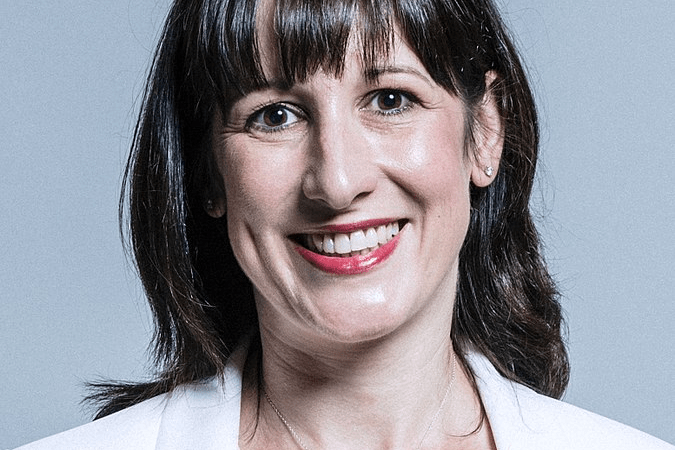
In a classic piece of New Labour-style spin, the advance coverage of Rachel Reeves’ Mais lecture on the evening of March 19th perhaps made it look worse than the actual speech turned out to be. Direct praise of Margaret Thatcher was merely alluded to, not spelled out. Presumably, we were expected to breath a collective sigh of relief.
As one commentator pointed out, Reeves did not mention Thatcher by name in her speech. But her call for “a decade of national renewal” did echo a phrase used by the late Tory prime minister. The implication was clear.
The idea that Margaret Thatcher brought about a decade of national renewal, which Labour should emulate in some ways, was immediately challenged by Momentum on both counts.
Martin Abrams, spokesperson for Momentum, said: “Once again, the Labour leadership is proving itself out of touch with the labour movement and Labour values. Thatcher’s government did not bring about ‘national renewal’ but instead misery for millions of working class people and ballooning inequality. As we witness today the exhaustion of a Tory ideology based on privatisation and financialisation, Labour should be offering a true break with Thatcherism with a popular programme based on public ownership, state investment and wealth taxes.”
Former Scottish Labour Richard Leonard leader agreed. He tweeted: “In the 1980s manufacturing was butchered, factory after factory closed, privatisation was let rip, unemployment rocketed, profits boomed, the wage share fell, the rich got richer, and inequality soared,” concluding: “Thatcher didn’t renew the economy, she broke it.”
Tax Justice campaign Richard Murphy simply called Reeves’ speech “depraved.”
It was left to progressive economist James Meadway to engage with and critique the substance of Reeves’ speech. In a lengthy twitter thread, he warned: “If our view of the next government is that it is only crisis and inevitable failure, ‘reformism without reforms’, we are likely to be blindsided. At the very least, the Reeves programme suggests that there has been some recognition of the institutional shift required to rebuild Britain’s political economy, and (related to that) the politics needed to secure consent to do so. Our baseline understanding of the world should be that crises will be worse, and the British institutional failures are worse, than Reeves and her team recognise.”
“On the positive side,” he suggests, “Reeves has a clear recognition of the major weaknesses of British capitalism, as capitalism itself might recognise them, centred on low productivity which is the product of low investment, and therefore results in low growth.”
Her ‘solutions’ are not a restatement of traditional Thatcherism, via shrinking the state. Nor do they envisage a classic social democratic expansion of the state. “The nearest parallel I can think of, in recent British history, is the rescue of the British car industry after the 2008 crisis which involved industrial strategy and government intervention – overseen by Peter Mandelson! – for a key sector, supporting demand and rebuilding supply chains, whilst also continuing with the broad outlines of neoliberal policy elsewhere.”
To get consent for this approach, at least from union leaderships, Meadway believes, there will be some improvements in workplace bargaining and rights at work. The problem is that the repair bill for fixing Britain’s broken services – the NHS alone needs £10 billion – is unlikely to be met under Labour’s tough, self-limiting expenditure rules.
“Fundamentally, the entire programme is premised on a smooth return to ‘broad-based’ growth, which Reeves insists is viable. In a world as subject to the shocks she described earlier, it is not,” concludes Meadway.
The reality is that growth has to be planned for and this is even truer for green growth. But announcements earlier this year that dilute Labour’s previous commitment to green investment – indeed cut it by half – make this all the more challenging.
Rachel Reeves’ strategic vision for the economy may not be Thatcherite. But in concrete policy terms, many will argue that refusing to abolish Right to Buy, supporting the continued privatisation of public utilities and pursuing a punitive benefits regime that includes the two-child cap, effectively means that a Starmer-Reeves government is likely to be a continuation of Thatcher’s legacy.
Starmer of course has pretty much shredded the ten progressive pledges he made when running to be Labour leader in order to reach this point. Reeves at least has the virtue of consistency. In 2013 she caused controversy when she announced that Labour in power would be tougher than the Tories in slashing the benefits bill. The long-term jobless would be required to take up work offers or lose state support, she declared.
She faced a further backlash in 2015 when she said, “We don’t want to be seen, and we’re not, the party to represent those who are out of work.”
We may soon see what all this looks like in practice.
Image: Rachel Reeves. Source: https://api20170418155059.azure-api.net/photo/GzViho86.jpeg?crop=MCU_3:4&quality=80&download=trueGallery: https://beta.parliament.uk/media/GzViho86. Author: https://en.wikipedia.org/wiki/Chris_McAndrew, licensed under the Creative Commons Attribution 3.0 Unported license.
 Labour Hub
