
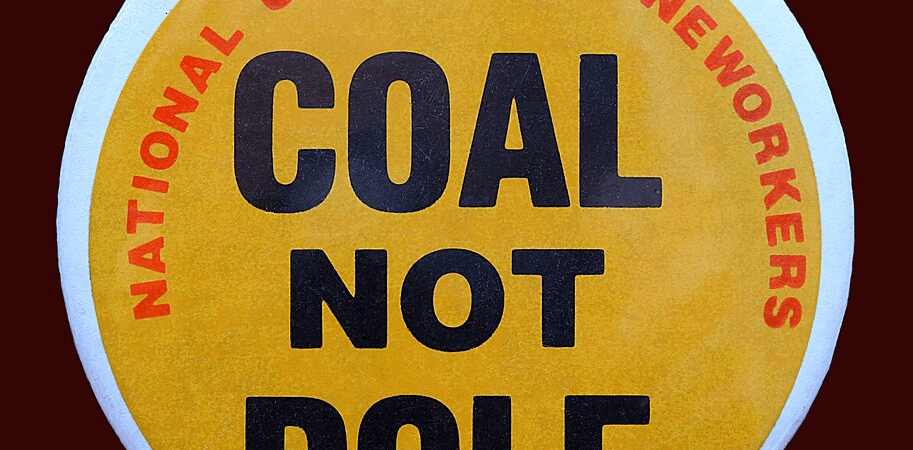
As a new exhibition opens in Edinburgh, former MSP Neil Findlay points to what an incoming Labour government could do to right some historic wrongs.
The 40th anniversary of the miners’ strike has provoked many articles, documentaries, events and exhibitions that look back at that titanic struggle for jobs and the future of coalfield communities across the UK.
The National Portrait Gallery in Edinburgh is in on the act, hosting ‘Before and After Coal – Images and Voices from Scotland’s Mining Communities.’ This free-to-enter exhibition is based on a visit to Scotland before the strike (in 1982), by American photographer Milton Rogovin. He photographed Scottish miners at work, at home, and enjoying their free time away from the dust and danger.
40 years on from the strike of 1984-85, with the industry long gone, artist Nicky Bird followed Rogovin’s footsteps working in the same communities with people connected to the original work. The result is a collection of powerful, evocative and touching images accompanied with artwork, banners made by school pupils, mining memorabilia and artefacts from the time. The strike and its aftermath feature heavily.
For me, as someone who grew up and still lives in a mining community, it is the black and white images of the miners and their comrades working in the toughest of environments, set against images of them in the places they shopped, the welfare clubs where they danced, played snooker, darts and bingo, at home in private moments with their wife and family, and taking action to defend their livelihoods and children’s futures that so powerfully evoke the spirit and dignity of these remarkable communities.
The 40th anniversary of the strike comes at a time when the election of a Labour Government looks almost certain. What will this mean for the UK’s mining communities and those who worked below ground?
A few weeks ago I attended a fantastic event in Dalkeith to mark the strike anniversary. Scottish Labour leader Anas Sarwar MSP and former Foreign Secretary and Labour candidate for East Lothian, Douglas Alexander were in attendance, pressing the flesh in the run up to the election. I had expected some kind of policy commitment from Sarwar in his speech, but none was made.
In Scotland I campaigned for a decade along with the NUM and Thomson’s solicitors, successfully securing a pardons bill for those miners convicted during the strike. Disgracefully, the SNP government voted down a proposal to compensate them. However, an incoming Labour government can right this and other wrongs. So, will we see Messrs Sarwar, Alexander and Starmer give any commitment to the communities and the people that powered Britain?
They should commit to:-
– A pardon for all UK miners convicted during the strike
– Compensation for all who lost their jobs after they were convicted
– A public inquiry into Orgreave and the policing of the strike
– An end to the theft by the state of the miners pension fund surplus.
With commitments like this, then the 40th anniversary will not be solely a time for reminiscing about the past or the mourning of an industry and way of life: it can be a year of real significance, and most importantly, four decades on, the injustice against our class and our communities can begin to be addressed.
‘Before and After Coal – Images and Voices from Scotland’s Mining Communities.’ runs until September 15th between 10am and 5pm at the National Galleries of Scotland, 73 Belford Road, Edinburgh, EH4 3DS.
Neil Findlay was a member of the Scottish Parliament for Lothian from 2011 to 2021. His book Hope and Despair: Lifting the Lid on the Murky World of Scottish Politics, (Luath 2023), was reviewed on Labour Hub here.
Image: Author: Jamain, licensed under the Creative Commons Attribution-Share Alike 4.0 International license.
 Labour Hub