
By Labour CND
Keir Starmer used a visit to Barrow-in-Furness on 12th April to announce Labour’s “unshakeable absolute total” commitment to Trident, Britain’s nuclear weapons system, and Labour’s plan to raise military spending to 2.5% of gross domestic product under a Labour government. This means billions of pounds more public funds allocated to the military budget.
Starmer should be under no illusions. He does not speak for the majority of Labour Party members, however, or even the public on these issues. Nor does this allay Tory voter fears that Labour is a safe pair of hands when it comes to defence, as shown by the hundreds of reader comments in response to the above, which appeared within hours of the article being posted online.
Trident is the “bedrock of Labour’s plan to keep Britain safe,” he said. The UK’s “nuclear deterrent” was “maintained on behalf of NATO”. This was “a generational, multi-decade commitment” from a Starmer government.
International tensions are growing, and with them the risk of nuclear confrontation. Politicians may believe Trident guarantees us a place at the top table. But the assurance of Labour and Tories alike that it brings safety for people in Britain is a cruel illusion. Meanwhile, UK domestic politics continues to ignore the true international situation which is that Britain has not signed the UN Treaty on the Prohibition of Nuclear Weapons which came into force in 2021.
The possession of a nuclear weapons system makes the UK a target. The decision to site United States nuclear weapons on British soil – taken without public or even parliamentary debate – puts us on the front line of any nuclear attack.
Britain’s nuclear weapons system is not independent as Starmer claims. Trident is dependent on US technology and know-how.
Even sections of the military recognise that the money spent on Trident would be better deployed elsewhere, arguing for increases in areas of conventional defence.
Disregarding these and many other arguments against nuclear weapons, in a statement shot through with jingoism, Starmer has made three commitments which he argues will defend the UK economy and prioritise British jobs and skills:
- to build all four new Dreadnought nuclear submarines in the UK, at Barrow-in-Furness;
- to maintain Britain’s continuous at sea nuclear deterrent;
- to deliver all future upgrades needed to properly equip Trident.
A commitment to increase the military budget means cuts elsewhere in government investment and public spending. Figures released by the Treasury as part of the Spring Budget showed that Core Military Spending was £54.2 billion pounds for the year ending March 2024, around 2.3% of GDP.
How else will a Labour government, committed to fiscal responsibility as well as lowering taxes, find the extra resources to fund Starmer’s commitment to increase the military budget? It will come at the expense of the NHS, education, and the ability to address child poverty or to abolish the two-child cap on child benefits. It will also come at the expense of dealing with the human security threat of climate change.
Labour CND says the next Labour government should not allow its priorities to be dictated by the Conservative Party and their establishment friends. We need is a radical rethink about spending priorities and about British foreign policy.
The incoming Labour government will face a range of challenges. None of them will be solved by nuclear weapons or spending ever more money on the military.
More reaction to Keir Starmer’s announcement
There was widespread concern at Keir Starmer’s military commitments from other quarters. Momentum Co-Chair Hilary Schan said: “For months we have been told by the Labour leadership that there’s simply no money left: no money to scrap the two-child benefit cap, no money to introduce universal free school meals, no money to invest in our public services or the green transition. Yet at a stroke Keir Starmer has made a massive, permanent spending commitment. This shows that Labour can and should make different economic choices, recognising the benefits of public investment, as progressive and mainstream economists have long been arguing. But the priority should be feeding the millions of children in the UK living in poverty, and reviving our beleaguered public services, especially the NHS, not bombs and bullets fuelling more conflict.”
Hackney MP Diane Abbott agreed: “Our public services are in crisis, there is a huge housing shortage, our transport network is shambolic, the planet is under threat and ordinary people are suffering a fall in living standards. Now is not the time to increase military spending.”
The UK already saw a £16bn defence spending increase in 2020 and another £5bn last year. – Meanwhile, research shows how billions are wasted in defence expenditure, which a recent report labelled “corporate welfare.”
In response to Starmer’s announcement, Labour’s former Executive Director of Policy and Research Andrew Fisher tweeted: “Looks like the magic growth tree has some more heavy lifting to do … That’s another £10-12 billion – and that’s aside from the huge spending boosts needed in the NHS, education, local government and to tackle child poverty.”
He developed the theme in an article in the i newspaper headlined “When child poverty is this bad, how on earth can Labour prioritise defence?”
Labour NEC member Jess Barnard agreed: “At Labours National Policy Forum last year, I repeatedly advocated for Labour to commit to funding free school meals, at a time when child poverty is sky high and thousands rely on food banks. Apparently there’s no money for that, but there is for a ‘hike’ in defence spending.”
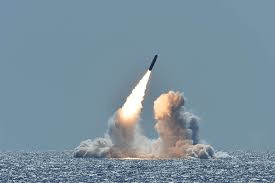
Image: Trident missile. https://garystockbridge617.getarchive.net/media/an-unarmed-trident-ii-d5-missile-launches-from-the-ohio-class-ballistic-missile-5b0a03. Source: U.S. NAVY https://www.navy.mil. Licence: PDM 1.0 DEED Public Domain Mark 1.0 Universal
 Labour Hub
[…] The cost and political opportunity cost of nuclear forces distract from investment in conventional defence or social spending. (Labour Hub) […]