
Dave Kellaway analyses yesterday’s French parliamentary elections.
Macron’s big gamble has failed. By calling a snap election, he thought the French people would rally around his centrist party and the moderate left to put Le Pen’s Rassemblement National (RN, National Rally) back in its box after its victory in the recent European parliamentary elections. He assumed a bigger turnout would not favour Le Pen’s extreme right-wing, post-fascist party.
| PARTY | % | Votes | MPs elected first round | 2022 first round |
| Rassemblement National (Le Pen) | 29.25 | 9,377,109 | 37 | 19% |
| Republicains allied to RN (Ciotti) | 3.90 | 2,104,978 | 1 | |
| Nouveau Front Populaire (Left coalition) | 27.99 | 8,974,463 | 32 | 26% (NUPES) |
| Ensemble (Macron) | 20.04 | 6,425,525 | 2 | 26% |
| Republicains (mainstream right | 6.57 | 2,104,978 | 1 | 11% (With Ciotti) |
| Independent right | 3.66 | 1,172,535 | 2 | |
| Other independents left or centre | 2.75 | 900,000 aprox | 0 | |
| Far left e.g Lutte Ouvriere | 1.5 | 335,817 | 0 |
On the contrary, 20% more people turned out than in 2022. Abstention was at its lowest since 1997. Yet the RN consolidated its Euro vote and successfully allied with a split from the mainstream Les Républicains (LR, the Republicans). In terms of actual votes – around 12 million if you add in the votes of the Zemmour current which got less than 1% – this is a massive breakthrough. Previous scores in legislative elections were less than half this.
Bardella rising
The RN has never had so many MPs elected in the first round. They were already the biggest single party in the National Assembly, and it is probable now that they will maintain that position with even more MPs. However, it is still uncertain whether they will get the 289 MPs needed for an absolute majority, which would guarantee them the premiership with their young leader Bardella.
Jordan Bardella, who successfully led the RN to 31% and victory in the Euro elections, headed up the RN parliamentary election campaign as the presumptive Prime Minister if they win. Only 28 years old, he represents the success of Le Pen’s long-term work to remodel her political current. Smartly dressed, a smooth communicator, and up-to-date on social media, Bardella is the modern face of post-fascist authoritarianism. Le Pen has gained support among younger voters. He is the epitome of what the French call ‘dédiabolisation’ – de-demonization.
Listening to Bardella outline his manifesto, you can see how on a lot of economic policies the RN are not so different to Macron. They no longer shout against the EU. On the pension issue, they reject the Macron reform. He also put forward, like Farage, plans to take lower-paid workers out of taxation altogether. There are plenty of anti-migrant measures built around the ideology of ‘la priorité nationale’ (French people first). Thirty-five anti-poverty organisations have denounced this and vowed to reject any sort of categorisation like that in their work.
The New Popular Front
Everything now depends on what happens in the second-round run-off. The top two candidates stand automatically, but the third candidate can run in the second round only if they have more than 12.5% of the registered voters. All the discussion immediately following the election focuses on whether the best-placed candidate to defeat the RN is given a free run by any eligible third-place candidates stepping down. Leaders of the Nouveau Front Populaire (the New Popular Front, NPF) from the Socialist Party, the Ecologists, and La France Insoumise (France Unbowed, LFI) led by Jean-Luc Mélenchon, have all called for this ‘barrage’ (bloc) to stop the RN winning.
Immediately after the Ero election, instead of splitting further apart, the different currents of the left came together in the New Popular Front. It deliberately evokes the historic 1936 Popular Front that, through struggles and strikes, and not just with an electoral pact, won historic gains like paid holidays for the working class. Le Pen becoming the biggest party in the Euro Elections with 33% really shook the left up. Within a day or so, there was an agreement about a radical left social democratic programme and an agreement to set up a single candidate in each constituency.
The NPF has a programme of action that would defend working living standards and provide a stimulus to further action and mobilisation. Over three years it proposes a spending budget of 108 billion euros – which highlights how limited the UK Labour budget for change is. Someone has forgotten to tell the French left that tax and spend is so old hat, so last year, and not a means to change.
On the Saturday following the formation of the NPF, over 250,000 people, according to official estimates, demonstrated across France in its support. The main trade union confederation, the CGT, called for a vote for the NPF – a rare occurrence in France. Well-known Black footballers like attacker Thuram, currently playing at the Euros for France, called for a vote against the RN.
Macron equivocates
However, leaders of Macron’s Ensemble (Together) party have been much more equivocal about supporting a single candidate to stop the RN winning. Some have called for blocking the RN with a single candidate, while others have said they will judge on a case-by-case basis. Bruno Le Maire, current economics minister, and Edouard Philippe, former Macronist prime minister, hold this position, saying they will vote for the social democratic left but not for the LFI. They refuse to support second-placed candidates from the LFI, whom they consider as extreme as the RN. These people do not like the way the LFI have supported the Palestinians and condemned the Israeli state or criticised police actions in ethnic minority neighbourhoods. This vacillating position could help the RN squeeze past both the left and the Macron parties in a three-way race in some areas.
The Macronists are third in 78 seats, and the NPF is third in 105, so if each side withdraws its candidates, there is a real chance that the RN surge could be held off in the second round. Much depends on whether Ensemble takes what is called a ‘republican line’ to stop the RN.
Leaders of the mainstream right wing that did not ally with Le Pen have refused to give any recommendation for the second round. François-Xavier Bellamy stated that “the real danger threatening our country is the far left.” The LR is obviously feeling the pressure of the RN, having just lost several MPs to Le Pen in the first round. This means their 6.5% of the vote will not necessarily go to candidates trying to stop the RN.
The Macronist position is more than a bit rich if you understand how Macron has been elected twice in a row on the back of the left and progressive electorate rallying around his candidature in the second rounds to stop Marine Le Pen from becoming president. It is particularly galling considering that calling this election, which has put the RN in a protagonist position, was unnecessary. Furthermore, it is the neoliberal, anti-working class policies championed by Macron, such as raising the pension age, that have fostered the widespread discontent from which Le Pen is benefiting.
Macron’s overall politics are not so different from the social liberal demagogy of Starmer. Macron broke with a certain traditional social democratic orientation of the Socialist Party to launch his bid for the presidency. He opposes ‘tax and spend’ and favours a partnership with business to grow the economy rather than any redistribution to lessen inequality or poverty. Macron promotes privatising reforms of the health service, just like Wes Streeting.
The French president has cracked down on migrants and fostered the idea of radical Islam being a direct threat to French identity and security. Like Starmer, he has adapted to the right-wing narrative spread by the RN. Similarly, on law and order, he uses the same language about the need for more police and tackling anti-social behaviour. His international policies are a carbon copy of Starmer’s view of national security. The extreme centre in France has been a fertile breeding ground for the rise of the post-fascist hard right.
What happens next?
The game is not over in France. People can change their votes between the two rounds, and abstention can go up or down. Everyone in the NPF will work hard this week to remobilise their base and alert new voters to the risk of an RN premiership. Unity has already paid off insofar as the main opposition bloc to the far right will be the broad Left. Within that coalition, the more radical LFI will still have a leading role.
An interesting detail of this election is that Jean-Luc Mélenchon’s attempt to quell his dissident MPs seems to have backfired. At least two of those he took off the slate have made it through to the second round as the best-placed candidates to take on the RN.
The Macronists still talk about some new ‘moderate’ coalition in the new parliament which will stop an RN majority – presumably, this would span the SP, Greens, and what is left of the LR. The problem is that Macron himself has hollowed out the centre of French politics with his divisive programme. If the RN does not have an absolute majority, it is likely that the current unstable paralysis, with a President lacking a parliamentary majority, will continue.
If the RN were to get an absolute majority, there would need to be a massive fightback to block their reactionary programme, which includes the central plank of ‘French people first’ – stopping dual-nationals from holding certain public jobs, discriminating against ethnic minority populations, more aggressive policing, and attacks on women and LGBTQ+ people. Key representatives of the bosses have already been involved in talks with the RN about their policies.
Dave Kellaway is a member of Hackney and Stoke Newington Labour Party. He lived in France for several years. This article is edited from articles he has written for Anticapitalist Resistance here.
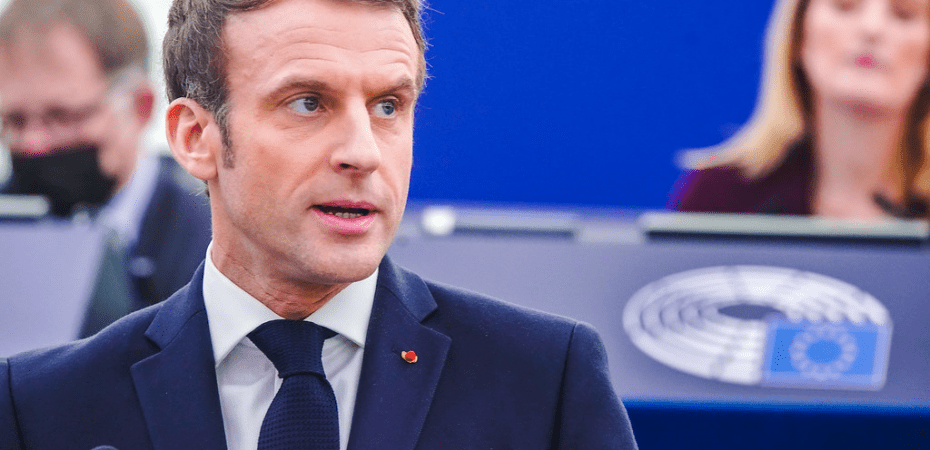
Image: https://www.flickr.com/photos/european_parliament/51830991330. This photo is free to use under Creative Commons license CC-BY-4.0 and must be credited: “CC-BY-4.0: © European Union 2022 – Source: EP”. (creativecommons.org/licenses/by/4.0/)
 Labour Hub