
By Stewart Lansley
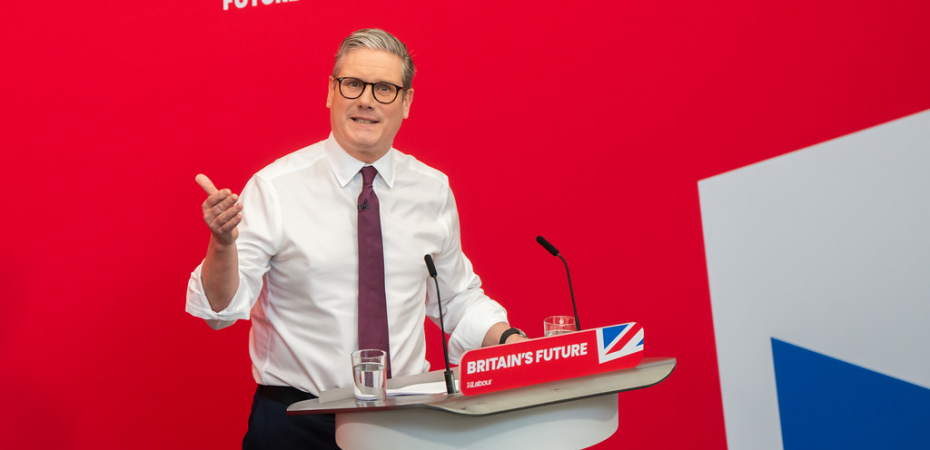
Writing in The Times, Keir Starmer called wealth creation Labour’s “No 1 mission”, adding that he is “doggedly determined” that people should be able to make money. This looks mighty close to Tony Blair’s support for the pro-rich politics launched in 1979 and which he had inherited in 1997.
Real wealth creation that boosts entrepreneurship, builds social infrastructure and more productive business methods is vital for rising prosperity. But ‘creating wealth’ is a slippery concept. Despite Britain’s recent dismal economic record, personal wealth holdings have surged. National wealth – a mix of property, physical and financial assets – stands at almost seven times the size of the economy, up from three times in the 1970s. But most of this expansion has been captured by the few.
It has little to do with a leap forward in levels of wealth creation. It is not the product of a greater entrepreneurialism and record levels of investment and productivity. Indeed, the escalating rate of personal enrichment has coincided with the collapse of Britain’s growth and productivity rate. While individual fortunes are reaching new heights, social institutions have been weakened while typical living standards have been close to static.
Much of today’s towering wealth mountain has been unearned, the product of the mass sell-off of former public assets, the exploitation of corporate power, and state-driven asset-inflation. The nineteenth century philosopher, John Stuart Mill, dubbed such windfall gains “getting rich while asleep”.
The history of ‘wealth accumulation’ tells a similar story. The last 1,000 years have seen a series of personal wealth surges, while elites – a mix of landowners, colonialists, slave traders, manufacturers, and financiers – have been able to secure towering fortunes through economic activity which has little in common with the social good. The founding economists drew an important distinction between new wealth creation that contributes to the common good, and extraction or appropriation of existing wealth that serves the interests of a powerful few. Such ‘appropriation’ was widespread in the middle ages, the Victorian and inter-war eras, but less prevalent in the post-war era of social democracy.
But today’s political license to ‘get rich’ has seen the return of corporate extraction which is now embedded in the British and global economy. Many large companies have been turned into cash cows for executives and shareholders through anti-competitive devices, the manipulation of corporate balance sheets, and the rigging of financial markets. The rising profit share of recent times has disproportionately gone in payments to shareholders and executives. It is this that explains Britain’s low investment, low productivity and low wage economy.
At the end of 2023, the volume of ‘dry powder’– finance’s term for the capital available for investment –held by the world’s asset managers had reached an all-time high of $4 trillion. That’s a sum a third larger than the annual output of the UK economy. A large part of this sum represents the proceeds of economic activity that has become disassociated from high value productive and social activity that might have served wider social and economic interests.
In recent years, over 60 per cent of such cash has been invested in private equity deal-making through the takeover of public, share-issuing companies. This is because the buying and selling of existing companies, and the plundering of their assets, can deliver heightened returns for investors, higher than longer term activity associated with traditional entrepreneurialism that delivers a stronger and more dynamic economy.
At immense cost – to living standards, economic stability and public finances – successive governments have ignored this distinction between wealth creation and extraction and turned a blind eye to the predatory side of modern capitalism. Starmer is right to be serious about raising the rate of prosperity, but this requires a strategy that cuts appropriation and boosts the volume of high value productive activity which secures long term social gain.
The combination of extreme inequality and the over-empowerment of markets has proved a toxic mix. This is the source of the stark paradox of contemporary capitalism that as societies get richer, rising numbers are unable to afford the most basic of needs. This has nothing to do with a lack of resources. The pro-rich, pro-market and pro private ownership politics of recent decades has passed too many decisions over how resources are used from democratic and social control to markets.
The result should be no surprise. National resources that could have built been used to for social housing, better services for children and social care have instead been syphoned off into low social value activity, from super-luxury property developments to the burgeoning private jet and luxury yacht industries.
Britain’s resource base should be targeted to social reconstruction. Tougher regulation could tackle the extractive mechanisms of private capital. Greater democratic control over resource use can be achieved through a boost to social ownership and greater state management of the allocation of finance capital currently determined by corporate elites. A higher proportion of existing wealth pools should be harnessed through a gradual shift from highly taxed income (over 30%) to currently lowly taxed capital (current rate: 2 per cent).
There have been multiple historic warnings of the destructive impact of economies heavily geared to markets and the hedonistic demands of the super-rich. “The test of our progress is not whether we add more to the abundance of those who have much,” declared the American President, Franklin D. Roosevelt in 1936, “It is whether we provide enough for those who have too little.”
Stewart Lansley is the author of The Richer, The Poorer: How Britain Enriched the Few and Failed the Poor, a 200-year History, Bristol University Press. He is a visiting fellow in the School for Policy Studies, the University of Bristol.
Image: Creator: Labour Party | Credit: Labour Party. Copyright: Labour Party. Licence: CC BY-NC-ND 2.0 DEED Attribution-NonCommercial-NoDerivs 2.0 Generic
 Labour Hub