
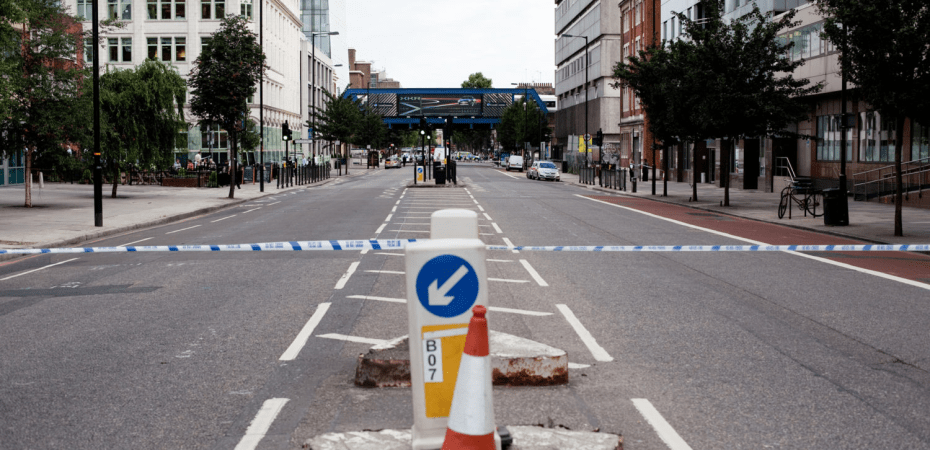
Youth safety needs a comprehensive approach, working from the grassroots up, argues Elaine Donnellon.
Let me paint you a scene; it’s not pretty, and I won’t apologise for that.
A body lies on a cold dirty pavement, a young man, just 16 years old, bleeding out catastrophically after being stabbed. He’s still in his school uniform. It’s daylight, and commuters are making their way home.
Passers-by heard his cries and stumbled upon his injured body. His injuries are gruesome, his cries for help fading as his breaths become laboured. His eyes, still alert and filled with fear; he feels he is likely to die on this pavement, one he’s walked a thousand times.
Just three minutes ago, another young man, also a teenager, plunged a zombie knife deep into this victim. As the knife was pulled out, it took with it part of the victim’s bowel, a grim testament to its design to inflict maximum damage.
The passers-by, now part of this unfolding tragedy, will never be the same. This scene, an unwitting stage, becomes an immersive experience that no one would choose to take part in, except for our emergency services. For police officers and paramedics, this has increasingly become their job over the past decade.
On some days, in one shift, they deal with two or three of these cases, sometimes losing all the victims, other times saving them, though often left with life-changing injuries.
When these tragedies unfold, adrenaline kicks in. Those who can, scramble to save life, using makeshift pressure pads—jumpers, jackets, even bare hands—to stem the bleed.
The paramedics have arrived, but their response was delayed. Every second counts, and his life is draining away.
Yet the paramedics cannot act immediately; they must wait for police to ensure their safety. All the while, this child bleeds out, and the police response time is affected by several external pressures. Most catastrophic bleeds take five minutes or less.
At the scene, the child’s mother arrives, alerted by his friends who made a frantic call, telling her he’d been chased down and was caught ‘lacking.’ They escaped; he did not. She arrives to a horror scene.
Just now, the mother howls—a harrowing, unforgettable sound, haunting and animalistic. She sees her baby’s body, watches his life slip away. Her cries, the unmistakable sound of pain and heartache, echo around as she sobs uncontrollably, holding his weakened body.
The police try to remove her, for she is ‘contaminating’ the scene of a crime; she just wants to cradle her son.
This stage was set when the weapon was used, and no one here remains unharmed.
Everyone is affected long after the blood fades from the pavement, and the victim becomes just a statistic, the media quickly moving on. To many, he’s just a number now.
But the events leading up to such incidents are complex and nuanced, more so than the current debate allows.
Mainstream media articles on these incidents are often dominated by victim-blaming comments, conflating victim with perpetrator. When a person of colour is involved, too many suggest their skin colour caused the violence, perpetuating a fascistic narrative that dominates the debate.
As I write this, I am perplexed at why, after his previous work in my home Borough of Camden, Labour leader Keir Starmer appears to disregard all he has learnt. His recent pledge to ban zombie knives contradicts the comprehensive approach outlined in the “Youth Safety Taskforce Report” from 2018.
Banning zombie knives is a sensible measure—they are designed to inflict maximum harm, and those selling them should be held accountable. But this measure alone will not go near to tackling this devastating problem. It will merely ‘tinker around the edges.’ Like many of Labour’s recent policy announcements, it lacks the necessary depth and detail.
Making these weapons harder to buy won’t solve this public health crisis. Guns are illegal, yet frequently used and still easily available. If zombie knives are banned, other items like kitchen knives, swords, machetes, and makeshift weapons will still be used. Prohibition alone doesn’t work.
What we really need to tackle is why a small minority of children, young people, and adults choose to purchase, carry, and use such weapons. This minority affects local communities and society at large, with far-reaching impacts and significant costs to taxpayers. It costs about two-thirds less to prevent.
Let’s remind ourselves that the vast majority of children and young people don’t engage in this behaviour. We should not mis-portray or exclude them from being part of the solution.
This issue cannot be solved without them. History shows it can only be addressed from the grassroots up, using a multidisciplinary approach and a long-term plan, much like the successful 1999 Teenage Pregnancy Strategy.
If we don’t seek to prevent violence, we are accepting its inevitability, only dealing with the aftermath. We’ll wait for victims to be slain and then ‘throw the book’ at the perpetrators.
Victims and perpetrators are disproportionately from impoverished and disadvantaged
backgrounds, living in areas of high crime, low employment, sub-standard and overcrowded housing. Insufficient opportunities lead to lower aspirations and a higher chance of being a victim and/or perpetrator.
Evidence proves that life sentences and banning items don’t deter violent crimes like murder. They provide some justice and public safety but are not the solution. A multipronged approach is desperately required.
We should learn from successful models like Chicago’s Cure Violence, Glasgow’s Violence Reduction Unit, and the work undertaken by City Hall and Sadiq Khan, all using a long-term public health approach.
Our children are not meant to die before us, and not in this way. The trauma reverberates throughout the local community, so community leaders plea, prayers are said, vigils held, candles lit. Everyone says, ‘never again,’ but it keeps happening. And tragically still, there is a shortage of politicians serious about tackling this issue correctly.
At the scene, the victim’s body now lies still under a makeshift privacy tent. The media rush to get their story, victims get conflated with perpetrators, biases perpetuated, narratives framed.
Please look closer; this is also a class issue.
On this issue, humanity is needed. In my opinion, Keir Starmer has failed to bring this to the debate, ignoring science and best practices.
Back in 2017, I began campaigning on this issue after a double murder of a 17-year-old and a 20-year-old in Camden, in Starmer’s constituency. From then until 2019, Camden had one of the highest murder rates in London, a complex situation driven by previous incidents and loss of life.
When we lose our children to violence, it’s hard to understand. The impact on families is vast, the injustices many. Our systems, strained by years of austerity, add to their trauma.
Without reversing cuts to public services, this problem will only worsen and become more entrenched.
So, over to you, Keir. What’s your next move? Will you listen to the experts and those most affected?
Elaine Donnellon is a Camden resident, with a Youth and Community work background and is Co-Founder of Camden Against Violence and Operation Shutdown.
Image: https://fabians.org.uk/turning-the-tide-against-violent-crime/ Creator: Lars Plougmann Copyright: Creative Commons BY-SA
 Labour Hub