
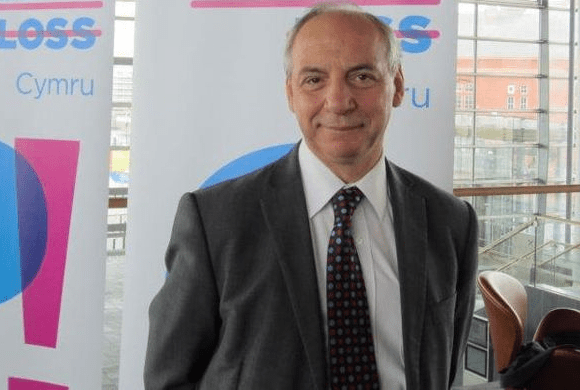
Mike Hedges AM surveys the 2024 general election results in Wales and looks ahead to the 2026 Senedd election.
Unless we have a Senedd election sooner, due to the failure to set a budget, the next scheduled Senedd election is on the 7th May 2026, which is now just over 20 months away.
Welsh Labour should be confident following a general election result where they won 27 out of the 32 seats. The votes were a lot closer as Labour benefited from the first past the post system. The vote percentages were: Labour on 37%, the Conservatives on 18.2%, Plaid Cymru on 14.8%, Reform on 16.9%, the Liberal Democrats on 6.5% and the Green Party on 4.7%. Despite the excellent result in terms of seats, the Labour vote dropped 3% in Wales despite rising slightly in England and substantially in Scotland.
As in every election, there are national, Senedd and council issues that affect voters’ perception of political parties.
One of the biggest criticisms that many young voters and British Muslims have had of the Labour Party was the leader’s perceived equivocation on the ongoing war in the Middle East. He came under intense criticism when, in the days following Hamas’s October 7 attack, he suggested that Israel had the right to cut off basic necessities such as power and water from Gaza. He subsequently tried to retreat from that statement, but the damage had been done.
In July, Environment Secretary Steve Reed reiterated calls for an immediate ceasefire in Gaza as well as for the release of hostages held by Hamas. Prime Minister Keir Starmer has insisted an immediate ceasefire is required in Gaza, as he warned the “world will not look away” from the suffering faced by “innocent civilians”. The Prime Minister made clear the UK Government’s policy includes securing the release of hostages from Gaza and a “huge” increase of humanitarian assistance, noting a ceasefire is the “only way” to achieve it.
The hope is that the electorate will see this policy and return to the way they previously voted.
Three issues relating to the Senedd were common in Wales: the 20mph default speed limit, Senedd reform and health provision, especially the ambulance service and hospitals. While there is widespread support for 20mph, not only around schools and hospitals but in built up areas and on estates there is a lack of support for it on main roads (A and B roads). Yet we have seen the reduction in accidents causing death and severe injury on roads following the move to 20mph.
This problem can be resolved by giving councils the ability to return A and B roads to 30mph where they think that would be appropriate.
After 20 mph, Senedd reform was the next negative issue in the eyes of the electorate. The electorate do not want more politicians in the Senedd, and they do not want to see very large constituencies and the break of one directly elected Senedd member for every constituency.
This can be resolved by postponing Senedd reform implementation until after the next Senedd election, with the 2026 Senedd able to either plan the start or, if the next Senedd wishes, to bring forward legislation to change it.
With health there are the problems that affect all of Wales and those that are specific to north Wales. North Wales problems can be summarised by the failings of Betsi Cadwalladr Health Board that covers all of north Wales.
Betsi Cadwaladr Health Board was again placed under special measures last February, with Board members removed and finance staff suspended. Betsi Cadwaladr came under increased scrutiny last year after financial irregularities were uncovered and “serious concerns” raised about its performance, leadership, and culture. Since I was elected in 2011, Betsi Cadwalladr Health Board has gone from crisis to crisis and in and out of special measures.
The question is: can Betsi Cadwalladr as a Health Board be managed effectively or would it benefit from the three main hospitals being stand-alone but with primary care and back-office functions carried out centrally.
There have been well-reported instances of delayed hospital discharge, difficulty in accessing GPs at some surgeries, ambulances queuing outside hospitals and long waiting times for non-urgent procedures. These will not be simple to be resolve but they need to be at least partially resolved soon. This will be addressed in a future article.
Local issues have varied across Wales but often involved refuse collection, school funding and access to social housing. It is important that councils ensure the regular and efficient collection of waste and recycling. An increase in school funding in England will produce a Barnett consequential share for Wales and should at least partially solve the school budget problems. The housing problems need the local housing allowance to be increased and for the large-scale building of social houses, preferably council houses.
Mike Hedges is the Senedd Member for Swansea East and a former Leader of Swansea Council.
Image: Mike Hedges. Author: Steve Cushen, licensed under the Creative Commons Attribution-Share Alike 3.0 Unported license.
 Labour Hub