
Phil Burton-Cartledge looks at the opportunities and pitfalls facing the project for a new party.
A Conference for a Party that has won its second highest seat tally ever should be an occasion for celebration. But the partying mood appeared absent from Labour’s annual gathering. The week-long feeding frenzy on ‘freebiegate’ would have come as a shock to Keir Starmer supporters who bought into the ‘Mr Rules/grown-up-in-the-room’ image that has been crafted for him. It would have sent a shiver down the dozens of backs of newly minted MPs in marginal constituencies, whose success lies partly in painting their defeated Tory opponents as corrupt and incompetent.
But there are other worries too. The thinness of Labour’s vote demonstrates the shallow relationship ‘Starmerism’ has with the country at large, a level of indifference that saw Labour’s support dip beneath 10 million votes for the first time since 2015. What should be a moment of supreme confidence is shot through with unease.
This is not helped by the results mustered by challenges to Labour’s left. The returning of four MPs – one at Labour’s expense – and almost two million votes suggest the Greens are poised to be a serious problem for Labour during this Parliament. It’s doubtful the Turning the Green tide event at Conference this Sunday would have calmed many jitters coming from this direction.
But what could amount to a bigger and possibly existential problem is the possibility of a viable left alternative. The victory of Jeremy Corbyn and the unexpected wins by four more anti-war Independents, plus very strong results in some places for other left-wing indies and George Galloway’s Workers’ Party could be a foretaste of difficulties to come. The suspension of seven Labour MPs for going against the whip on lifting the Child Benefit cap also creates an (on paper) parliamentary nucleus around which a new united left party could be built. Are the stars aligning for a viable left alternative?
The space is there, so it behoves the extra-Labour left to make the move. Which is what will be debated at the upcoming series of Party Time? public discussions about left strategy under Keir Starmer’s Labour. But it’s not as simple as simply declaring a party, as the last 25 years of left electoral experiments have taught us. The central question for any new party project has to be ‘What is it for?’
The answer for some of the left is straightforward: a combat party capable of taking on the capitalist class and building working class capacities to the point where a revolutionary crisis breaks out, which the party can then prosecute to victory. For others, it’s the creation of a broader party that is simply about challenging Labour from the left. But here, there are issues around whether it should exist to ultimately displace Labour, or act as a pressure group to keep it honest. These are the three strategic positions likely to dominate debate in a new formation and could easily cause it to fall apart in short order, or bring about an unsatisfying fudge that could enshrine permanent factionalism.
Then there are questions about how it should be built. Jeremy Corbyn has argued for a community-focused orientation. He says the sinking of deep roots across Britain is the prerequisite for building something lasting. The truth of this, he suggests, was shown in his own victory against the Labour machine.
The problem is that while this would be ideal, it overlooks how Corbyn’s example is based on his being the MP for Islington North for 41 years, and hamstrings any effort to make the most of the opportunity now in front of the left. The alternative is some central direction, by someone or a collective with a national profile to take the lead. The seven suspended Labour MPs are best placed to do this. Their views are more in tune with public opinion than the Labour leadership’s, and it’s unlikely most will get the whip back soon.
But this too comes with problems. How many, if any, want to take this lead? Do they think their political priorities are better served by remaining left Labour MPs, and therefore seeking readmission to the PLP? And if any do want to take this role on, does this not replicate the priority Labourism accords MPs over the rest of the party, no matter how formally democratic this left alternative sets out to be? And if this is the case, what role in an electoralist party for those who are involved but are committed to a revolutionary project of some sort?
There are no easy answers to these questions, but they have to be grasped, debated, and decided upon, if the extra-Labour left want to build a new party. The gap in Britain’s political ecology is open, and the left have an opportunity to fill it. But the moment is time-sensitive and if it doesn’t, the Greens almost certainly will. What’s it going to be?
Phil Burton-Cartledge is a lecturer in sociology at the University of Derby and blogs at All That Is Solid. His latest book, The Party’s Over: The Rise and Fall of the Conservatives from Thatcher to Sunak, is published by Verso He tweets at @philbc3.
Phil will be speaking alongside Nandita Lal, Owen Hatherley, Dan Evans and Fiona Lali at What’s Left? Is this moment of national decline a political opportunity?, the first of a series of discussions on left strategy, organised by Party Time? On Thursday September 26th at 7.15pm at Pelican House, London E1 5QJ. More information here.
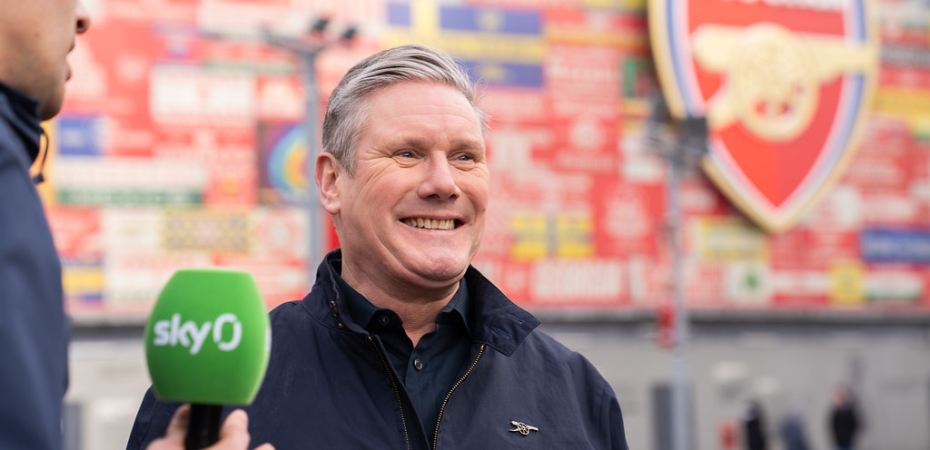
Image: https://www.flickr.com/photos/190916320@N06/53509429830 Creator: Labour Party | Credit: Labour Party Copyright: Labour Party Licence: Attribution-NonCommercial-NoDerivs 2.0 Generic CC BY-NC-ND 2.0
 Labour Hub