
Guy Standing explains why.
It is good news that Ed Miliband will go to COP29 in Baku, that David Lammy is appointing a Foreign Office nature envoy and a climate envoy, and that Rachel Reeves promises to be the first ‘green Chancellor’, all indicating the laudable objective of making Britain a leading country in addressing the existential crisis of our age.
However, the Government must address the biggest ecological failure of successive governments. So far, it shows no signs of understanding it. Since the passage of the UN’s Convention on the Law of the Sea (UNCLOS) in 1982, Britain’s sea area has been 27 times its land area. The sea covers 71% of the planet, and is threatened by global warming and biodiversity decay to a much greater extent than the land.
The seas are threatened not only by global warming, which is causing acidification, shrinking ice caps and rising sea levels, but by horrific pollution from plastics, ‘forever chemicals’ and other toxins, nuclear waste and the debris from industrial exploitation of marine resources, including fishing and offshore drilling for oil and gas.
Yet what is happening in the sea receives scarcely any attention from politicians and commentators. There is a Green politics, but not a Blue. One is not being totally facetious in wondering if the neglect is because there are no constituents out in the sea, except perhaps the occasional mermaid.
In an excellent concise assessment of Labour’s initial environmental initiatives, Fiona Harvey inadvertently revealed the blind spot, implying that none of the Government’s Departments are giving any priority to what is happening in our sea or our seabed or in the world’s. They did not receive a single word.
The only sensible solution would be to appoint a Cabinet-level Minister for the Sea, with a mandate to act as the Steward, with a clear mandate to preserve and enhance the health and reproductive capacity of the sea, seabed and all the species, minerals and organisms in the sea.
The current structure is woefully inadequate and fragmented. Ed Miliband’s Energy Department includes responsibility for offshore renewable energy, which largely means vast new offshore windfarms. No doubt, the strategy will be to accelerate the growth of wind energy. The externalities will be brushed aside in the interest of the primary mission. To compound the problem, as argued elsewhere, the Crown Estate has been gifted our seabed, and it has been auctioning off vast areas to multinationals without proper environmental impact assessments. It seeks growth and profits.
The Crown Estate is neither Steward, aiming to preserve the value of our seabed and pass it on to future generations, nor a fully commercial endeavour. But as it earns 25% of the profits from commercial activities in the sea, it has a structural conflict of interest. For instance, it overseas the mining and export of our sea sand without any democratic control. And Ed Miliband’s Department is not a Steward at all. It wants to promote renewable energy and therefore accelerate planning permission for offshore wind power. Who in those circumstances will be insisting on environmental impact assessments?
DEFRA is no Steward either of what should be seen as our ‘blue commons’. Its priorities are revealed by its name – Department for Environment, Food and Rural Affairs. Not a whiff about Marine Affairs. It contains the chronically under-funded Marine Management Organisation, which has only 12 coastguard boats to monitor and police all the UK’s vast expanses of sea.
Then the Department of Transport has an equally underfunded Maritime and Coastguard Agency. Understandably, it has indicated that it will be focusing on transport emissions, car electrification and air transport. Some 96% of goods traded internationally are transported by sea, mostly by many of the 100,000 vessels of over 100 tonnes, doing incredible environmental damage. New international regulations are needed, and the Department is far too parochial to deal with the complex negotiations that lie ahead.
As for the Foreign Office, the appointment of the two envoys risks being gesture politics. The Foreign Secretary will rightly be preoccupied with conflict resolution, with two major wars stretching into the future. Neither of the envoys will have the mandate to deal with such issues as the mining of the seas for minerals needed for electrification.
With the existing departmental structure, there is a very high probability that marine issues that are at the heart of the crisis of global warming, biodiversity loss and distress migration from developing countries will be marginalised. What is needed is a Cabinet Minister able to speak and act as a genuine Steward for the blue commons.
Let me suggest some immediate priorities for the new Minister. It is too late to develop a marine policy agenda for COP29 or for helping to develop tight curbs on plastics for the global treaty, but not too late yet to prepare ambitious proposals for the UN Ocean Summit to be held in Nice in June 2025, to be chaired by the Presidents of France and Costa Rica.
Domestically, the Minister should overhaul Britain’s fish quota system. Quotas, the share of the total allowable catch (TAC) of each species fisheries are allowed, are mostly allocated through producer organisations (POs), supposedly democratic bodies representing all fishers in various fishing grounds. In reality, most POs are run by a few big firms. One result is that just 25 industrial fisheries have been gifted over two-thirds of the total quota, while the thousands of small-scale fishers scramble for tiny shares.
Furthermore, exceeding quotas—if discovered—is treated as only a civil offence, punishable with modest fines but no loss of quota. Marine crime pays. The Minister should make such law-breaking a criminal offence and any firms caught illegally fishing or overfishing should lose all or part of their entitlement. It is overfishing by fisheries with legal quotas that is chiefly responsible for collapsing fish populations around Britain.
The Minister should also tackle the crisis of our ports. Privatised by Thatcher, most are now foreign-owned, beyond democratic control. In 2021, Teesport, owned by a Canadian asset management company, dumped 250,000 tons of dredged sediment into the sea. Shortly afterwards, hundreds of thousands of dying crabs and other crustaceans turned up on 43 miles of coastline. The company denied responsibility, the fishing communities disagreed; Defra investigations were inconclusive. Whatever the truth, the governance process was wrong. Independent environmental impact assessments and consultation with local communities should be mandatory before any such action. The new Minister should take back control of our ports.
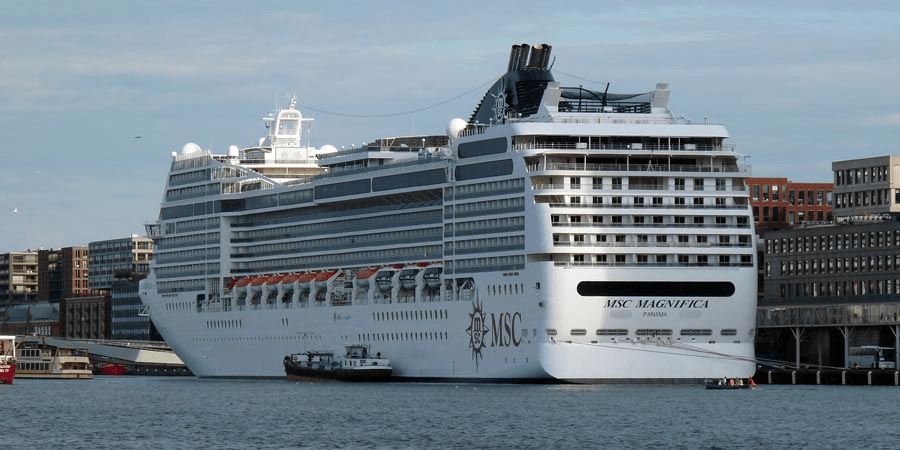
Another issue is pollution from ships in ports, especially the huge cruise liners which keep their engines running continuously, using the most polluting diesel fuel. Pollution around ports such as Southampton is linked to higher rates of throat and lung cancer and respiratory diseases. A heavy tax on use of such fuel should be introduced, in addition to tough regulations.
Internationally, the oceans rarely take centre stage. Although the sea contains 80% of biodiversity, governments meeting on biodiversity in Montreal last December merely reiterated a vague commitment to protect 30% of both land and sea. But marine protection is largely phoney. Britain sets a bad example. Bottom trawling, the most destructive form of industrial fishing, has been systemic in 71 of 73 of its offshore marine protected areas (MPAs). Globally, besides ecosystem destruction, stirred-up sediment from bottom trawling is estimated to release more CO2 than global aviation and shipping. The government should ban bottom trawling in all its MPAs.
The bodies set up to regulate global fishing, called Regional Fisheries Management Organisations, are mostly institutionally corrupt, dominated by a few multinationals. They must be overhauled. The Minister should begin by targeting the North-East Atlantic Fisheries Commission, which meets annually in London (the UK is a member) to agree on the total allowed catch (TAC) for herring, mackerel and blue whiting, before handing out quotas to fisheries.
It is a travesty of good governance. At every meeting, there are far more representatives of commercial fisheries than civil servants. Predictably, the negotiated TAC is always far above levels recommended by scientists. Sadly, North Sea mackerel is now endangered. As the UK provides the secretariat, the Minister could insist on excluding lobbyists and on respecting scientific guidelines.
There are countless other international issues that Britain could pursue, if it had the dedicated ministerial expertise to do so. It could push to restrict the use of ‘flags of convenience’, when flying another nation’s banner enables ship owners to ignore ecological and social norms, and for a clamp down on fuel and other subsidies that enable rich countries’ long-distance fishing fleets to plunder fish populations in the developing world.
The Minister could take a lead in preventing the start of deep-sea mining for minerals, such as cobalt and nickel. While they are key to the transition to renewable energy, scientists believe deep-sea mining could have a catastrophic impact not just on ocean biodiversity but on the climate, by disrupting the ocean’s role as a carbon sink. Despite 30 years of trying, the International Seabed Authority (ISA) has failed to draw up agreements for mining to take place in line with UNCLOS rules. Although the Conservative government belatedly joined other members of the ISA in calling for a moratorium on mining, there is pressure from some members to go ahead regardless. Britain should take the lead, and not repeat what the Conservatives did in handing out illicit mining licences.
Globally, the minister should launch an initiative to revise UNCLOS. It sets the whole framework for what happens in the sea. It was drawn up in the Cold War era and has never been ratified by the United States. Developing countries were induced to make binding commitments, for instance on access to their fishing grounds, in return for vague promises of benefit-sharing that have never been honoured. The Global Oceans Treaty adopted in 2023 has similarly vague language on the “fair and equitable sharing of benefits” from marine genetic resources (MGRs) that have many potential uses including new drugs. There are over 13,000 MGR patents, three-quarters of which are owned by just three countries—Germany, the US and Japan. Britain is missing out. It is not a minor matter, economically or medically.
In sum, we need a Cabinet Minister capable of taking an integrated approach to vital issues that are marginalised today. In addition, the Minister should consider another potentially transformative role. The Minister could launch a programme of sea allotments in selected harbours around Britain, emulating what is being done in Denmark, Norway and Sweden, and enabling nearby residents to cultivate, for example, mussels, oysters and kelp. These could evolve into marine cooperatives, reviving the British attachment to the sea in a progressive way. One only needs a little imagination—and a Minister to make it happen.
Guy Standing is author of The Blue Commons: Rescuing the Economy of the Sea (London, Pelican). An earlier version of this article was published by Prospect.
Image: https://rosemaryandporkbelly.co.uk/where-are-cruise-ships-banned/ Creator: Smiley toerist Copyright: credit: Smiley toerist /Wikimedia CC BY-SA 4.0 Attribution-ShareAlike 4.0 International
 Labour Hub