
Deborah Orr offers a personal view of her experience at the Liverpool Conference.
I have long believed in the disconnect between those at the (physical, not political) centre of the Labour Party and its members, local councillors and even many MPs. As one friend said to me, “locally is where the real politics is done in this country.” This is what has made me stick with the Party when many of my socialist friends have abandoned it – the belief in how much good we do in our communities. What I saw at the Party’s 2024 Conference in Liverpool did nothing to counter my belief in that disconnect.
Did it feel like change was happening, with positivity brimming from every delegate and speaker? Or was the dreadful rain prescient of a damp squib? What, exactly, is the point of a Conference where decisions are taken by a democratic voting process but are “non-binding”?
What did we learn this week? Although speeches delivered policies with great fanfare, and there are some vital changes planned, we didn’t seem to hear very much new. Yes, we heard about guaranteed homes for homeless veterans, care leavers and domestic abuse victims. But the fact that these aren’t already available in the sixth richest country in the world is embarrassing and depressing. We look forward to a nationalised rail system, a new Industrial Strategy, a New Deal for Workers, reform of the NHS and a whole lot more. But I still have the overriding feeling that, for many of these policies, there is no real plan in place. Where’s the detail? As one former boss of mine used to say: “If I can’t see your plan, I don’t believe you have one.”
Then of course, we come to the subject of how we are going to pay for it all. Both the Chancellor and the Prime Minister declared that there would be no return to austerity, although they didn’t tell us how that would be avoided. I for one, didn’t hear Rachel Reeves dropping “the broadest possible hint” that she would be relaxing her self-imposed fiscal rules in her speech, but maybe that was because the audience was clapping so enthusiastically. In July this year, we voted for change, and part of that change included how we manage the economy. We’ve all heard that famous definition of insanity. I was hoping to hear a bold vision of how the new government was going to do things differently and was disappointed.
What about the state of the Party itself? Despite speakers proudly repeating the phrase “our changed Labour party”, it is obvious that it remains as full of factions as ever. There’s a lack of willingness to listen to each other, work with each other or compromise. One of the many things I learned from my famous namesake, was the need for pluralism within politics and nowhere is it needed more than in our Party.
At no point was this more apparent, than in the motion put forward by Unite the Union: An Economy for the Future. With this bumped to Wednesday morning, when many delegates and pretty much all the Party officials had already left, the dividing line was clearly drawn between the so-called left and right of the Party, although most union members really don’t see themselves in those terms. The motion contained five points for Labour to address in the upcoming budget, but the focus was only on the first of those points, when the remaining four have much more significance for the future.
- Reverse the introduction of means-testing for the Winter Fuel Allowance
- Ending fiscal rules which prevent borrowing to invest
- Commit to public services and infrastructure, ensuring any public expenditure gaps, at a minimum, are restored through taxing wealth and that there are no further cuts to welfare provision for working people and pensioners
- Introduce a wealth tax on the top 1%, an excess profits tax, equalise capital gains tax with income tax and apply national insurance to investment income
- Deliver the investment necessary for a workers’ transition to Net Zero
Why couldn’t the motion have asked the Chancellor to demonstrate real leadership and defer the decision until she has had the opportunity to conduct the necessary reviews of the Department for Work and Pensions and the Pension Credit threshold? Instead, we end our first showpiece event in government with disagreement and a show of disunity.
I’ve been in and out of the Labour Party for years and would still like to consider it a broad church. Certainly, my experience in my local area is exactly that. We put our differences aside to work together for the many and not the few.
The 2024 Labour Party Conference avoided the difficult discussions, highlighted everything wrong with the Party and not the overwhelming positives that we do in our communities. It really felt like we were “going through the motions”.
Deborah Orr is a member of Makerfield CLP and Unite the Union.
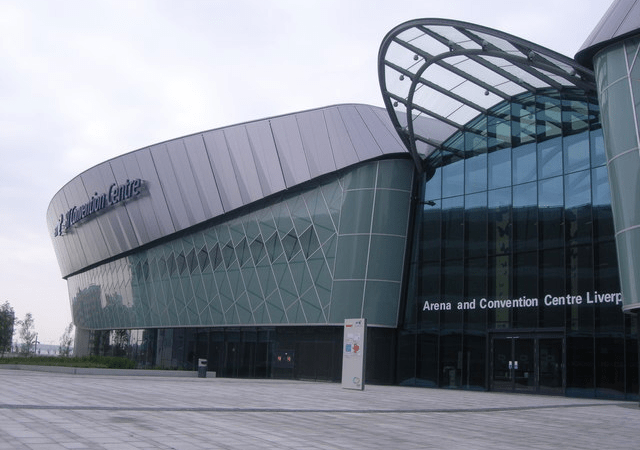
Image: Arena & Convention Centre, Liverpool. https://www.geograph.org.uk/photo/1039210. Creator: Nick Mutton | Credit: Nick Mutton Copyright: © Nick Mutton and licenced for reuse under cc-by-sa/2.0
 Labour Hub