
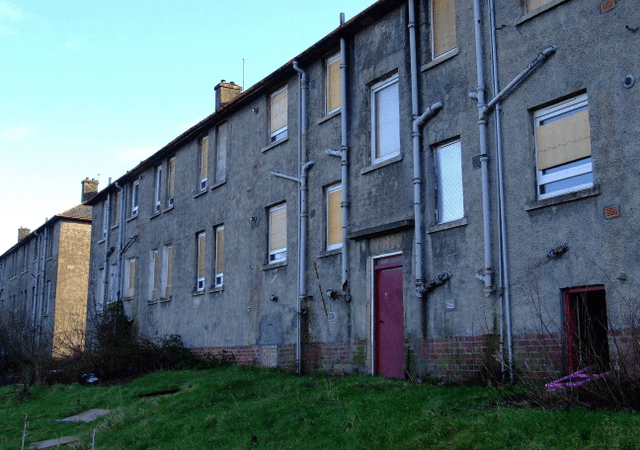
As millions of households struggled through last winter in cold damp homes, the impact on children has been revealed in newly released data.
Over a fifth of social workers working with children, young people and families have seen their service remove a child or children from their family in the last three years where unsafe or inappropriate housing conditions was a key contributing factor. Unsafe housing conditions can include maintenance issues, mould, damp, insect or vermin infestations or cramped conditions.
More broadly, 78% of all social workers strongly agree that housing conditions are a concern for people they support, with 36% strongly agreeing that over the last three years the number of people they help living in unsafe or inappropriate housing conditions has increased.
John McGowan, General Secretary of the Social Workers Union, commented: “Removal of a child from their family is always a last resort, but sadly when conditions become dangerous action has to be taken. This data shows that the reality of life in modern day Britain is a struggle for many households. The country’s poor housing stock poses a danger to the wellbeing and development of children and poses a risk to the health of many adults with pre-existing health conditions.
“Social workers go above and beyond to help those at most risk in the country and are highlighting safeguarding concerns on a regular basis. However, addressing the housing challenge is more than social workers can do themselves. Not only do we need to see investment in a £13.2bn Warm Homes Plan to help improve housing conditions, but we also need a full range of fully-functioning and well-resourced public services.
“Ministers must own up to the fact that it is only the Government that can provide the funding to reverse the decline in public services and ensure the most vulnerable get the support they need.”
Among all social workers, housing conditions are a concern with large numbers strongly agreeing that “the number of people I work with who are living in unsafe or inappropriate housing conditions has increased over the last three years.”
The results varied across the UK, with those in the North East of England, London and Wales most likely (41%) to report that housing was a major concern. This was followed by the South East, Yorkshire & Humber and the North West on 39%.
Simon Francis, coordinator of the End Fuel Poverty Coalition, said: “Millions of people from the youngest children to our oldest pensioners are living in cold damp homes, unable to heat their homes to a safe temperature or racking up massive debts – with some even turning to loan sharks. To add insult to injury, around a quarter of what is spent on heating our draughty properties is wasted, because the UK’s old housing stock is some of the worst insulated in Europe.
“The Chancellor needs to commit the funding needed for a Warm Homes Plan which will help people improve the energy efficiency and insulation of their homes. Until these reforms are delivered, Ministers must not forget about the millions of people suffering in cold damp homes – they should provide enough support to ensure that everyone is able to stay warm every winter.”
Amaran Uthayakumar-Cumarasamy, an NHS Children’s Doctor based in South Yorkshire, commented: “Some of the most acute harms of the UK’s unsafe, unaffordable and insecure housing are shouldered by our most disadvantaged children and young people.
“While the findings of this report are shocking, they won’t come as a surprise to many of us working in the NHS. Increasingly, children’s health professionals across the UK are witnessing cases of respiratory illness, undernutrition and worsening mental health all linked to undignified housing circumstances.
“What’s more, rather than providing a foundation for their health, unfit, unsafe and expensive housing continues to severely impact their educational attainment, social health and life chances.
“Without radical change towards fairer policies that support affordability, energy efficiency, accessibility and security of tenure, housing will continue to entrench and reproduce childhood mass illness and stark disadvantage.”
Matthew Scott, senior policy officer at the Chartered Institute of Housing, added: “Warm, safe homes are the cornerstone of our health, but this research demonstrates the life changing impact housing can have on children’s wellbeing. Local authorities’ Housing Revenue Accounts are stretched to their limit following decades of rent cuts and caps over the last ten years, and it is nearly three decades since the last significant central investment in upgrading homes, which came through the transformative Decent Homes Programme.
“The government should seize the opportunity to reverse the cycle of underinvesting in housing quality, so every child has a safe, secure home. In its forthcoming Spending Review, we urge the government to set out a new programme of investment in existing homes, including fully allocating the £13.2 billion promised for its Warm Homes Plan and taking steps to put the finances of housing providers on a more stable footing.”
Image: Parkhill Avenue.https://www.geograph.org.uk/reuse.php?id=2831383 Creator: Picasa; © Copyright Thomas Nugent Licence: Attribution-ShareAlike 2.0 Generic CC BY-SA 2.0 Deed
 Labour Hub
[…] from Yahoo News, Professional Social Work magazine, Social Work Today, Morning Star, LocalGov, Labour Hub, and End Fuel Poverty […]