
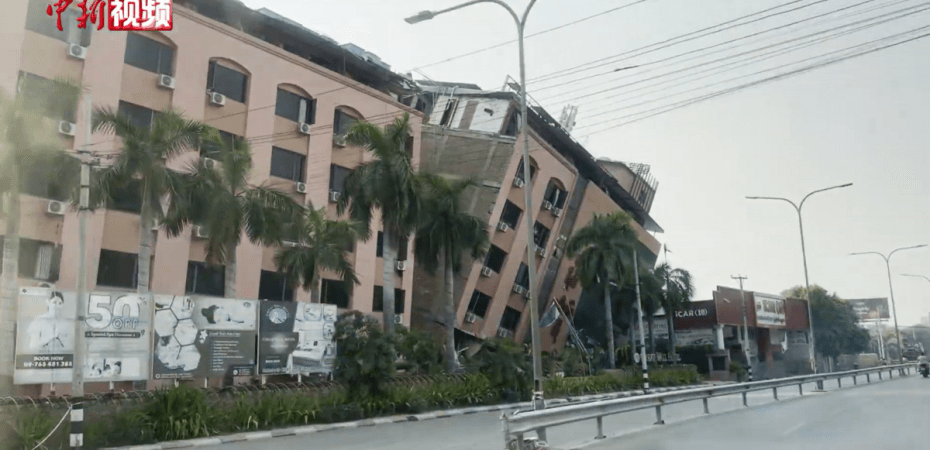
With over 4,000 dead in the Myanmar earthquake, it is vital that aid reaches the people needing it most, not those favoured by the Burmese military, argues Karin Valtersson.
The earthquake that struck Burma/Myanmar on 28th March has caused devastation, with thousands dead, homes destroyed and hospitals overflowing. Instead of helping the population, the Burmese military is making a horrible situation worse, even continuing its airstrikes against civilians in earthquake-hit areas. The international community, including the UK Labour government, must make sure no aid intended for earthquake victims get squandered or stolen by the Burmese military.
The number of dead people keeps rising. The latest reported figure by the Democratic Voice of Burma, an independent Burmese media organisation, is over 4,400, higher than the official numbers reported by the Burmese military (over 3,700). Few people in Burma trust the military’s numbers, and there is a stark fear that the number of dead people will grow much higher.
Another thing people in Burma do not trust the Burmese military with is delivering aid. Already, Burma Campaign UK has received reports of the military blocking aid to certain areas and asking aid delivery groups to register with military officials, which is an attempt to increase surveillance of civil society activities rather than organising aid delivery.
Since the military coup in 2021 and the resistance against military rule, the military controls as little as 21% of the territory in Burma. Other areas are under the control of ethnic and other resistance groups, or are contested. The Burmese military has a long-standing policy of blocking aid to areas outside their control. This has happened during previous natural disasters, such as Cyclone Mocha in 2023, and it is happening now. The priority of the Burmese military is not saving lives, but clinging onto power. They are using the earthquake to punish those who oppose them.
In the immediate aftermath of the earthquake, several groups involved in armed conflict with the military declared ceasefires. The Burmese military did not. It took them until 2nd April to do so. But, as many times before, this military statement meant nothing.
Airstrikes have continued. In Karen State, where many areas have been affected by the earthquake, a civilian was injured in a military airstrike on 3rd April. In Sagaing region, where the epicentre of the earthquake was, and a stronghold for the opposition against the military, nearly 30 people, including women and children, were killed in airstrikes on 9th April.
Few people in Burma trust the military. The international community shouldn’t either.
The Labour government has announced £25 million in emergency humanitarian aid to Burma since the earthquake, including £5 million in match funding to the Disasters Emergency Committee appeal. This is welcome, especially during a time when USAID is missing in action. Catherine West MP, Minister for the Indo-Pacific, has ensured Parliament that UK aid will go to “UK-funded local partners” in Burma, not the military.
“Our priority is to help the most vulnerable in all areas affected by this disaster, including those outside the control of the military regime,” she said in her statement on 31st March. The following week, on 3rd April, Baroness Chapman, Minister for International Development, reinforced that point in the House of Lords, but declined to reveal who the UK partners are, for their safety. MPs of all parties need to make sure the ministers keep to their words.
We have received information from partners on the ground that a lot of international aid so far has been concentrated in Mandalay and Naypyidaw, both severely hit by the earthquake, and a lot less has reached remoter areas, including in Sagaing region. There, community groups are taking on the burden of serving their communities, bringing aid in by avoiding Burmese military checkpoints at great risk to themselves. These people are heroes.
There are different ways of delivering emergency aid to Burma. Burma Campaign UK has a sister charity, Advance Myanmar, which was originally set up to support civil society organisations in Burma with advocacy and campaigning. Since the military coup in 2021, Advance Myanmar has delivered emergency support to activists and organisations in Myanmar, both to human rights defenders at risk and to people in need of humanitarian aid, delivered by local civil society organisations.
Advance Myanmar has launched a public appeal for the earthquake here, and has sent tens of thousands of pounds to local groups, which are already delivering aid to their communities, including food, medicines and shelter.
There are plenty of capable groups across Burma that do amazing work but find it very hard to access international funding, due to application and reporting demands not fit for a conflict zone. This is something that needs to be addressed, not just in the aftermath of the earthquake, but in how aid is distributed generally. Supporting local groups is also cost-efficient: they know better than anyone what is needed, how to access items and how to deliver. It gives local groups ownership over the process, not just passive recipients of aid.
The Labour government’s engagement and allocation of funds since the earthquake is welcome. Minister Catherine West MP has a long-standing record of support for democracy and human rights in Burma. It is fundamental that the Labour government utilises all its networks across Burma for the earthquake response, so the aid reaches the people needing it the most, not the people the Burmese military says should receive it.
Karin Valtersson is Campaigns Officer, Burma Campaign and UK and Grants and Project Manager, Advance Myanmar.
Image: Myanmar earthquake damage in Mandalay. Source: YouTube: https://www.youtube.com/watch?v=VO1_3_M4jDo. Author: China News Service, licensed under the Creative Commons Attribution 3.0 Unported license.
 Labour Hub
[…] Labour Hub | By Karin […]