
By Ben Hayes
At May Day events being held in Britain and around the world later this week, international solidarity will once again be a key theme – with no shortage of urgent cases to build support for, and a sense that many of the issues needing to be addressed are increasingly connected at a global level.
For all the many examples both of British governments carrying out brutality and propping up reaction across the globe (at times with the complicity of leading elements in the labour movement), there is also a long and proud tradition of taking action to support those struggling for a better future wherever they happen to be located. Right back to the end of the 18th century, steel workers in Sheffield rallied in their thousands against the slave trade. As documented in Felipe Bustos Sierra’s acclaimed documentary Nae Pasaran, a group at the Rolls-Royce factory in East Kilbride collectively refused to service engines for Pinochet’s coup regime in Chile. NHS staff in Portsmouth similarly declined to handle goods from apartheid South Africa.
Whilst these are particularly notable examples, they are by no means isolated: just look at how many activists affiliate their branches to solidarity organisations, help mobilise for demonstrations and raise concerns with elected representatives on a regular basis.
While this internationalist tradition has never been short of powerful enemies, it has undoubtedly faced a particularly notable and sustained targeting in recent years. The last years of the previous government saw increasingly frenzied rhetoric on the Palestine solidarity movement, backed up by the ‘Boycott Bill’, which was ultimately defeated after pushback from a coalition of trade unions, campaigning organisations and faith groups. And of course, as with much of their domestic agenda, the present leadership of the Labour Party have taken every opportunity possible to attack the best traditions inside it – ‘internationalism’ now amounts to trying to build an alliance which can answer the Trump administration’s call for a more militarised Europe.
Their position on Gaza has been perhaps the most infamous and damaging example of this – not to mention Starmer’s comments declaring that he would campaign for a unionist vote in any future referendum on Irish unity. It must also be said that arguments undermining solidarity work have not been limited to the Starmer leadership itself, but amongst elements of the labour movement who position themselves as being to its left on numerous policy areas. These have largely attempted to counterpose it to campaigning on ‘bread and butter issues’, and in some cases portrayed it not just as a distraction but something which risks actively undermining the interests of workers in Britain.
It is therefore vital that the left defends international solidarity not only as a basic duty, but a necessity in order to effectively respond to the historical period we find ourselves in. As horrifying scenes in Palestine are viewed around the world, various power struggles over the future dynamic between the US and Europe play out publicly over the question of ending the war in Ukraine, and tensions between India and Pakistan escalate, the world’s most powerful state not only faces challenges to its status but an increasingly erratic leadership. The climate crisis meanwhile makes global cooperation essential to future of our planet. In this context, having nothing to say on events in the wider world is simply not a serious approach. The tendency which has viewed foreign affairs as ‘above’ the labour movement’s remit and something we should leave to our betters (in reality often actively cheering them on) is simply incapable of rising to the occasion.
It’s also never been the case that international questions have occupied only the minds of a small minority of the most politically engaged workers – they have been the basis of many of the most notable mass movements in British history. Indeed, a clear majority of the 25 largest protests recorded in the country to date have been called over issues of foreign policy and peace. And, while some seek to portray it as being a weak point when it comes to winning popular support, the left’s involvement in the campaign against the Iraq War proved one of its most effective campaigns in recent history in terms of shaping public opinion. This clearly had an impact on various electoral contests at the time – just as the issue of Palestine was clearly significant in numerous constituencies at the most recent general election. In the past month, it was clear in the response to Pope Francis’ passing that many people from across different backgrounds saw him as a powerful voice on global issues of injustice, a quality which clearly matters to many.
For all that is being put into spreading ideology based on division and selfishness, all those wanting to bring about change for the better have never had more reason to stick together. As well as celebrating these bonds on this May Day, let’s resolve to keep them at the forefront of our work all year round – and look to examples which show another world is not only possible, but being fought for and built.
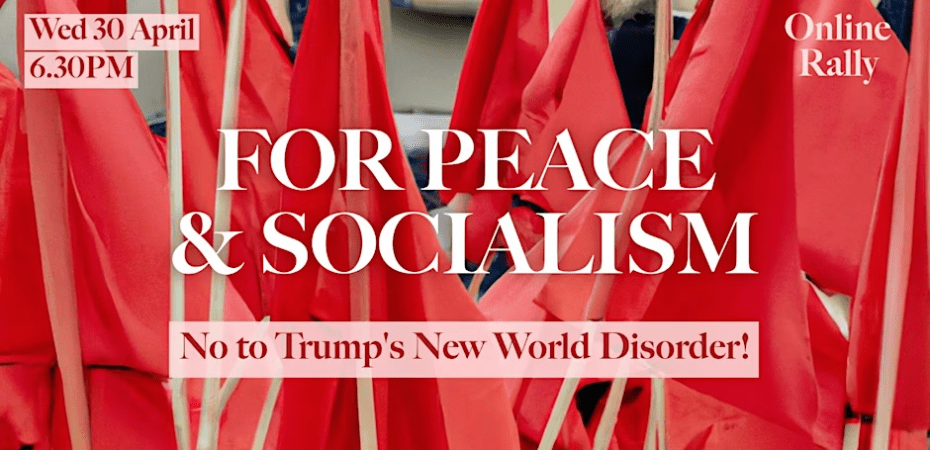
- EVE OF MAY DAY RALLY: For Peace & Socialism – No to Trump’s New World Disorder!
Online Annual International Eve of May Day Rally. Wed. Apr. 30, 18.30. Register at https://bit.ly/rally4peaceandsocialism
Join our international Rally with Richard Burgon MP // Fran Heathcote, PCS General Secretary & global guests Eman Al-Shayeb, General Secretariat, General Union of Palestinian Teachers // Chris Hazzard MP, Sinn Fein (Ireland) // Walter Baier, Party of the European Left (Austria) // Maria Perez Ramos, Mexico Solidarity Forum (Mexico) // Marga Ferré, transform! Europe & Foundation for Critical Studies (Spain) // Dialo Diop, PASTEF Vice-President (Senegal)
Join speakers from frontline struggles across the globe – for peace, justice and a better world.
Ben Hayes is a volunteer with Arise – a Festival of Left Ideas.
 Labour Hub
[…] This article was originally published by Labour Hub on 28 April 2025. […]