

The ceasefire between Israel and Iran is welcome, but fragile. The big question is: will it last? Carol Turner suggests some pitfalls to watch out for.
Around midnight on Monday 23rd June, President Trump announced a ceasefire between Israel and Iran. “It has been fully agreed by and between Israel and Iran that there will be a complete and total ceasefire… when Israel and Iran have wound down and completed their in-progress final missions, at which point the war will be considered ended.”
The announcement came the day after United States stealth bombers attacked Iranian nuclear facilities with massive ordnance penetrator weapons – Fordow and Natanz uranium enrichment plants came under fire, together with Isfahan which is Iran’s largest nuclear research centre. US bunker busters are the only munitions able to reach and destroy Iran’s nuclear facilities buried deep underground.
The US assault on Iranian nuclear facilities and those carried out by Israel during its ten-day bombarded are illegal under international law. Attacks on nuclear facilities are explicitly prohibited under the Geneva Conventions which set out the rules for the conduct of wars.
- Director General of the International Atomic Energy Agency (IAEA) Rafael Grossi, warned: “For the second time in three years, we are witnessing a dramatic conflict between two IAEA member states in which nuclear installations are coming under fire and nuclear safety is being compromised.”
- UN Secretary General António Guterres described the US attack as a “perilous turn” in an already volatile region, cautioning: “We now risk descending into a rathole of retaliation after retaliation.”
Will the ceasefire hold?
An end to this destructive and dangerous war which threatens to further destabilise the Middle East is welcome. It is not unusual for exchanges of fire to continue during the first days of a ceasefire. The question is: will this one hold?
This current round of air strikes against Iran is the third in little more than a year. The previous two took place in April and November 2024. Opposition to Prime Minister Benjamin Netanyahu’s military campaigns from President Joe Biden proved ineffective. Trump has taken a radically different approach.
At the time of writing, it is too early to tell if Israel and Iran will maintain their agreement to end the fighting. Neither is it clear that re-establishing the nuclear talks, which stalled when bombing began on 13th June, will result in agreement any time soon.
Resuming nuclear talks
An end to military hostilities reopens the door to continuing US-Iran nuclear negotiations. But Trump is seeking more than an end to uranium enrichment. He wants Iran’s ballistic missile programme in the negotiations. This will increase the potential pitfalls for the talks. Iran has said its ballistic missile programme is not designed to deliver nuclear payloads and should not be subject to nuclear negotiations.
Both now and in his first term, Trump has linked a nuclear agreement with Iran to concessions on ballistic missile development, as well as removing Iran’s influence among regional allies.
Shortly after returning to the White House, on 4th February, Trump signed National Security Presidential Memorandum NSPM 2 directing US offices of state to pursue these objectives. The presidential memorandum, in its own words, states that:
- Iran should be denied a nuclear weapon and intercontinental ballistic missiles;
- Iran’s terrorist network should be neutralized; and
- Iran’s aggressive development of missiles, as well as other asymmetric and conventional weapons capabilities, should be countered.
Trump introduced this linkage in his first term, when he unilaterally withdrew the US from President Barak Obama’s Iran nuclear agreement, the Joint Comprehensive Plan of Action (JCPoA) and reintroduced sanctions. In a speech at the time, Trump’s then Secretary of State Mike Pompeo said the US would only be prepared to end sanctions if Iran agree to:
- permanently and verifiably abandon in perpetuity any military dimension of its nuclear programme;
- stop enrichment and never pursue plutonium reprocessing;
- halt development of nuclear-capable ballistic missile systems; and
- provide the IAEA with unqualified access to all sites throughout the entire country.
The JCPoA is widely seen as one of the most successful and effective arms limitation agreements of contemporary times. Not only does the Trump policy break with the approach of the Obama administration, it also represents a breach of the bipartisan stance of past US presidents, which has focused on preventing Iran’s acquisition of nuclear weapons.
Will Israel forgo regime change?
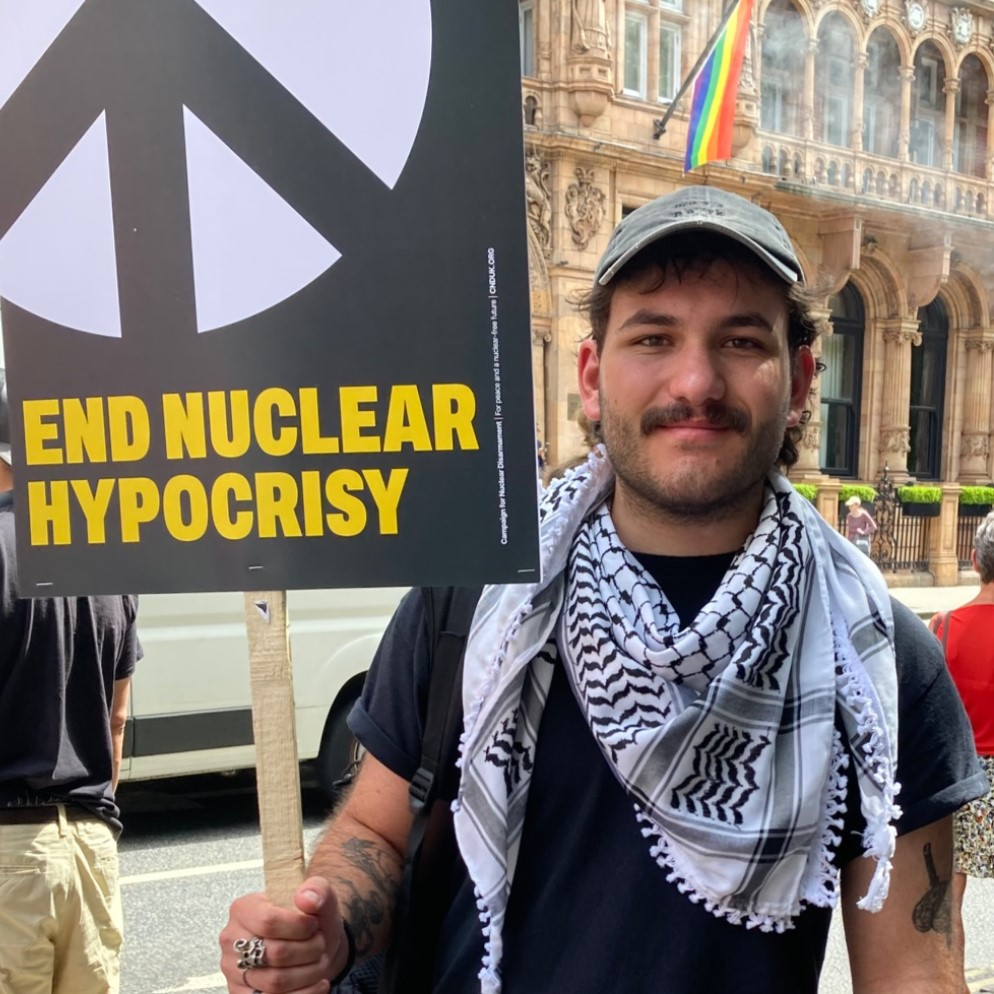
Like Trump, Netanyahu wants an end to Iran’s nuclear programme. Israel’s nuclear double standards are entrenched:
- Israel is an undeclared nuclear weapons state,
- Israel is not a signatory to the nuclear Non-Proliferation Treaty, and
- Israel does not permit IAEA inspections.
Israel also wants to end Iran’s ballistic missile system which has allowed the country to hit back in the battles of the past twelve days. Israeli strikes have also taken place against Iran’s ballistic missile facilities, as well as key military figures and nuclear scientists. The scale and choice of these targets, as well as Netanyahu’s own words, are rightly understood as seeking to destabilise the Iranian leadership.
Netanyahu claims Iran’s actions are inconsistent with Israel’s interests and objectives. Despite the experiences of regime change – in Afghanistan, in Iraq, in Libya, and in Syria – in a video broadcast shortly after Israel’s first air attack on 13th June, he told the “proud people of Iran” that: “The Islamic regime which has oppressed you for almost fifty years, threatens to destroy the State of Israel,” adding: “As we achieve our objective, we are also clearing the path for you to achieve your freedom.”
Israel’s desire to see the Iranian regime overturned, could yet scupper the ceasefire.
Re-establishing IAEA inspections
Grossi welcomed the ceasefire announcement on behalf of the IAEA. IAEA inspectors have remained in Iran throughout the attacks, and Grossi stressed the need for a resumption of the authority’s “indispensable safeguards verification work” after twelve days of military conflict which is known to have severely damaged several Iranian nuclear sites.
In a letter to Iranian Foreign Minister Abbas Araghchi, Grossi has also proposed a meeting. “Resuming cooperation with the IAEA is key to a successful diplomatic agreement to finally resolve the dispute over Iran’s nuclear activities,” he said. The head of Iran’s Atomic Energy Organization (AEO) Mohammad Eslami has also announced Iran is now assessing damage to its civil nuclear energy industry and preparing for its restoration.
Only days before the US air strike, Grossi confirmed to the UN Security Council (UNSC) there was no evidence Iran was developing nuclear weapons. He also informed the Security Council that Iran’s nuclear facilities had already suffered “severe damage” from Israeli air attacks, and called for the restoration of IAEA inspections.
At a second appearance before the UNSC, after the US bombing, he confirmed that the Iranian nuclear sites of Fordow, Natanz and Esfahan have been hit. Based on information available to the IAEA, damage appeared to be in line with US claims.
The re-establishment of nuclear checks by IAEA inspectors is urgent in the aftermath of the bombing.
Will Iran attempt to re-establish its nuclear programme?
Reports in the media suggests stores of enriched uranium were removed to an unknown location days before the US bombed Fordow, Natanz, and Isfahan. This has fuelled speculation that Iran will secretly continue enriching uranium.
Since US withdrawal from the JCPoA, the Iranian leadership has sought a nuclear dialogue with the United States. This was the case right up to the recent bombing.
Iran asserts:
- its nuclear programme is for peaceful purposes;
- its willingness to return to its JCPoA obligations if sanctions are lifted;
- that parties to the JCPoA have violated the terms of the agreement, by failing to meet their commitments on sanctions relief.
Iran signed up to the Non-Proliferation Treaty in 1970 and remains a member. Israeli bombing did, however, spark a recent discussion in the Iranian parliament about withdrawing. Israeli aggression against Gaza and Lebanon led nuclear hawks in the Iranian leadership to increase their calls for the country to acquire nuclear weapons, wrongly arguing this will deter rather than encourage attacks by the United States.
Where to now?
Iran is a significant political and military actor in the Middle East. It has the largest armed forces in the region. Driven by sanctions, it has expanded domestic rearmament and has significant ballistic missile and cruise missile programmes. Notwithstanding, Iran is no match for the combined military strength of the US and Israel. Iran’s military leadership is depleted and its military forces weakened, though it has retained its ability to strike beyond its borders, inflicting significant damage on Israel during the exchanges of 2024 and today.
With tacit US support, Israel’s ruthless and illegal military action across the region – in Gaza and the West Bank, in Lebanon, Iraq and Syria – has shifted the balance of power in Israel’s favour. The Israel-Iran conflict of the past twelve days has shown, yet again, that when push comes to shove the US stands with its regional ally.
This shift has been achieved at the expense of mighty and enduring bitterness on the Arab street, and at huge reputational damage to Israel and the United States among the majority of the world’s nations. The world is changing – difficult as that may be for Britain, Europe, and western allies to come to terms with.
Carol Turner is a CND Vice Chair and active in Labour CND. She is a member of the Stop the War Coalition national officer group and author of Corbyn and Trident: Labour’s continuing controversy and Walter Wolfgang a political life.
Images: c/o author.
 Labour Hub