
Livvy Gibbs reflects on Labour’s welfare bill, the whip and the inevitable collapse of consensus.
Labour’s welfare rebellion earlier this month wasn’t just a policy embarrassment. It exposed a deeper democratic dysfunction: power without consensus, governance without dialogue, and control without credibility.
On 1st July 2025, after a chaotic Commons session, Keir Starmer’s flagship welfare reform bill passed its second reading by 335 votes to 260, but only after a dramatic U-turn. Key changes to Personal Independence Payments (PIP), originally promoted as part of a £5 billion cost-cutting package, were stripped out at the last moment following a rebellion by 49 Labour MPs. It marked the largest revolt against his premiership. Under pressure, Disability Minister Stephen Timms announced that PIP eligibility changes would be shelved until a co-produced review due in autumn 2026. The result? A bill that technically passed but was politically gutted. Less governance, more emergency surgery under the whip’s sharp edge.
Big Majority, Small Mandate
Labour’s 166-seat majority looks commanding on paper. But it was won with just over 34% of the popular vote, less than the Conservatives secured in 2019. First Past the Post transformed a minority share into near-total parliamentary dominance, while millions of votes for Greens, Reform, the Liberal Democrats and others were effectively discarded.
This left Labour with formal authority but a shallow mandate. When a policy as ethically charged as welfare reform collapses under pressure from the Party’s own MPs, it signals more than poor timing. It shows that our political system no longer reflects the complexity of public opinion.
This isn’t a government buoyed by popular support. It’s a government propped up by a system designed to erase dissent.
Limits of Party Control
A government with this scale of majority shouldn’t have to fight to pass its own bills. But Labour’s internal contradictions, amplified by FPTP, are difficult to contain. When you campaign as a catch-all, you govern as a compromise. And when that compromise is enforced through whipping rather than built through dialogue, it fractures under pressure.
The revolt over PIP wasn’t just about policy. Dozens of Labour MPs, particularly from the Party’s soft-left and trade unionist wings, viewed the bill as rushed, opaque, and unjust. More than 120 MPs signed an amendment opposing the changes, forcing the leadership into retreat.
This kind of rebellion is often framed as disloyalty. But what does loyalty mean in a system that punishes conscience? Under First Past the Post, the whip isn’t about the democratic process. It’s about enforcing a unity that doesn’t exist.
The whip holds the party together only because the system leaves no room for difference. What masquerades as cohesion is, in truth, coercion. And when the whip becomes a tool for suspension, not just persuasion, it signals something darker: a party unable to tolerate its own internal plurality.
The Policy Shambles
Initially presented as a fiscally responsible package to ‘rebalance’ welfare and cut £5 billion in spending, the bill was gutted by Monday night. The PIP changes were dropped. Warnings from disabled people’s organisations and MPs were finally heeded. What passed was a stitched-together shell, not a coherent vision.
Projected savings largely vanished. Flagship reforms were deferred until after 2026. Instead of clarity or credibility, the government was left with confusion and spin.
But this was never just about policy substance. It was about a process that collapsed under scrutiny. With minimal consultation and no meaningful space for dissent, Labour attempted to impose its agenda from the top down. Under FPTP, parties don’t build consensus. They presume it. And when that illusion fails, the whole structure buckles.
A healthy democracy doesn’t just pass legislation; it builds consent. Essentially, this bill achieved neither.
What Proportional Representation Could Offer
Under a proportional system, Labour most likely wouldn’t be governing alone. Reforms like this would require negotiation with the Greens, Liberal Democrats, the SNP, and others. That might slow things down, but it would also force dialogue, compromise, and transparency.
Instead, what we saw was a scramble. Amendments rushed through in panic. Ministers contradicting themselves. A key policy disintegrating in front of the House.
Coalition politics isn’t dysfunction, it’s democratic honesty. Across Europe, it’s standard practice. Conscience votes are expected. Disagreement is built into the structure, not punished as betrayal.
In FPTP, the party becomes the coalition, but without the consent, dialogue, or compromise that real coalitions require.
When critics call PR chaotic, we should ask: compared to what? What we saw this week wasn’t stability at all, but rather, instability masked as control.
The System Failed First
This was spun as a misstep, an awkward stumble, but the truth runs deeper. It was a structural failure of process, cohesion and mandate. Labour’s rebellion didn’t derail consensus. It revealed there wasn’t any.
A party handed artificial dominance by FPTP collapsed under the weight of its own contradictions, not because of disunity, but because the system insists on unity where none exists. And unity built on silence always breaks.
We need a political system that reflects modern Britain, not just at the ballot box, but when policy is made.
The past fortnight has made that painfully clear. As of 16th July, six MPs have had the whip removed for opposing a bill condemned by disabled people’s organisations and experts alike. Brian Leishman was the latest, punished not for misconduct but for standing by his principles.
Suspending MPs for defending disability rights isn’t just authoritarian, it’s a warning sign. In a healthy democracy, you don’t lose your job for having a conscience.
Proportional Representation won’t fix everything, but it would be a decisive start. It means governing with, not despite, difference. The crisis wasn’t the rebellion; it was the system that made it inevitable.
Livvy Gibbs is a 22-year-old campaigner and activist focused on political reform, democratic accountability, and systems change.
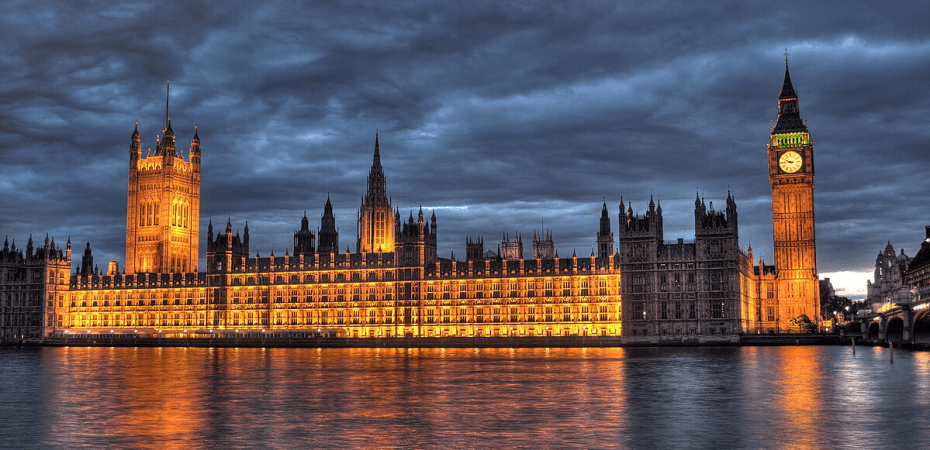
Image: British Houses of Parliament. Source: The British Parliament and Big Ben. Author: Maurice from Zoetermeer, Netherlands, licensed under the Creative Commons Attribution 2.0 Generic license.
 Labour Hub