
While Labour’s dismal performance at the national level played a big part in last week’s byelection defeat, there has been little focus on the internal blows inflicted by the Party’s factional apparatus on local activists, whose views were damagingly sidelined in the run-up to the contest. An exclusive report.
There are several important lessons from last Thursday’s byelection in Caerphilly. Plaid Cymru won the Senedd seat with over 47% of the vote, beating Reform on 36% and taking the seat from Labour, reduced to 11%, for the first time in 100 years.
Early evidence suggests that Plaid’s win was due in no small part to an unexpectedly strong turnout from younger voters. Overall turnout was high at 50% – the highest turnout in any Senedd byelection and the highest turnout ever recorded for a Senedd contest in the area. Additionally, anti-racism campaigners distributed thousands of leaflets in the constituency during the campaign, which may have helped ensure that, despite tabloid media support, Reform’s defeat in Caerphilly was decisive.
Labour’s wider crisis
Plaid attributed their win to having fought a positive campaign around local issues. Some tactical voting evidently took place, as progressive voters switched to the best placed candidate to stop Reform – and perhaps Labour too, for whom this result was nothing short of catastrophic. It was, as Simon Fletcher, argued, “brutal evidence of Labour’s wider crisis. On the eve of Labour conference Ipsos recorded not only the lowest level of support for Labour since 2009 but, much more dramatically, Keir Starmer’s satisfaction rating standing at -66, the lowest of any PM on Ipsos’ record going right back to 1977.”
“So long as UK Labour governs without a clear vision and story to tell people who we are, detached from its moral purpose and democratic socialist foundations, losses like this will become the norm,” suggested the new centre-left group Mainstream in response to the byelection result.
Former Shadow Justice Secretary Richard Burgon MP was more concrete: “ The historic loss of Caerphilly is the direct result of the disastrous direction taken by the Labour leadership. To rebuild support, we need to start governing with real Labour values. That means taxing the very wealthiest and taking urgent action on the cost-of-living crisis.”
Momentum’s Co-Chairs agreed: “The drop in Labour support in traditional heartlands can only be described as an existential threat to the Party’s future. This is a damning indictment of a Labour Government that refuses to tax the rich properly and has refused to genuinely reverse austerity.”
Labour ministers were quick to claim they were listening to voters and delivering the change they wanted. Clive Lewis MP retorted: “The attempt to claim we’re ‘listening and speeding up change’ rings hollow when voters reject the very version of change on offer.”
Former Shadow Hone Secretary Diane Abbott MP tweeted: “A disastrous result for Labour. On the same day ministers attack doctors, make housing more unaffordable and press ahead with unpopular digital ID. Labour is losing support on its left and the leadership does not care.”
The point was reinforced by Labour’s former Director of Policy under Jeremy Corbyn’s leadership, Andrew Fisher, who said that Plaid Cymru’s huge win underlined “how vulnerable Starmer’s Labour is to parties to their left.”
Local difficulties
Labour ‘s dismal record in office at the national level played a central role in the Party’s performance in Caerphilly. But there were key local factors too that undermined Labour’s campaign. Much of the cause of Labour’s defeat in the byelection can be laid at the door of the Welsh Labour Party leadership riding roughshod over the views of local members.
Labour in Wales have been in trouble since the scandal that engulfed Vaughan Gething, who was elected as Leader of Welsh Labour in March 2024 and had to resign just weeks later after being forced to deny allegations of perjury and losing a vote on no confidence in the Senedd. The departure earlier that year of Mark Drakeford as First Minister, under whose leadership Welsh Labour had been able to buck the wave of unpopularity suffered by Labour nationally, marked the end of ‘clear red water’ between Welsh Labour and what Keir Starmer was offering. Over the last eighteen months, the ‘command and control’ of the national leadership has increasingly reached into the Party in Wales.
In the Caerphilly Party, local discontent mounted as boundary changes – which Welsh Labour argued should not be opposed – were introduced that split the community into different constituencies. The closure of libraries by the local Labour council has also been deeply unpopular. In villages in the Welsh valleys, local libraries are a lifeline and residents have fought a determined campaign to save them, which has included legal action that forced the council to pause its closure programme.
Local Party members were already feeling alienated when the Senedd byelection candidate selection process began. Popular Council Deputy Leader Jamie Pritchard put himself forward, only to be barred hours before the selection meeting by the Welsh Labour panel due to old social media posts, backing Jeremy Corbyn when he was Party leader. These they deemed made him unfit to stand – even though those posts were known about when he had been selected and elected to the council.
With their preferred candidate barred, only about 10% of Caerphilly’s 450 members bothered to go to the selection meeting. Most of those present wanted to vote for Jamie, and chose to spoil their votes by writing his name on their ballot paper. In the event, Richard Tunnicliffe became the Labour candidate.
Former Caerphilly MP Sir Wayne David described Richard Tunnicliffe as “an excellent candidate” in a recent post-mortem of Labour’s campaign. Local activists would beg to differ. Members think he had been active in the local Party for no more than a year or so, and the former CLP Secretary Sian Boyles told Labour Hub that she had no recollection of ever having met him.
The selection process seems to have been manipulated from the outset, with rules seemingly ignored – for example, allowing candidates to run for more than one constituency at the same time. Members feel Tunnicliffe was an establishment figure, imposed from above: he is the son of Baron Tunnicliffe, a businessman and New Labour life peer.
Tunnicliffe lost Caerphilly disastrously and the local Party has paid a heavy price too. Sian Boyles has quit the Party, as has ex-Caerphilly Council Leader Sean Morgan who backed Plaid in the by-election. The local Party, one former activist told me, is now largely defunct.
This level of disaffection is similar in other parts of Wales. The combination of Keir Starmer’s dire record in office so far and the bureaucratic control over local selections exercised by a factional Welsh Labour executive is having a calamitous effect. Some insiders think Labour, which has dominated the Welsh government since it was set up, could be reduced to single figures in next year’s Senedd elections – especially with the introduction of a new, more proportional electoral system.
Widespread demoralisation
This combination of national policy failings and authoritarian control by the Party apparatus over what should be democratic candidate selection processes is demoralising members across the country. Labour are likely to pay a heavy price in elections next May, especially in areas where popular local candidates have been stopped by Party officials from running. Nor will Caerphilly be the only place where a large part of the Party’s activist base drops away as a result.
And yet, Caerphilly also showed that voters were able to find a way forward to advance progressive, anti-austerity policies and to oppose Reform without settling for a Labour leadership which borrows their rhetoric and accepts many of their premises.
This may be the most important lesson to emerge from this much-debated contest. Professor Jeremy Gilbert noted: “I think the real significance of Caerphilly is that once centre-left voters start accepting that they might have to vote for parties to the left of Labour in order to block Reform, then the entire basis for centrist political strategy since the 1970s is out of the window.”
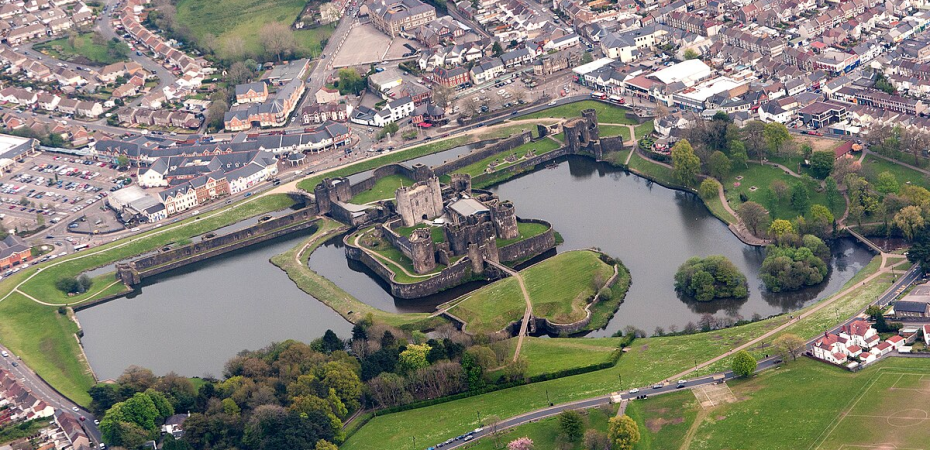
Image: https://commons.wikimedia.org/wiki/File:Caerphilly_Castle_from_the_air.jpg. Author: Varitek, licensed under the Creative Commons Attribution-Share Alike 4.0 International license.
 Labour Hub

[…] messy, with a number of credible parties fielding progressive candidates. October’s Caerphilly byelection showed that in the right circumstances, progressive voters can find a way to defeat both […]
[…] policy failings and the local Party bureaucracy imposing their own candidate, Labour lose the Caerphilly byelection to Plaid Cymru. Labour Hub comments: “Caerphilly showed that voters were able to find a way […]
[…] that the leadership faction has failed to learn from. One of the main reasons Labour lost the safe seat of Caerphilly to Plaid Cymru last October was because the Party barred a popular local candidate and imposed […]
[…] continue to remain in a parlous state. Local members in critical by-election seats such as Caerphilly and Gorton and Denton have been denied the right to select the parliamentary candidate of their […]