
The Right To Food UK Commission, announced in September 2025, was launched in Parliament this week. It will interrogate and report on the scale of food poverty and hunger in the UK today.
The scale of food insecurity in Britain today is shocking. Some 14 million people in the UK – one in five of the population – experience some form of food insecurity. Over 7 million adults are going hungry or skipping meals, and children, disabled people and single-parent families are hit hardest.
The Commission will be based out of the UK Parliament and take evidence from around the UK. It has been established jointly by the Right To Food Campaign, which is led in Parliament by Ian Byrne, MP for Liverpool West Derby, the University of Westminster, the Bakers, Food and Allied Workers Union (BFAWU) and the Food and Work Network.
The Commission aims is to shine a light on the unacceptable nature of food insecurity in Britain, map out solutions to endemic food insecurity and apply pressure on the UK Government, devolved administrations and politicians and policy makers in all UK jurisdictions, to tackle and end food insecurity in the UK.
Specifically, the Commission will produce a roadmap for the implementation of a Right to Food law in the UK, the aim of which is to support a programme of work and actions to end hunger in the UK by 2035, with an interim objective of halving the number of people experiencing food insecurity by 2030.
The Right to Food Commission will consider:
- The extent and nature of food insecurity across the UK, including the various nations and regions and specific localities
- The effects of malnutrition and food insecurity on public health outcomes in the UK
- The impact of current labour market conditions, welfare provision, and asylum/immigration policy as drivers of food insecurity
- The role of public policy frameworks in tackling food insecurity – and the potential for interventions by Central Government, devolved national and regional bodies, directly-elected Mayors and local authorities
- How to ensure support and investment for collective community-based food initiatives
- How best to legislate for an effective and enforceable statutory Right to Food.
The considerations above will be framed around the five demands of the Right To Food campaign:
1. Universal Free School Meals – Free school meals for all children
2. Transparency on Food Costs in Wages and Benefits – Government must reveal how food costs are used in wage and benefit calculations
3. Independent Enforcement – Create a regulatory body to ensure government accountability
4. Community Kitchens – Fund community dining and meal programmes
5. Ensured Food Security – Integrate food security into all policy areas.
The Commission will hold its first evidence session in Liverpool in January 2026, followed by sessions in Belfast, Newcastle, Glasgow, Cardiff, and London. Each session will be preceded by a citizen’s assembly.
For too long, the conversation about food insecurity has focused on crisis management rather than prevention. This Commission offers a chance to reframe that conversation, to recognise that the state has an obligation to ensure everyone can afford nutritious, adequate food, and to explore how this can be enshrined in law.
The launch meeting focused on the urgent need to address food poverty and hunger in the UK. Sarah Woolley, General Secretary of the Bakers Union, emphasized the importance of ensuring everyone has access to decent, nutritious and affordable food, as a basic human right. She called for political action to challenge the normalization of hunger and poverty, advocating for fair wages, secure work and a sustainable food system.
Richard Burgon MP discussed the potential of a wealth tax to fund emergency measures and emphasized the need for structural change. Professor Ian Sinha, a paediatrician, spoke about the critical role of nutrition in child health and development, highlighting the stark inequalities in access to healthy food among children in the UK.
The meeting focused on addressing social and economic challenges, particularly the exploitation of students and workers, and the rising use of food banks. Participants discussed the need for community assistance assemblies across the UK, emphasizing the involvement of trade unions to address wage disparities and improve living conditions. They highlighted the isolation and fear experienced by individuals, especially mothers, when sharing their voices, and the importance of creating trust and anonymity in gathering evidence. The group also addressed the need for a more humane social security system, with concerns raised about the current benefits system and its impact on poverty and homelessness.
Lucy Powell MP, the newly elected Deputy Leader of the Labour Party, expressed her support for the campaign against food poverty in the UK, emphasizing the shocking nature of the issue in the 21st century. Abolishing food poverty was an important priority, she said.
The conversation ended with a call to action for politicians to address these issues and help transform communities.
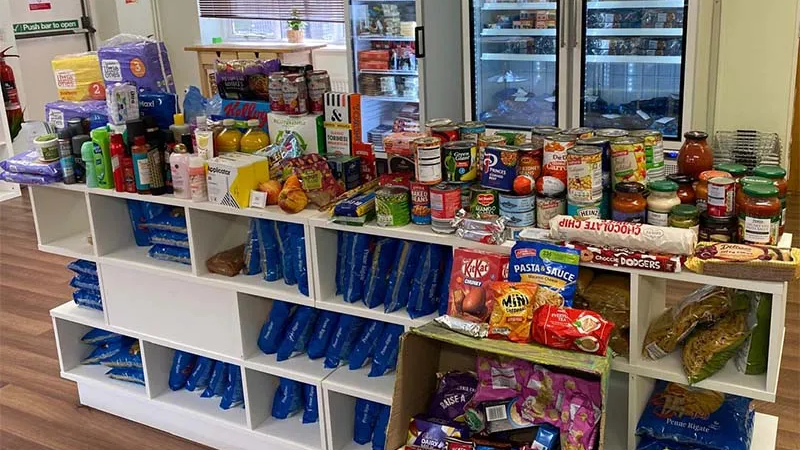
Image: Neater Heat Partners with Aldershot GrubHub. https://www.neaterheat.co.uk/neater-heat-supports-aldershot-grubhub-warming-hearts-homes-and-heaters/ Licence: Attribution-NonCommercial 4.0 International CC BY-NC 4.0 Deed
 Labour Hub