
By Sacha Ismail
One striking aspect of the 21st November sentencing hearing for Nathan Gill, the former Reform UK Wales leader convicted of taking bribes to make pro-Russian propaganda in the European Parliament, has not been reported on.
In his arguments to the court before the judge handed down the sentence, Gill’s defence barrister Peter Wright KC put forward pro-Russian imperialist arguments about the war in Ukraine.
Few will have heard or will read these arguments – I was in the public gallery and took notes – and so far the media have not picked up on them. But so clear and determined were they, it seems likely they are reflective of a political line that will be pursued much more widely.
Tellingly, Wright began by saying that, though he did not dispute the facts presented by the prosecution, nothing in them should be taken to suggest any responsibility on the part of those Gill worked with politically. Wright achieved the quite impressive feat of not naming any organisation or individual, but making it abundantly clear he was referring in particular to Nigel Farage.
This set the stage for him to present his client as a personally gone-astray bad apple, whose self-interested misdemeanours were not aligned with the political project he is part of – and perhaps even mitigated by understandable enthusiasm for that project.
Gill’s corrupt acts, Wright said, seem “utterly unfathomable” given his “wholly laudable” record before they took place. What explains them is, we were told, Gill’s humanitarian concern for the situation in eastern Ukraine, which Wright described as a conflict caused by “tension between Russian-speaking and Ukrainian-speaking factions in the Donbas and the impact of this on the population”.
These words of Wright’s are pro-Russian imperialist propaganda, echoing Putinist narratives about the nature of the war in Donbas. What occurred from 2014 was in fact a veiled Russian invasion of eastern Ukraine, a prelude to the full-scale invasion in 2022 – with Russian-speaking Ukrainians the main victims.
Gill’s interventions on Ukraine in the European Parliament, said Wright, were motivated by a desire to “highlight the plight of the Russian-speaking section of the Ukrainian population”, and to counter the “myopic way” in which the situation in Donbas was generally presented “on the geopolitical stage” – again echoing Kremlin propaganda.
Gill did not “deliberately set out to monetise” his activities on behalf of Russia, Wright argued, but fell into corrupt practices in the course of “highlighting the plight of Russian-speakers” in Ukraine.
Gill apparently feels great “shame” for his bribe-taking; he has not sought to “deflect or dissemble” about his guilt – in fact he insisted on his innocence for months after being charged. Shame about justifying Russia’s blood-soaked war on Ukraine is a different matter.
Wright’s arguments were striking because, in so far as they had any impact on Gill’s fate, they cannot have done him any favours. This was particularly clear because earlier in the sentencing hearing, during the prosecution’s arguments, the judge at one point intervened to make clear the war in eastern Ukraine should be regarded as a matter of Russian occupation, not just a “conflict”.
In my judgement, Wright’s argument about Ukraine did not and could not have been intended to help Gill himself. Repeated more widely, they would certainly help the political project Gill was and is part of, by spreading the idea that his corruption is unconnected to his pro-Russian politics and even that such politics are justified and even laudable.
I don’t know who instructed Wright to act for Gill; and we don’t know if Wright actually agrees with Gill’s stance on Ukraine or other aspects of his politics. Clearly, however, Wright was expected to use the court to set out a narrative that serves a political purpose, one that legitimises the ideas about Russia’s war on Ukraine that Gill, Farage, etc., have been parroting since 2014.
The left, the labour movement and serious democrats must oppose attempts to strip the politics out of this; and insist that the problem is not just individual corruption, but the wider political project and movement Gill supports. That project is anti-working class, anti-migrant, pro-billionaire and imperialist – including pro-Russian imperialism.
The Labour Party’s response to Gill’s sentencing is a welcome break in the Labour leadership’s general reticence to challenge Reform UK. However its great weaknesses – not only absurdly calling for Nigel Farage to launch an investigation into his own party’s Russia links, but suggesting it is a just matter of “weeding out” corrupt individuals – underscore the need to have the serious political arguments.
Moreover, as Mariia Pastukh from Ukraine solidarity collective Vsesvit told the media outside the Old Bailey after Gill’s hearing, Labour cannot effectively fight Reform UK while it apes its policies on asylum rights and other issues.
Sacha Ismail is trade union officer for Ukraine Solidarity Campaign
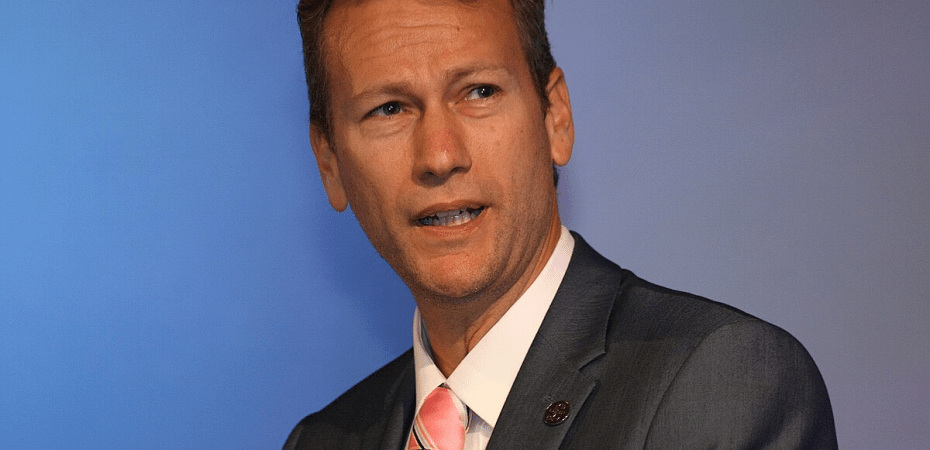
Image: Nathan Gill https://commons.wikimedia.org/wiki/File:Nathan_Gill_%2815228054729%29.jpg Source: Nathan Gill Author: Derek Bennett, licensed under the Creative Commons Attribution 2.0 Generic license.
 Labour Hub

[…] Originally published by Labour Hub, November […]
[…] from Labour Hub, with […]