
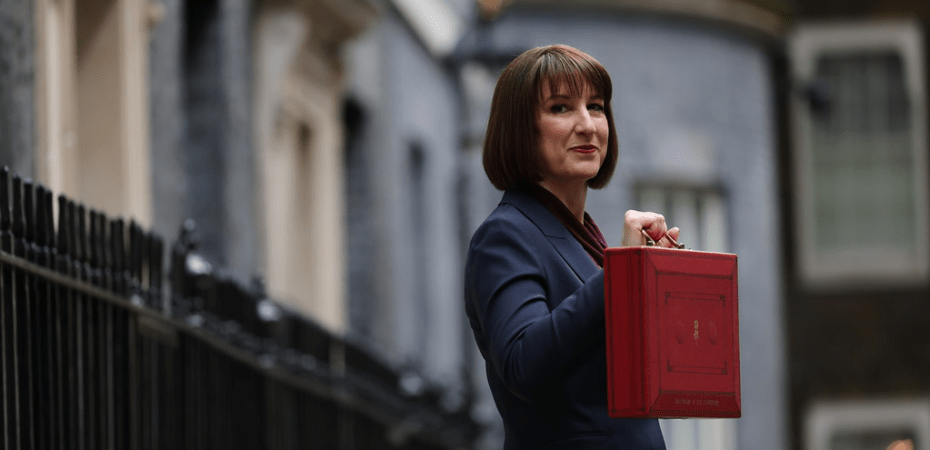
Rachel Reeves’ Budget finally landed yesterday. So much of its content had been trailed in advance that, on one level, this was one of the most predictable Budgets of modern times. On another level, however, the package underlines a Government that is highly fearful of its dire poll ratings and the ensuing disquiet within the parliamentary Party. This has forced it to adopt some of the key measures the left has been calling for since Labour came to power last summer. On that basis, many in the Party have welcomed the package overall.
Before the Budget
On the eve of the Budget, the Government announced a new round of Private Finance Initiatives. The Socialist Health Association said it was “deeply opposed to the re-introduction of private finance in NHS infrastructure.” It pointed out that: “Capital funding constraints are self-imposed by the Government and can and must be challenged. Local publicly funded and managed building schemes are likely to be much cheaper and more socially useful than the PPP equivalent.” Its more detailed analysis is here.
Another pre-Budget announcement was the Chancellor’s decision to increase the National Minimum Wage and National Living Wage. Erin Mansell, Interim Deputy Director at the Women’s Budget Group, responded: “Raising the National Living Wage and the National Minimum Wage above headline inflation is good news especially for women – who are twice as likely as men to be in low-paid work – and continue to bear the brunt of rising prices.
“However, concerns among care providers will likely persist as this will further increase their costs. Together with the changes to employers’ NICs in last year’s budget, this may stretch services even further. It remains unclear if the additional funding announced in the Spending review will be enough to enable providers of essential services like early education and childcare and social care to meet the costs of the increase in the NLW.
“The underfunding of these services is a double whammy for women: They make up the majority of their workforce and they depend most on these services to be affordable and available to access employment.”
Exit the two-child benefit cap
One of the most trailed announcements of the Budget itself was the abolition of the two child benefit cap. Former Shadow Chancellor John McDonnell MP said: “This is a huge victory for all those Labour MPs and campaigning groups, who fought so hard to lift 500,000 children out of poverty. It was worth staying in the Labour Party to achieve.”
Momentum agreed: “While this should never have been up for debate, this decision is a huge win for anti-poverty campaigners and the labour movement. It’s also a clear vindication for the Labour MPs who were suspended last year for voting to scrap it. Let’s be clear – this would not have happened without a mobilised left demanding change inside the Labour Party.”
Bell Ribeiro-Addy MP described the U-turn as “a major victory for all the families who have suffered hardship because of it and all those who campaigned for so long to end it.”
The Women’s Budget Group applauded the measure. Dr Sara Reis, Interim Director, said: “This change will be particularly transformative for single parents, who make up more than half of the households hit by the policy, with the majority headed by women who are more likely to skip meals or get into personal debt to cover daily living costs. It also means an end to the horrific requirement on women to prove they were raped in order to qualify for the exemption.”
Anti-poverty charity Z2K also welcomed the scrapping of the two-child benefit cap, but was disappointed that the overall benefit cap was being retained and that housing benefit as being frozen, trapping low-income renters in poverty and fuelling homelessness.
The Women’s Budget Group agreed: “This relief will be short lived when they find their income is still subject to the benefit cap, which limits the total amount of social security households can receive unless they earn the equivalent of 16 hours at minimum wage. For single parents, most of whom are women, balancing parenting and paid work is harder than for dual parent households so it is no surprise that they make up nearly 70% of families whose benefits are capped. Over half of capped single parent households have a youngest child under five years old.
“With private rent now absorbing, on average, 58% of women’s incomes compared to 42% for men, the failure to uplift local housing allowance in line with actual rent costs was also a missed opportunity to tackle one of the biggest costs facing families.
“The full child poverty strategy must commit to removing the benefit cap and permanently relinking Local Housing Allowance to real rent prices before the end of the parliament and improving the wider support available to mothers. That includes access to the 30 hours funded early education and childcare currently only offered to parents already in work, creating a catch 22 for single mums.”
Debt Justice was also concerned about the limited impact on the poor, saying the Budget contained “absolutely nothing for households in council tax debt.”
Rachel Reeves’ freeze on income tax thresholds also has consequences for lower earners, especially women. The Women’s Budget Group again: “As the majority of those who earn under the personal allowance tax band are women, freezing it means more women will be paying income tax for the first time. Because of having lower incomes on average, women will lose a greater proportion of their incomes through the freezing of income tax thresholds.”
Other welcome measures
Besides, the decision to scrap the two-child benefit cap, other welcome measures in the Budget include the high value council tax surcharge on homes worth over £2 million, an almost doubling of the tax on online gambling and increased taxes on landlords’ rental income by 2%.
Former Shadow Justice Secretary Richard Burgon MP warned: “The stark reality is that living standards are set to stagnate for the rest of this Parliament — so these must only be the first steps. I’ll keep pushing the government to go much further — above all to tax extreme wealth instead of hitting workers with stealth taxes — so we can finally get to grips with the cost-of-living emergency facing millions.”
Nadia Whittome MP added: “I am still concerned that we are not being ambitious enough, and that the wealthiest and corporate giants are not being made to pay their fair share when compared to the contributions that ordinary people are expected to make.”
Another popular measure in the Budget was a pension boost for ex-mineworkers from the release of £2.3 billion in reserves from the British Coal Staff Superannuation Scheme. Easington MP Grahame Morris, who chairs the Labour Group of Coalfield MPs, described the measure as a “hard-won victory for all in the coal industry”.
Energy policy incoherence?
The Chancellor’s headline announcement of a reduction in energy bills was welcomed by the End Fuel Poverty Coalition, but its coordinator Simon Francis added: “Even with the changes announced, we expect that from April 2026, average energy bills will still be hundreds of pounds higher than they were in winter 2020/2021 and £97 higher than at the General Election.
“The millions of households who will still be struggling with the cost of energy need further bold action from the Government in reform of energy pricing, targeting energy bill support at those who need it, delivering on a new fuel poverty strategy and in creating an ambitious Warm Homes Plan to upgrade cold, damp homes.
“And we’d also urge the Chancellor to address a c.25% projected shortfall in total energy efficiency funding in future budgets after the ECO scheme is scrapped.”
Analyst Chaitanya Kumar was also concerned about energy efficiency, saying that “the scrapping of the flagship energy efficiency policy is deeply unfortunate. It has achieved under £17.5bn in cumulative savings since 2013 and £290 per household on average. Scrapping it weakens the objectives of the warm homes plan and disrupts the retrofit industry.”
Lord Prem Sikka was also concerned about energy policy, tweeting: “No abolition of VAT on domestic fuel. No curb on energy company profiteering. No change in the Ofgem pricing formula, which gives us the most expensive electricity in the world.”
Others expressed concern about the ongoing freeze on fuel duty. Former Green Party leader Caroline Lucas said: “Since 2011 fuel duty freeze has cost the Treasury a whopping £133bn and added to yet more climate emissions. Freezing it yet again is reckless and irresponsible.”
Chaitanya Kumar went further: “Sustaining the fuel duty freeze continues to cost the government dearly but the savings accrue to the richest households. In fact, drivers have benefited hugely from a significant fall in fuel prices since 2019 and 2022 (adjusting for inflation) and unfreezing the duty would have been reasonable.”
Stagnant living standards?
Other measures aimed at addressing the cost of living crisis, such as the freeze on rail fares and prescription charges are welcome. But UK rail fares are already among the highest in Europe. John McDonnell MP noted that, after reading the Office for Budget Responsibility Report, “a worrying element is the growth in household disposable income is predicted to drop from 3% to 1/4%. This means effectively that, despite today’s cost of living measures, a freeze in living standards and for many an ongoing cost of living crisis” would result.
One commentator noted: “The Resolution Foundation says that the outlook for living standards has worsened significantly, with disposable incomes rising by a ‘paltry’ 0.5 per cent a year over this Parliament – the second worst since records began in the 1950s.”
Momentum added: “This shows that take-home income will be close to stagnant for the next four years. Only a complete overhaul of the economy based on radical redistribution will genuinely improve living standards.”
Momentum was also critical of the decision to sign up to Nato’s arbitrary 5% target – which Stockholm International Peace Research Institute suggests would mean finding an extra £136bn per year by 2035. It said it “shows that fiscal rules can be bent and bond markets resisted when government decides.”
Common Wealth also expressed reservations. “Surging military spending — an extra £136 bn by 2035 — redirects manufacturing away from technologies needed for the energy transition,” it said.
Overall assessments
Campaigning group War on Want made an overall negative assessment, saying the Chancellor “blew it. Reeves had a chance to tackle inequality by taxing extreme wealth. To raise billions to rebuild our crumbling public services. To raise the money the UK failed to pledge at last week’s COP30 climate talks. Instead, the Chancellor sided with corporate interests and the super-rich.”
Prem Sikka also expressed concern that the wealthy were scarcely impacted. He said: “Minor tweaks on dividend and mansion tax. No wealth tax. No alignment of taxation of dividend and capital gains tax with the rates for wages. Partnerships won’t pay NIC on partners’ share of profits. No financial transactions tax.”
Fire Brigades Union General Secretary Steve Wright was also concerned about the lack of tough measures against the wealthiest. “Without meaningful action on taxing extreme wealth, this Budget does not yet provide secure, long-term investment or break with austerity,” he said.
Unite the union took a similar line: “On the fundamental issues of who pays for the crisis and the investment required to back British industry, the wrong decisions are being made.”
Former Labour Director of Policy under Jeremt Corbyn’s leadership Andrew Fisher took a nuanced approach, saying: “What’s frustrating about Budget 2025 is the wasted year. Labour could have scrapped the two-child limit, cut energy bills and done a freeze on rail fares in last year’s Budget. Instead they tried to target pensioners and disabled people, and were forced into embarrassing U-turns and lost goodwill.”
Clive Lewis MP summed up: “Today’s Budget might steady the ship, but doesn’t change its course. Until we tackle the extraction economy at its root, living standards won’t recover and the promise of ‘change’ will remain unfulfilled.”
Image: https://www.flickr.com/photos/hmtreasury/54104758648/ Creator: Lauren Hurley / DESNZ | Credit: Lauren Hurley / DESNZ Copyright: Crown copyright. Licensed under the Open Government Licence Attribution-NonCommercial-NoDerivs 2.0 Generic CC BY-NC-ND 2.0
 Labour Hub
[…] few other things welcomed by the left, such as freezing rail fares and reducing energy bills. But a new round of private finance initiatives for the NHS, the freezing of housing benefit, the absence of a […]